
What's inside
- Best hand planers for doors at a glance
- Our top choices by situation
- How cutting depth affects door fitting
- Decision matrix: which plane matches your job?
- How to trim a sticking door without damaging the edge
- Grip and control matter more than speed
- Ownership, sharpening, and common mistakes
- Final recommendation
- Related Guides
As an Amazon Associate I earn from qualifying purchases. This post may contain affiliate links at no extra cost to you.
The best hand planer for doors is a low-angle block plane with a sharp 1 5/8- to 1 3/4-inch blade, adjustable mouth, and comfortable two-handed control; for most homeowners, the Stanley 60-1/2 is the sensible choice, while the Lie-Nielsen No. 60-1/2 and Veritas Low-Angle Block Plane offer better fit, smoother adjustment, and longer-term durability.
A hand plane is useful when a door sticks by only a few millimeters, when a hinge edge needs a small correction, or when a newly cut edge must be refined without removing too much material. The right tool should take controlled shavings rather than tear chunks from the edge. Cutting depth, grip, blade support, and the ability to retract the iron quickly matter more than maximum aggressiveness.
As an Amazon Associate we earn from qualifying purchases at no extra cost to you.
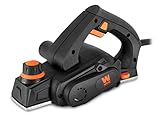


Best hand planers for doors at a glance
| Model or type | Blade width | Bed angle | Best for | Typical market range |
|---|---|---|---|---|
| Stanley 60-1/2 Low-Angle Block Plane | 1 5/8 inches | 12 degrees | General door trimming and end grain | $50–$90 |
| Lie-Nielsen No. 60-1/2 | 1 5/8 inches | 12 degrees | Frequent use and highly controlled fitting | $250–$325 |
| Veritas Low-Angle Block Plane | 1 3/4 inches | 12 degrees | Users wanting precise adjustment and a broad sole | $220–$300 |
| Standard No. 4 bench plane | About 2 inches | Approximately 45 degrees | Long, straight door edges and workshop preparation | $40–$400, depending on model |
Prices vary by finish, regional availability, and whether a plane is new or restored. The dimensions above describe common versions, not every production variation.
Our top choices by situation
Best overall: Stanley 60-1/2 Low-Angle Block Plane
The Stanley 60-1/2 is the practical starting point for door work. Its low cutting angle handles end grain better than a conventional high-angle block plane, which is important when trimming the top or bottom of a door. The adjustable mouth lets you close the opening for fine shavings or open it slightly for faster stock removal.
Its main limitation is consistency between individual examples. The sole and blade may need flattening and sharpening before the plane gives its best performance. The front knob and rear handle provide adequate control, but the casting and adjustment mechanism do not feel as refined as more expensive planes.
Best premium option: Lie-Nielsen No. 60-1/2
The Lie-Nielsen No. 60-1/2 is a strong choice for a carpenter who regularly fits doors, builds furniture, or wants a block plane that can remain in service for decades. The ductile iron body, accurately machined sole, thick A2 blade, and precise mouth adjustment make it easier to produce a predictable shaving at the end of a difficult grain direction.
The extra cost buys control rather than dramatically higher removal capacity. It will not correct a badly twisted door edge faster than a powered planer or aggressive bench plane. Its value appears when the final few passes must be precise and clean, especially near corners and hinge recesses.
Best for adjustment and grip: Veritas Low-Angle Block Plane
The Veritas Low-Angle Block Plane suits users who prefer modern ergonomics and fine depth adjustment. Its side wings and comfortable front and rear contact points make it easy to keep the sole flat against a narrow door edge. The wider 1 3/4-inch blade also gives useful coverage on ordinary door edges.
It is a particularly good fit for someone who has struggled with a traditional block plane’s small front knob or imprecise depth mechanism. The plane is still compact enough for on-site work, although its relatively sophisticated adjustment system rewards careful cleaning rather than careless storage in a dusty toolbox.
Best workshop alternative: a No. 4 bench plane
A standard No. 4 bench plane is better than a block plane when the door edge needs to be straightened over a longer distance. Its longer sole bridges small hollows and reduces the chance of creating a scalloped edge. It is less convenient for quick trimming because it is larger, heavier, and more awkward to hold against a door while the door is upright.
Choose a No. 4 when the door is already supported on a bench and the job involves correcting several inches of uneven edge. Choose a low-angle block plane when the problem is a local high spot or a small fit adjustment.
How cutting depth affects door fitting
For a sticking door, start with a shaving around 0.05 mm to 0.15 mm thick. This is a deliberately light cut: it removes roughly 0.002 to 0.006 inch per pass and gives you time to check the fit. A deeper setting of approximately 0.25 mm to 0.5 mm can remove material faster from a freshly cut edge, but it increases the risk of tear-out and an edge that is no longer square.
Think of the plane’s depth adjuster as a limit on material removal, not a substitute for judgment. Retract the blade until it produces no shaving, then advance it in small increments. If the plane stops cutting, do not automatically push harder. The blade may be dull, the mouth may be clogged, or the edge may be presenting unfavorable grain.
Decision matrix: which plane matches your job?
| Your situation | Recommended choice | Why |
|---|---|---|
| One or two sticking doors per year | Stanley 60-1/2 | Affordable, compact, and capable after basic blade preparation |
| Several doors each month | Veritas Low-Angle Block Plane | Fine adjustment and comfortable control reduce setup frustration |
| Daily carpentry or restoration | Lie-Nielsen No. 60-1/2 | Durable body, stable blade support, and dependable adjustment |
| Long edge is uneven by more than 2–3 mm | No. 4 bench plane or powered planer | A short block plane is slower and can follow existing hollows |
| Limited sharpening experience | Quality block plane with a replaceable or easily removed blade | Simpler maintenance makes consistent results more likely |
How to trim a sticking door without damaging the edge
1. Find the actual interference
Close the door slowly and identify whether it catches at the latch edge, hinge edge, top, or bottom. Look for rubbed paint or pencil marks. Do not plane the entire edge merely because one corner touches the frame.
2. Remove the door only when necessary
For a minor latch-side correction, a block plane can sometimes be used with the door supported securely. For bottom or hinge-edge work, remove the door and place it on padded trestles. Clamp it only with protective padding, and keep the edge accessible at a comfortable working height.
3. Mark the amount to remove
Measure the gap you need, then remove slightly less than that amount. For example, if the door needs a 2 mm clearance correction, begin by removing about 1 mm. Make a second fitting pass after checking the door in its frame. This staged approach prevents an irreversible oversized gap.
4. Plane with the grain when possible
On long-grain edges, work from the end where the grain rises toward the cutter, so the blade tends to slice rather than lift the fibers. On end grain, use the low-angle plane, take shallow cuts, and support the far corner with a sacrificial block if possible. A skewed stroke can reduce resistance, but keep the plane’s sole fully supported.
5. Protect the exit corner
Most blowout occurs as the blade leaves the far end. Plane toward the center from each end instead of making one continuous pass through the entire edge. Stop frequently and check that the edge remains square with a small try square.
Grip and control matter more than speed
A good door plane should allow your pushing hand to apply force directly along the sole while the other hand guides the front. Keep the plane level rather than rolling it toward the hinge or latch side. A narrow door edge gives little room to recover from a tilted stroke, so a comfortable front knob and a textured rear grip are useful features.
Do not use the blade depth to compensate for poor body position. If the plane chatters, reduce the cut, sharpen the blade, and slow the stroke. Chatter commonly leaves a repeating pattern that is difficult to remove and may round the edge.
Ownership, sharpening, and common mistakes
The blade edge is the part most likely to wear first. Paint, old filler, grit embedded in a door edge, and occasional nails can damage it immediately. Inspect the edge before planing and remove hardware or fasteners from the working area. A sharpening routine using a medium stone followed by a fine stone is usually enough for occasional door work; a honing guide helps beginners maintain a consistent bevel.
- Clean shavings from the mouth and adjustment threads after each job.
- Apply a small amount of camellia oil or other suitable rust protection to exposed steel during storage.
- Do not leave a plane resting on its blade; set it on its side or on a wooden plane stop.
- Do not plane painted edges aggressively without checking for embedded nails or screws.
- Seal or repaint a freshly cut exterior door edge according to the door manufacturer’s requirements.
- Check hinge screws before removing wood; a loose hinge can mimic a door-edge problem.
Final recommendation
For occasional household repairs, buy the Stanley 60-1/2 and budget time for blade sharpening and sole inspection. For frequent, high-precision work, the Lie-Nielsen No. 60-1/2 is the premium long-term choice, while the Veritas model is compelling if ergonomic grip and precise adjustment are your priorities. Whichever hand planer for doors you select, use shallow cuts, work from both ends, and measure the fit between passes. Those habits prevent more damage than an expensive plane can repair.