What's inside
As an Amazon Associate I earn from qualifying purchases. This post may contain affiliate links at no extra cost to you.
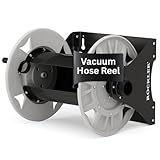
An overhead hose reel keeps a dust-collection hose off the floor and close to the tools that need it. The right setup saves time and reduces trip hazards; the wrong one adds drag, kinks, or a weak point that leaks air. For most small shops, a simple spring-retractable reel is convenient for a light hose, while a manually wound reel or fixed overhead boom is often better for a larger, stiffer dust hose.
As an Amazon Associate we earn from qualifying purchases at no extra cost to you.

What to check before buying
Start with the hose, not the reel. Measure its outside diameter, length, and weight, then check the reel’s stated hose capacity and diameter range. A reel rated for 50 feet of 3/8-inch air hose may not fit 25 feet of 2½-inch dust hose: capacity depends on hose diameter, and a bulky hose needs a larger drum and wider guides. If the manufacturer does not specify dust hose compatibility, ask before buying.
Dust-collection hose also needs to preserve airflow. A reducer, tight bend, or narrow swivel can become a restriction. Keep the path as short and smooth as practical, and use a hose diameter that matches the tool and collector. A small portable extractor may work well with a 1¼- to 2½-inch hose; larger machines commonly need a 4-inch connection or duct. Check the tool and collector ports rather than assuming a reel’s fittings will match.
For overhead mounting, find the ceiling joists or a structural beam. Do not hang a loaded reel from drywall or a light-duty ceiling anchor. A full reel can weigh substantially more than the empty unit, and pulling a hose sideways adds force to the mount. Follow the maker’s installation instructions and use hardware suited to the structure. Leave enough clearance for the drum to turn and the hose to hang without scraping lights, doors, or sharp edges.
Reel types and trade-offs
| Type | Best for | Main trade-off |
|---|---|---|
| Spring-retractable | Light, flexible hose used often | Convenient, but spring tension and fittings may not suit heavy dust hose |
| Manual crank | Longer or heavier hose | More effort to wind; often easier to control and less dependent on a return spring |
| Fixed hook or boom | Short runs and a tight budget | Cheapest, but the hose must be gathered by hand and may sag or snag |
A spring reel is the easiest choice when the hose is light enough to retract reliably. Search for a spring-retractable dust-collection hose reel, but verify that the listing actually supports your hose diameter and material. Many reels are designed for compressed air or garden hose; their fittings, guides, and spring force may not be right for shop dust collection. A heavy hose can retract slowly, refuse to latch, or snap back hard enough to strike a tool or wall.
A manual reel takes longer to put away, but avoids relying on a spring to pull a large hose onto the drum. It can be a better fit for a 2½- or 4-inch hose, especially when the run is long. Check whether the drum has enough width to wind the hose without crushing it against side plates. A manual dust-collection hose reel is worth considering if you value controlled winding more than one-handed retraction.
For a cheap, light-duty setup, a sturdy ceiling hook or short pipe boom can be enough. It keeps a hose off the floor without a moving reel mechanism. The drawback is that you still need to coil or hang the hose after use, and a long unsupported span can sag into a work area. This option makes sense for one stationary machine or occasional cleanup, not a hose that gets moved around the shop all day.
Plan the overhead route
Place the reel so the hose reaches the work area without pulling at a sharp angle. A reel mounted directly above a bench can put the hose in the way of long boards; one mounted too far to the side can drag across the workpiece. Before drilling, temporarily support the hose at the proposed location and move a typical workpiece through the space. Include cabinet doors, machine guards, and the full travel of any sliding tools.
Use a broad, gradual bend from the reel to the tool. Tight bends can flatten flexible hose, reducing airflow and making chips more likely to collect. A swivel fitting can help prevent twisting, but it is another joint that can leak or clog, so inspect its passage and seals. Avoid suspending a heavy hose from an electrical cord or from the collector’s tool port.
For mobile tools, a single reel may not reach every station. A second hose or a portable extractor can be more practical than adding a very long overhead run. Long hose increases resistance, and a reel does not compensate for an undersized collector. If suction is poor, check for a clogged filter, blocked fitting, leaking joint, or crushed hose before blaming the reel.
Installation, safety, and upkeep
Mount the reel securely, then test it with the hose empty before connecting the collector. Pull the hose through its full travel and watch for rubbing, snagging, or contact with lights and sprinkler lines. If it is spring-loaded, use the maker’s release and locking procedure; do not let the hose whip back. Keep hands clear of the drum and stop using a reel with a frayed hose, cracked guide, loose mount, or damaged return mechanism.
Check joints for air leaks and inspect the hose for splits or flattened sections. Fine dust can escape through small gaps, and leaks reduce suction at the tool. Clean buildup from the reel guide and swivel as needed, and do not force a hose beyond its rated bend radius. If the reel struggles to retract, first remove kinks and excess hose rather than adding spring tension or forcing the drum.
Which setup makes sense?
Choose a spring reel for a light hose, frequent changes between nearby tools, and a confirmed compatibility rating. Choose a manual reel for heavier hose or when controlled winding matters more than speed. If the hose is short and used at one station, a hook or boom is a reasonable low-cost solution. In every case, prioritize a sound structural mount, an unrestricted airflow path, and enough clearance to keep the hose away from the work and the floor.