What's inside
As an Amazon Associate I earn from qualifying purchases. This post may contain affiliate links at no extra cost to you.
Hand-tool drawers are easy to organize badly: narrow compartments waste space, oversized bins let tools slide around, and dividers that are too tall make it awkward to lift out a chisel or marking knife. The right setup keeps edges from knocking together while leaving enough room to grab each tool. Before buying anything, measure the drawer and decide whether you need fixed compartments, adjustable layouts, or removable trays.
As an Amazon Associate we earn from qualifying purchases at no extra cost to you.


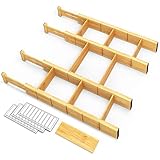

Choose the right divider for the drawer
There are three useful approaches. Adjustable plastic dividers are quick to install and easy to rearrange. Wood dividers can be cut to fit unusual drawers and make a durable, clean layout. Removable trays or small bins work well when you want to carry a group of tools to the bench, but they can consume more drawer space.
For a shallow drawer of chisels, marking tools, or screwdrivers, low partitions are often better than deep bins. A divider around 1 to 2 inches high can keep tools in place without hiding them. In a deeper drawer holding mallets, braces, or larger layout tools, taller partitions help prevent items from rolling or shifting when the drawer opens.
| Divider type | Best for | Trade-off | Typical fit |
|---|---|---|---|
| Adjustable plastic | Changing tool collections and quick setup | Can flex or release if overloaded | Standard drawer widths and shallow compartments |
| Wood strips or a fitted grid | Permanent layouts and odd-size drawers | Requires measuring, cutting, and fitting | Custom compartments for specific tools |
| Removable trays or bins | Taking a tool group to the bench | Uses space around and beneath containers | Deep drawers or frequently used kits |
Measure before buying
Measure the drawer’s usable interior width, depth, and height—not its outside dimensions. Check for slides, screws, a center support, or a drawer bottom that narrows the space. Leave a little clearance so a divider or tray does not bind. For a fitted organizer, roughly 1/8 inch of total clearance is a practical starting point, but verify the drawer is square before cutting parts to that number.
Lay out the tools on a bench in the positions you expect to store them. Allow room for fingers as well as tool handles. A compartment that matches a chisel’s width exactly may be frustrating to use, especially if the handle flares. For long tools, measure the whole item and confirm the drawer closes with the handle or blade in its intended position.
Adjustable drawer dividers make sense if your tool collection changes often or you want to test a layout before building a permanent one. Check the listed adjustment range against the inside drawer dimension. Spring-loaded models need firm contact with the drawer sides; a divider that is slightly too short may shift every time you open the drawer.
Protect cutting edges and delicate tools
Do not store sharp edges loose against other metal tools. Chisels can dull when they knock together, and a marking knife can catch a hand while you reach into a crowded compartment. Use separate slots, edge guards, or a dedicated tray for sharp tools. Keep the cutting edge pointed away from the drawer opening where practical.
For a permanent wooden layout, thin hardwood strips or plywood make straightforward partitions. Use material thick enough not to flex under normal handling; 1/4-inch stock is adequate for many small compartments, while larger bins may benefit from thicker dividers. Sand the edges, and avoid protruding nails or screws. Glue is often enough for light-duty partitions, but a mechanically secured grid is more resistant to a hard drawer slam.
Foam inserts can stop tools from moving, but they are not automatically the best choice for a dusty shop. Fine dust settles into cutouts, and a tightly fitted slot can make a tool hard to lift. If using foam, make the cutout slightly generous and leave a finger notch. A washable tray or open wooden divider is easier to sweep or vacuum clean.
When trays and bins are worth it
Small bins suit loose items such as awls, countersinks, spare blades, and pencil sharpeners. Choose bins with a stable base and a lip that is easy to grip. Very deep bins hide small tools underneath; shallow compartments make contents visible but may not contain bulky handles. Removable trays are useful for a sharpening kit or layout tools that move between storage and the bench.
Measure the tray’s outside dimensions, including handles or rims. A set that looks compact online can leave unusable gaps in a drawer. For a drawer with limited clearance, a simple drawer organizer tray set is a sensible low-cost option if its dimensions match and the tools are not heavy enough to tip it. There is little advantage in buying a premium modular system for a drawer of inexpensive, replaceable accessories.
Avoid common setup failures
A divider that is too tall can block the drawer above it or make tools awkward to lift. Check the closed-drawer clearance, including any cabinet face frame or neighboring drawer hardware. A loose divider may slide and let tools collide, so test the layout by opening and closing the drawer firmly several times before loading it fully.
Do not pack every gap. Leave space for your hands and for the next tool you are likely to add. Group tools by task or shape—such as chisels together and layout tools together—rather than sorting only by size. If you have a mixed collection, adjustable sections are easier to revise than a tightly fitted grid.
For a reliable, inexpensive starting point, use a few adjustable dividers for the main compartments and a shallow tray for small accessories. Upgrade to a custom wood grid when the layout has stayed stable and the drawer holds tools worth protecting. The best organizer is the one that keeps tools from shifting, makes damage visible, and lets you put everything back without a fight.