What's inside
As an Amazon Associate I earn from qualifying purchases. This post may contain affiliate links at no extra cost to you.
A mobile dust collector is useful when a planer, jointer, bandsaw, or sander has its own dust port and there is no room—or budget—for ductwork to every machine. The right choice depends less on the word “mobile” than on the tool’s airflow needs, the hose connections, and how often you are willing to move the collector.
For a small shop, a portable single-stage collector is usually the practical starting point. A compact extractor can be better for fine dust from handheld tools, while a larger two-stage system makes more sense if you need high airflow at a stationary machine. Those are different jobs; no collector is equally good at all of them.
As an Amazon Associate we earn from qualifying purchases at no extra cost to you.
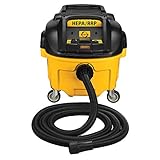
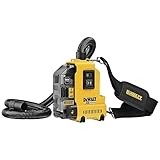

Choose by the tool, not the wheel kit
Check the tool’s dust port before shopping. Small sanders and routers commonly use ports around 1¼ to 2½ inches. Many benchtop machines use a 4-inch port, and some planers and jointers need more airflow than a small shop vacuum can supply. Reducers and adapters can connect different sizes, but a small hose can restrict airflow and clog when chips are large.
Airflow figures are not directly comparable across every product: advertised cubic feet per minute (CFM) may be measured under different conditions, and the connected hose, filter, and machine all affect what reaches the tool. As a rough selection guide, a shop vacuum or extractor suits many small-port tools; a collector advertised in the several-hundred-CFM range is a more appropriate starting point for a single 4-inch-port machine. For a specific planer or jointer, follow its dust-collection requirements rather than relying on a generic rule.
| Collector type | Best fit | Trade-off |
|---|---|---|
| Shop vacuum or extractor | Handheld tools and small ports | Easy to move, but often a poor match for large chip loads |
| Portable single-stage collector | One stationary machine at a time | Good chip capacity; filters and bags need regular attention |
| Two-stage collector | Frequent use with chip-producing machines | Separates more debris before the filter, but costs more and takes up more room |
For stationary tools, start with a portable collector
A portable single-stage unit is the usual compromise for moving among machines with 4-inch ports. Look for a stable base, locking casters, a filter that is easy to clean, and a bag or drum that can be emptied without wrestling the whole machine. A portable single-stage dust collector with a 4-inch inlet is a sensible search category if one machine runs at a time.
Do not assume that a large-looking motor guarantees adequate collection. A long, narrow, corrugated hose, several tight bends, or a restrictive adapter can cut performance. Keep the run short and smooth, and use the largest hose the tool’s port allows. A collector that works well on a bandsaw may still struggle with a planer throwing a heavy stream of chips.
For machines used in quick succession, buy enough hose and a simple blast gate for each machine, then close the gates on tools that are not running. This avoids repeatedly moving the collector, but it is not the same as a properly balanced duct system. With one collector and several open branches, airflow is divided and may be inadequate at every tool.
When a shop vacuum is enough
If your work is mostly sanding, routing, and cleanup through small ports, a shop vacuum or dust extractor can be easier to store and reposition than a larger collector. It is also a cheaper option when use is occasional and the connected tool produces modest amounts of dust. A tool-activated dust extractor with a fine-dust filter is worth considering for this kind of work.
Its limitation is airflow through a large opening. A vacuum may pull strongly at a small nozzle but fail to capture chips across a wide 4-inch machine port. Fine-dust filtration matters, too: a bag that catches chips is not automatically suitable for fine dust. Check the filter rating and whether compatible bags are available before buying. Avoid running a vacuum without the correct filter or collection bag; fine dust can pass through the machine and back into the shop.
Check filtration, capacity, and handling
Filter area and maintenance affect real performance. A filter that loads quickly loses airflow, so look for a cleaning method you will actually use—manual paddles, a removable cartridge, or another accessible system. If you work with fine dust, choose filtration suited to the material and task; a basic fabric bag may capture larger debris without containing the finest particles. Wear a suitable respirator when emptying bags or cleaning filters, and do it outdoors if practical.
Bag capacity is a trade-off. A small bag keeps the collector compact but fills quickly with planer chips. An oversized drum can be awkward to move when full. Empty it before debris reaches the filter or blocks the inlet, and secure the bag so it cannot leak around the rim. Check the cost and availability of replacement bags as well as the purchase price; an inexpensive collector can become less attractive if its consumables are hard to find.
Make moving it safe and useful
Casters help only if the collector stays put during use. Lock them, place the unit on a level floor, and keep the hose out of walkways where it can catch a foot or pull a machine’s connection loose. A long hose makes it easier to reach distant tools but adds resistance and is more likely to kink. A short hose improves handling and airflow but means more frequent repositioning.
Plan for electrical load and noise. Check the collector’s current draw against the circuit and the tools sharing it; starting a collector and a high-draw machine on the same circuit can trip a breaker. If the collector is loud enough to discourage use, place it as far from the operator as the hose run reasonably allows, without creating a trip hazard or choking airflow.
A practical buying decision
For one 4-inch-port machine at a time, choose a portable collector sized to that machine’s requirements. For several small-port tools, a shop vacuum or extractor is often cheaper and less cumbersome. Choose a two-stage unit when you routinely generate large quantities of chips, want less debris reaching the main filter, or run a more involved duct setup—not simply because “two-stage” sounds more powerful.
Before ordering, verify the inlet size, included hose and adapters, filter type, replacement-bag availability, and the tool manufacturer’s dust-collection guidance. Those checks prevent common disappointments: a hose that does not fit, a collector that clogs under chip load, or fine dust escaping from a setup bought for convenience rather than filtration.