What's inside
As an Amazon Associate I earn from qualifying purchases. This post may contain affiliate links at no extra cost to you.
A dust collector’s filter is the part that determines what happens to the fine dust that makes it past the impeller and into the collector. A coarse bag may catch chips and larger particles while letting much finer dust back into the shop. Upgrading can reduce that recirculation, but no filter makes a leaky or undersized collection system safe by itself.
As an Amazon Associate we earn from qualifying purchases at no extra cost to you.
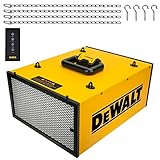


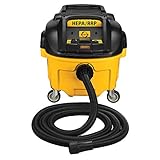
What the filter rating means
Filter ratings are not always stated in comparable ways. A label such as “1 micron” is useful only if the maker explains the test method and whether the rating is nominal or absolute. Nominal ratings describe typical performance; they do not guarantee that every particle larger than the stated size is captured. Look for a published efficiency or test standard where available, and treat vague micron claims cautiously.
For a typical single-stage shop collector, a pleated cartridge filter is often the most practical upgrade from a basic felt or woven bag. Pleats provide more surface area in a compact space, which can help maintain airflow as dust accumulates. A high-efficiency cartridge is not a substitute for source capture: a hood that misses the dust will still leave it airborne.
Filter types compared
| Filter type | Best fit | Trade-off |
|---|---|---|
| Coarse collection bag | Budget collectors handling chips and larger debris | Usually poor at retaining fine dust; dust can escape through the fabric. |
| Fine-fiber or felt bag | Owners who want a simple replacement on a compatible collector | Performance varies by fabric and rating; less surface area than many cartridges. |
| Pleated cartridge | General-purpose collector upgrades and frequent woodworking | Costs more, needs compatible mounting, and can clog if cleaning is neglected. |
| HEPA after-filter | Additional filtration after a suitable collector or separator | Adds restriction and expense; must be sealed correctly to help. |
Choose a filter that fits the collector
Start with the collector’s make, model, inlet and filter-mount dimensions. Check the filter’s diameter, height, attachment style, gasket position, and cleaning mechanism. A filter that nearly fits is not a bargain: air takes the path of least resistance, and a gap around the rim can send dusty air around the media. Inspect the gasket and clamp rather than relying on a snug-looking fit.
Then check the collector’s airflow requirements. A finer or denser filter can add resistance, especially as it loads with dust. If airflow falls, a table-saw hood or planer port may stop capturing effectively even though the filter itself is doing its job. Compare the replacement with the collector manufacturer’s recommendations, and avoid assuming that a more restrictive filter automatically improves the whole system.
For many hobby shops, a compatible pleated dust-collector cartridge filter is the sensible middle ground. A replacement felt bag can still be fine if the collector is used occasionally, the work is mostly rough cutting, and the dust is captured well at the tool. Spend the difference where the dust exposure is highest, not just because a product has a smaller micron number on its label.
When an after-filter helps
An after-filter sits downstream of the main collector and catches some of the remaining fine particles. It can be useful when a collector’s primary filter is not highly efficient or when you want another filtration stage. It cannot fix leaks upstream, poor hood design, or a filter that is installed backward or poorly sealed. Check that the added filter is rated for the airflow and can be mounted without blocking the outlet.
A HEPA-rated dust-collector after-filter is a more expensive add-on, and it is not necessary for every small shop. Consider one if fine dust remains a concern after improving the main filter and sealing leaks. Remember that “HEPA” applies to the filter media under specified test conditions; the assembled system still needs airtight connections to deliver that performance.
Maintenance and common failure modes
As dust cakes onto a filter, airflow drops. If the collector sounds normal but a machine’s pickup becomes weak, check for a full bag or drum, clogged filter, blocked hose, and closed blast gate before buying a new filter. Use the collector’s cleaning paddle or other built-in mechanism as directed. Avoid beating a cartridge against the floor or blasting it with high-pressure air; that can damage media, drive dust deeper into pleats, or release a cloud into the shop.
Empty the collection bin before it reaches the filter or inlet, and check for dust around seams after running the system. A ring of dust near a clamp often points to a bad seal. Replace torn media, crushed pleats, or a hardened gasket. Do not wash a filter unless its maker explicitly says it is washable; moisture can deform media and leave it clogged when it dries.
Wear a well-fitting respirator appropriate to the dust during filter cleaning and bin changes, and do that work outdoors when practical. Fine wood dust is a health hazard, and some species can cause sensitization. Good filtration reduces what returns to the room, but it does not remove the need for close-fitting hoods, short hoses, adequate airflow, and sensible cleanup.
A practical buying checklist
Before ordering, confirm compatibility, published filtration information, replacement availability, and the cleaning method. If the collector has a small motor or long, narrow duct runs, prioritize maintaining airflow rather than chasing the finest advertised rating. If you run a planer or jointer that produces heavy chips, make sure the filter’s surface area and collector capacity suit that load; a filter upgrade cannot compensate for an undersized machine.
For a low-cost setup used now and then, a compatible fine-fiber bag and careful source capture can be adequate. For regular sanding, routing, or work with dust-producing machines, a well-sealed cartridge is usually a more useful upgrade. Add an after-filter only when the rest of the system is in good order and you have a clear reason for the extra stage.