What's inside
As an Amazon Associate I earn from qualifying purchases. This post may contain affiliate links at no extra cost to you.
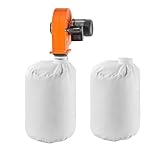
When a dust collector shares a wall with a saw, planer, or workbench, its location affects more than floor space. Poor placement can make duct runs longer, block access to filters, send noise toward the work area, or put the collector in the way of lumber and sheet goods. The best spot is usually close enough to the machines for practical ducting, but not so close that servicing or moving stock becomes awkward.
As an Amazon Associate we earn from qualifying purchases at no extra cost to you.


Start with the duct route
Sketch the collector, machines, doors, and lumber path before drilling holes or mounting pipe. Favor a short main run with gentle bends. Every elbow and long stretch of small duct adds resistance, which can leave a machine with weak pickup even when the collector’s advertised airflow looks adequate.
For a typical one- or two-machine hobby shop, a 4-inch branch is common for many portable tools. Larger machines may need a 5- or 6-inch connection, and a small collector may not maintain useful airflow through a long, undersized network. Check the machine and collector manuals rather than assuming that an adapter makes every connection work. A reducer can connect different diameters, but it cannot make a collector move more air.
Keeping the collector on the same wall as the main machines can simplify the layout. Avoid placing it at the far end of a wall just because that corner looks empty if doing so adds several elbows or forces a long horizontal run. A more direct route is often worth giving up a little open floor space.
Leave room for service and emptying
Measure the collector with its largest practical service task in mind: removing the bag, opening the canister, changing a filter, or rolling out a drum. Leave enough clearance to do that without moving a bench or disconnecting ductwork. As a starting point, allow about 18 to 24 inches of access on the service side, then check the actual unit dimensions and instructions. A collector tucked tightly between a wall and a cabinet may fit on installation day but become a nuisance every time the bag fills.
Keep the intake and exhaust openings unobstructed. Do not push a collector into a corner where a filter is pressed against the wall or the exhaust blows directly into a pile of offcuts. If the collector has a clean-air outlet, keep it directed away from the operator’s breathing zone and from areas where fine dust settles back onto tools.
On a shared wall, wall-mounted duct or hose reels can keep the floor clear, but they should not block filter access or collide with the collector when it is serviced. For a simple setup, a short flexible hose may be cheaper and easier than permanent duct. It is a reasonable choice for one machine used at a time; it becomes less convenient when several tools need regular connections.
Compare practical placement options
| Placement | Works well when | Main trade-off |
|---|---|---|
| Beside the main machine | The duct run is short and the unit is easy to reach | Can crowd the operator or block long stock |
| At the end of the shared wall | There is clear filter and bag access | A longer run may reduce pickup performance |
| Behind a partition or in a nearby enclosure | Noise is a major concern and the space is ventilated appropriately | Access and heat management need planning |
| On a mobile base | Machines move or the shop layout changes often | Hoses and cords need managing each time it moves |
Control noise without choking airflow
A shared wall can send motor noise and vibration straight into a work area. A rubber isolation pad or a purpose-made vibration mat under the collector may reduce rattling, especially on a hard floor. Make sure the base remains stable and that the collector cannot roll or tip when a hose is pulled.
A cabinet or enclosure can reduce noise, but do not seal a collector into a small box. Motors need cooling, filters need service access, and the enclosure can trap dust if joints are poor. Follow the manufacturer’s clearance and ventilation requirements. If those requirements are unclear, leaving the unit open with vibration isolation is safer than improvising a tight cabinet.
When the lower-cost option is a flexible hose instead of fixed pipe, keep it as short and straight as practical. Long corrugated hose tends to create more resistance than smooth duct and can sag into walkways. Fixed duct makes more sense when the same machines stay in the same places and get used frequently.
Choose duct and hose for the layout
For permanent runs, smooth metal duct is durable and less prone to damage than thin plastic. Use fittings sized for the collector and machine, and limit sharp turns. A practical system often uses a main trunk with short branches rather than one long, narrow hose serving every tool. Gates let you close unused branches, but they only help if they seal reasonably well and are easy to reach.
If you are buying components, compare duct diameter, fitting availability, and the space each option needs before ordering. Metal dust-collection duct fittings suit a fixed layout; flexible dust-collector hose is often a cheaper choice for a single movable connection. Avoid buying a pile of fittings before confirming the route and the machine ports.
Mind electrical and fire safety
Place the collector where its plug and switch remain accessible, and route the cord so it cannot be snagged by stock or become a trip hazard. Do not bury an extension cord behind the unit or run it under a mat. If the motor trips a breaker, do not solve it by repeatedly resetting the breaker; check the collector manual and have an electrician assess the circuit if needed.
Wood dust is combustible. Keep the collector and duct away from heaters, open flames, and sparks from grinding or metalwork. A household shop vacuum and a woodworking dust collector are not automatically suitable for combustible metal dust. Clean the area around the unit, including behind it, where fine dust can accumulate unnoticed.
Test before making it permanent
Place the collector temporarily, connect the most demanding machine, and check pickup at the hood while the machine is running. Watch for hose collapse, a gate that leaks, or chips collecting at a bend. Also walk the full length of your largest board or sheet and confirm that it clears the collector, hose, and controls. Fixing a placement mistake before mounting duct is inexpensive; moving a loaded collector and rebuilding the run is not.
If you need help measuring a tight layout, 4-inch blast gates can make branches easier to isolate, while a rubber vibration-isolation pad may help with floor-borne rattling. Neither fixes an undersized collector or an obstructed filter. Put the collector where it can breathe, be emptied, and serve the machines with the shortest sensible route.