What's inside
As an Amazon Associate I earn from qualifying purchases. This post may contain affiliate links at no extra cost to you.
Why use a workshop air cleaner after machine use
A dust collector attached to a table saw, planer, or sander captures much of the dust at the source. It does not capture everything. Fine particles escape through tool openings, loose connections, and the air around the workpiece, then stay airborne after the machine stops. A workshop air cleaner circulates room air through a filter to catch some of that suspended dust.
It is a second line of defense, not a substitute for a properly sized dust collector, close-fitting hoses, or a suitable respirator during dusty work. Air cleaners also do little for chips and heavy dust that have already settled; sweep or vacuum those up with a dust-rated vacuum rather than blowing them around with compressed air.
As an Amazon Associate we earn from qualifying purchases at no extra cost to you.

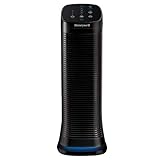


What to buy for your shop
For most small workshops, the practical choice is a ceiling- or wall-mounted unit with a replaceable particle filter, a prefilter, and at least two fan speeds. A prefilter catches larger dust and helps the main filter last longer. Look for a published airflow rating, filter replacement availability, and a control you can operate without climbing a ladder.
Airflow is usually stated in cubic feet per minute (CFM). Treat the number as a guide, not a guarantee: ratings may be measured without loaded filters, and placement, room shape, and obstructions affect actual circulation. A unit that is too small may take a long time to clean the room. A very powerful unit can be noisy, disturb settled dust, or cost more than a compact shop needs.
Compare ceiling-mount workshop air filtration systems by airflow, filter availability, noise, and mounting requirements—not by the largest number on the box alone.
Compare the main options
| Option | Best fit | Trade-off |
|---|---|---|
| Ceiling-mounted air cleaner | Small or medium shop with a fixed machine area | Good room circulation, but requires secure overhead mounting and may be hard to service |
| Wall-mounted unit | Shops with limited floor space or low ceilings | Easy to keep clear of benches, though shelves and walls can block airflow |
| Portable filtered unit | Shared work areas or occasional use in different locations | Flexible, but takes floor space and can be in the way |
| DIY box-fan filter | Low-cost supplemental filtration in a small shop | Cheap and simple, but airflow, sealing, noise, and filter performance vary |
Size and place it for the room
Estimate the shop’s volume by multiplying length, width, and ceiling height. A 20-by-20-foot shop with an 8-foot ceiling contains 3,200 cubic feet. A unit rated at 800 CFM would theoretically move that volume in four minutes, but real mixing takes longer. Furniture, machines, dirty filters, and air that follows an easy path back to the intake all reduce effective cleaning.
Mount the cleaner where it can draw air from the work area without being blocked by a beam, tall cabinet, or stacked lumber. Avoid aiming its exhaust directly at an open dust pile or across a workbench where it could stir up settled fines. If you have a long or divided shop, one central unit may leave dead zones; a smaller unit near the dusty area can work better than a larger unit in the wrong spot.
Check the manufacturer’s mounting instructions and the ceiling structure before installation. A loaded unit is heavy, and drywall alone is not a safe anchor. Leave enough clearance to open the filter cover and change filters without dismantling nearby storage.
Filter maintenance and use
Run the cleaner while you work and leave it on afterward. A practical starting point is 30 to 60 minutes after a dusty session, then adjust based on room size, machine use, and visible dust. The unit cannot make a room safe immediately, and clear-looking air does not mean fine particles are gone.
Inspect the prefilter often at first. If it is visibly coated, clean or replace it as directed; a clogged prefilter reduces airflow and makes the main filter work harder. Replace the main filter according to the maker’s instructions or when airflow drops noticeably. Do not wash a filter unless it is specifically labeled washable. A damaged seal can let dust bypass the filter entirely, so check that replacement filters fit snugly and the housing closes properly.
For a small shop on a tight budget, a properly assembled box-fan filter setup can be a reasonable supplement. Use a fan and filter arrangement designed to work together, seal gaps so air cannot bypass the filter, and secure the assembly against vibration. It is not equivalent to a tested commercial unit, and an improvised setup may have weaker airflow or be louder than expected.
Common buying mistakes
Do not buy an air cleaner to compensate for poor source capture. If a planer or sander leaves a visible cloud, first check the dust collector’s airflow, hose diameter, leaks, and tool port. A room cleaner takes time to remove escaped dust; it does not keep that dust out of your breathing zone as effectively as capture at the machine.
Do not assume a HEPA label, high CFM figure, or washable filter tells the whole story. Check what the rating applies to, whether replacement filters are available, and how the unit performs as filters load. Also consider noise: a machine that is unpleasant to run may get switched off, defeating the point. If you work in a garage connected to living space, control dust at the tool, keep the door between spaces closed, and avoid drawing dusty shop air into the house.
For routine woodworking, choose a unit you can mount securely, maintain without hassle, and afford to keep supplied with filters. In a compact shop, a modest cleaner used consistently can be more useful than a high-capacity unit left off or neglected.