3 Best Floor Standing Band Saws for Garages (November 2026)
Floor standing band saws for garage workshops compared on resaw height, throat, motor power and dust ports, with setup and safety checks before buying.
Floor standing band saws for garage workshops compared on resaw height, throat, motor power and dust ports, with setup and safety checks before buying.
As an Amazon Associate I earn from qualifying purchases. This post may contain affiliate links at no extra cost to you.
The jump from a benchtop band saw to a floor standing model is really a decision about resaw height and stability. A 14-inch floor saw stands on its own stand, puts a cast iron table at working height, and holds a long blade that can slice a wide board into bookmatched panels, work a benchtop saw simply cannot attempt. The trade is permanent floor space in a garage that may also hold a car, bikes and storage.
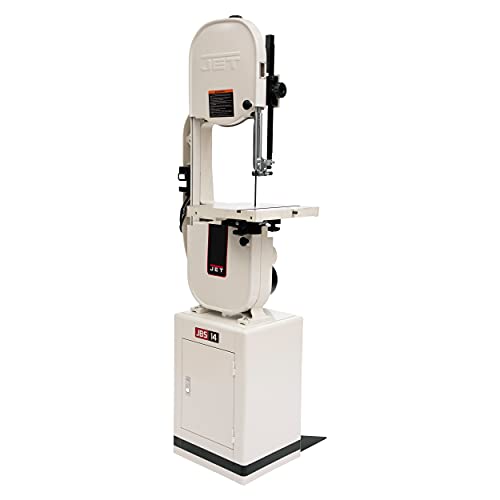
This guide is for garage woodworkers ready to give a saw its own footprint. All three picks are 14-inch floor standing models chosen from their Amazon listings: two modern steel-frame resaw machines from JET and RIKON with 13 inches of cutting height, and JET’s cast iron Deluxe Pro, which builds its 12-inch capacity into the frame without a riser block.
Quick Picks
As an Amazon Associate we earn from qualifying purchases.
1-1/4 HP, 12-inch cutting height, stand and saw blade included
How to Choose
Resaw Height Decides What the Saw Can Become
Cutting height is the first number to compare, because it caps every future project. A saw with about 6 inches of height resaws ordinary boards but cannot split a wide panel blank in one pass. The listings here offer 12 to more than 13 inches, which covers bookmatching, shop-sawn veneer and slicing thick turning blanks. Match the number to the widest stock you genuinely plan to resaw, and remember the blade matters too: a tall capacity is wasted without a wide, low-tooth-count resaw blade, which on some models is sold separately, so read the included components list before ordering.
Throat, Table and Frame Decide Everyday Handling
Throat capacity, the distance from blade to frame, sets how wide a piece you can swing through a curve, and all three saws here sit around 13-1/2 inches. The table is where work actually rests: cast iron surfaces in the 15-inch class and up stay flat and damp vibration, and a trunnion that tilts smoothly and locks hard matters every time you cut bevels. Frame construction splits the field. Welded steel frames give the tall resaw designs their rigidity, while a traditional cast iron frame carries mass that soaks up vibration. Neither is automatically better; both beat a saw that flexes under blade tension.
Power, Speeds and the Circuit Behind Them
Motors here run from 1-1/4 to 1-3/4 HP, all dual voltage 115/230V designs. Resawing dense hardwood is where the stronger motors earn their place, holding blade speed instead of bogging mid-cut. Two-speed drive, offered on the RIKON and the Deluxe Pro, lets you slow the blade for very dense stock or non-wood materials the listing allows. Check your garage circuit before the saw arrives: these are heavy machines that want a circuit sized to the listing’s requirements, and a saw that trips a shared garage breaker every time the dust collector starts will frustrate you out of using either tool.
Guards, Guides and Safe Blade Changes
Set the upper guide post so the blade guard sits just above the workpiece before every cut; exposed blade above the stock is blade that can catch fingers during a slip. Learn the guide system on paper before you buy, because guides you understand get adjusted, and guides you avoid get left loose. Unplug the saw before every blade change and wear gloves handling a new blade, which arrives coiled and springs open with real force. Keep a push stick or push block at the saw for narrow rips and resaw offcuts, and let the blade stop fully before reaching in to clear a cutoff.
Garage shops built around resawing wide stock, veneer and bookmatched panels.
Watch out for
Budget for a blade before the saw arrives, since none is included, and confirm the current listing’s offers, because availability on this model has varied between sellers.
The JWBS-14SFX is the resaw-first pick. Its listing claims more than 13 inches of resaw capacity, a 360 square inch cast iron table, and dual 4-inch dust ports, a combination aimed at slicing wide boards all afternoon without the cut line disappearing under dust. The 1-3/4 HP motor and tubular steel welded frame suit a garage shop that treats the band saw as its primary resawing station. Read the included components carefully: the stand, fence and resaw fence are in the box, but the blade is sold separately, so your first blade choice is part of the purchase decision.
RIKON Power Tools 10-326 14″ Deluxe Bandsaw
Runner-Up
RIKON Power Tools 10-326 14″ Deluxe Bandsaw
Best for: Woodworkers who swap blades and setups frequently and want adjustments without tools.
Woodworkers who swap blades and setups frequently and want adjustments without tools.
Watch out for
Plan a careful first setup session; the fence and table need squaring out of the crate, and blade width tops out below the widest resaw blades some rivals accept, so check the listing’s blade range against the blades you intend to run.
The RIKON 10-326 competes on setup speed. Its listing highlights spring-loaded, tool-less blade guides, a quick-adjust rip fence and a quick-lock table trunnion, three systems aimed at the woodworker who changes blades and angles often and hates hunting for hex keys. Capacity matches the JET at 13 inches of resaw with a slightly wider 13-5/8 inch throat, and the two blade speeds, 1,445 and 2,950 FPM, add flexibility the single-speed JET does not offer. An enclosed stand is included, and the 4-inch dust port sits in the lower wheel housing where most chips collect.
Buyers who want tall resaw capacity in a cast iron saw that includes a blade and stand.
Watch out for
The 1-1/4 HP motor is a step down from the other two picks, so heavy resawing in dense hardwood will call for a slower feed rate; confirm the included blade’s width and tooth pattern suit your first projects.
The Deluxe Pro takes the older cast iron route to tall capacity: instead of a riser block, its redesigned frame builds in 12 inches of cutting height, with a retractable blade guard that travels the full range. The 1-1/4 HP motor is the smallest here, but the two blade speeds of 1,500 and 3,000 SFPM and the upper and lower ball bearing guides keep it a capable general-purpose saw. Its listing also includes a saw blade alongside the machine and stand, which makes it the only pick that can cut the day it is assembled, once setup checks are done.
Which One Fits Your Situation
Resawing Is the Whole Point of the Purchase
Choose the JET JWBS-14SFX. More than 13 inches of capacity, the largest table here and dual dust ports make it the saw for splitting wide boards into panels and veneer as a weekly habit. Its 1-3/4 HP motor has the headroom for a wide resaw blade in hardwood. Just remember the blade is a separate purchase, and pick it with the same care as the saw itself, because the pair works as one system.
You Change Blades and Angles Constantly
Choose the RIKON 10-326. If your work alternates between tight curves with a narrow blade and straight resaw cuts with a wide one, tool-less guides and a quick-lock trunnion turn a ten-minute setup chore into a one-minute habit, which means you will actually do it. The two speeds broaden the materials you can cut, and the enclosed stand keeps the footprint tidy against a garage wall between sessions.
You Want One Complete Crate and a Cast Iron Feel
Choose the JET JWBS-14DXPRO. It is the pick for the buyer who values a heavy cast iron frame, built-in 12-inch capacity without riser-block assembly, and a box that includes the stand and a blade. The smaller motor asks for patience on the deepest hardwood resaws, but for mixed furniture work, curves and moderate resawing it covers the ground without an accessory list before the first cut.
Your Garage Shares Space and Power With Everything Else
Choose carefully between the RIKON and the Deluxe Pro, and measure first. All three saws weigh around 250 to 275 pounds and stand about six feet tall, so each claims a permanent parking spot. The two-speed models let you slow the blade for awkward cuts, and every pick here is dual voltage, which helps if you later add a 230V circuit. What none of them does is fold away, so confirm the footprint against your floor plan before ordering.
Common Mistakes
Ordering a tall-capacity saw and forgetting that the blade may be sold separately, delaying the first cut by days.
Judging a band saw by throat size alone and ignoring resaw height, which limits the projects that matter most.
Leaving the blade guard parked high above the stock instead of lowering it to just clear the workpiece.
Changing blades with the saw still plugged in, or handling a coiled blade without gloves.
Feeding narrow resaw offcuts with bare hands instead of a push stick or push block.
Frequently Asked Questions
How much garage space does a floor standing band saw really need?
Plan for the saw’s footprint, roughly two feet by two and a half feet for these 14-inch models, plus working room: long boards need infeed and outfeed space, and resawing a full-length plank can claim most of a single garage bay. The machines stand about 75 inches tall and weigh 250 to 275 pounds, so owners give the saw a permanent wall spot rather than moving it each session.
Is 13 inches of resaw capacity worth it for a home shop?
It is worth it if you resaw wide boards for panels, bookmatching or veneer, because a 12-inch board can be split in a single pass with the fence set once. If your work is boxes, toys and curved parts from thinner stock, 12 inches on the Deluxe Pro or even less would cover you. Buy capacity for the projects on your actual list, not for one you might attempt once.
Can these saws run on a normal household circuit?
The listings rate all three motors for 115/230V single-phase power, so they can run on household voltage as delivered or be rewired for 230V by a qualified person following the manual. What matters in practice is the circuit: a 1-3/4 HP saw starting under load alongside a dust collector can strain a shared garage circuit. Check the amperage in the listing and give the saw a suitable circuit.
What should I check first when the saw arrives?
Finish setup before the first cut: confirm the table is square to the blade, set blade tension and tracking, adjust the guides and thrust bearings for the blade, and lower the guard to working height. Make test cuts in scrap and check for drift, adjusting the fence rather than forcing the workpiece. That first hour decides whether the saw cuts straight for years or argues with every board.
J
JD's Woodworks Editorial Team
We compare specs, warranty terms, long-term owner feedback and street pricing before anything earns a spot. Rankings are never paid.
Affiliate disclosure. As an Amazon Associate we earn from qualifying purchases at no extra cost to you. Prices accurate as of the date shown.
Compare the best two stage dust collectors for weekend woodworking projects, with cyclone separation, canister filters, drum sizes and inlet specs compared.
Compare the best cyclone dust collectors for experienced DIY woodworkers, with airflow, canister filtration, remote control and drum capacity compared.
Compare the best wall mounted dust collectors for weekend woodworking projects, with CFM, bag size and filtration from each listing to size one machine right.
Stationary thickness planers that ship with a dust hood, compared for home shops: 15, 20 and 22 inch helical floor models with listing specs and ASINs.
True open-sided thickness planers are rare on Amazon. See the verified open-end pick with a dust connection, its listing specs, safety notes and buying checks.
Compare the best cyclone dust collectors for weekend woodworking projects, with airflow, drum size and filter ratings from each listing to pick the right fit.