
What's inside
- Best benchtop band saws at a glance
- Our picks by small-shop situation
- Head-to-head: footprint, mounting, and storage
- How much bench space do you really need?
- Mounting and storage options that work
- Vibration: what causes it and how to reduce it
- Ownership costs and maintenance realities
- Bottom line
- Related Guides
As an Amazon Associate I earn from qualifying purchases. This post may contain affiliate links at no extra cost to you.
The best bench top band saw for a small shop is the WEN 3962 when cutting height and price matter most, the RIKON 10-305 when low vibration and a compact footprint matter most, and a 9-inch saw such as the CRAFTSMAN 9-Inch when storage and occasional use come before resaw capacity.
For a space-constrained workshop, the headline wheel diameter is less important than four practical questions: how much bench space the saw consumes, whether it can be mounted or stored easily, how tall a workpiece it can cut, and how much vibration reaches the blade and table. The comparison below uses commonly published specifications; exact dimensions can vary slightly by production run and included accessories.
As an Amazon Associate we earn from qualifying purchases at no extra cost to you.
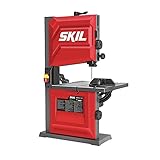

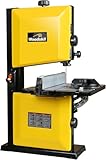

Best benchtop band saws at a glance
| Model | Wheel size | Published cutting height | Table size | Approx. weight | Best fit |
|---|---|---|---|---|---|
| WEN 3962 | 10 in | Up to 6 in | 14 x 12 in | About 73 lb | Maximum capacity on a moderate budget |
| RIKON 10-305 | 10 in | About 4-5/8 in | 13-3/4 x 12-1/2 in | About 68 lb | Compact furniture and joinery work |
| CRAFTSMAN 9-Inch | 9 in | About 3-5/8 in | About 12 x 12 in | About 45 lb | Beginners and occasional cutting |
| POWERTEC BS900 | 9 in | About 3-5/8 in | About 12 x 12 in | About 40–45 lb | Light-duty work where easy storage matters |
Those capacities describe the distance between the table and the upper blade guide, not the thickness of every material the machine can safely cut. A dull blade, slow motor, poor tension, or a dense hardwood can reduce useful capacity well below the published maximum.
Our picks by small-shop situation
| Your situation | Best choice | Why | What you give up |
|---|---|---|---|
| Very limited bench and storage space | CRAFTSMAN 9-Inch or POWERTEC BS900 | Smaller tables, lower weight, and easier shelf or cabinet storage | Less cutting height and less reserve for thick hardwood |
| Frequent curves in 1–3 inch stock | RIKON 10-305 | Sturdy 10-inch platform with a reputation for a controlled, low-vibration layout | Not the best choice for tall resawing |
| Occasional resawing of boards up to roughly 5 inches | WEN 3962 | Highest published cutting height among these compact options | Its larger table and cabinet take more room; setup quality matters greatly |
| Beginner learning basic curves and small joinery cuts | CRAFTSMAN 9-Inch | Light, comparatively simple, and less intimidating to move | Limited growth potential as projects become larger |
Head-to-head: footprint, mounting, and storage
RIKON 10-305: the compact stability choice
The RIKON 10-305 is a sensible choice when the saw will stay on a bench and vibration is more annoying than an extra few inches of footprint. Its roughly 68-pound weight helps it stay planted, while the 10-inch wheel size provides useful capacity without moving into floor-saw territory.
Its practical limitation is cutting height. A published capacity of approximately 4-5/8 inches is plenty for small boxes, curved furniture parts, templates, and many bowl blanks, but it is not a dedicated thick-board resaw machine. The saw is easiest to live with when installed permanently on a rigid bench or a low stand rather than lifted in and out after every cut.
WEN 3962: the capacity choice
The WEN 3962 offers a roughly 6-inch cutting height, making it the strongest option here for occasional resawing. Its larger table is also helpful when guiding wide panels or supporting a temporary fence. The trade-off is shop real estate: allow room not only for the machine but also for the stock entering and leaving the blade.
Because a taller cut puts more load on the blade and guides, the WEN benefits from careful setup. Use a sharp, appropriately wide blade for straight cuts, reduce feed pressure in hardwood, and do not treat the maximum opening as a promise of effortless resawing.
9-inch saws: the storage choices
The CRAFTSMAN 9-Inch and POWERTEC BS900-style machines are easier to put away. Their lower weight makes a lift-off bench arrangement realistic, and a dedicated shelf or rolling cart can keep them available without consuming the main workbench.
That convenience comes with less mass and less cutting height. A lightweight saw can move when the workpiece is pushed too aggressively. A bolted mounting plate, rubber isolation feet, or a low plywood torsion-box stand can make a bigger difference than a small motor-power increase.
How much bench space do you really need?
Do not size the installation by the machine footprint alone. A useful planning formula is:
Required bench length = saw depth + longest workpiece projection + clearance for your hands.
For example, if a saw is about 18 inches deep and you routinely cut 24-inch blanks, a 30-inch-deep bench may be barely adequate once the workpiece is centered. A 36-inch-deep surface gives safer support and reduces the temptation to twist the stock around the blade.
Also leave access to the blade covers, tension knob, tracking adjustment, and dust outlet. A machine that fits tightly between two shelves may technically operate, yet become frustrating because changing a blade requires moving it first.
Mounting and storage options that work
- Permanent bench mounting: Best for the RIKON 10-305 or WEN 3962. Through-bolts and washers reduce movement more reliably than short wood screws.
- Removable mounting board: Bolt the saw to a plywood base, then clamp or screw that base to the bench when needed. Mark its position so alignment is repeatable.
- Low rolling cart: Use locking casters and keep the platform low. A tall, narrow cart raises the center of gravity and can amplify vibration.
- Lift-off shelf: Suitable for lighter 9-inch machines. Add a front stop and side cleats so the saw cannot slide during a cut.
- Fold-away arrangement: Only use this if the folded storage position protects the blade and power cord. Never store heavy material on the saw table.
For any movable setup, lock the casters before cutting and check that the table remains level. A soft rubber pad can reduce transmitted vibration, but an overly soft pad may let the machine rock. Stability comes first; isolation is a secondary refinement.
Vibration: what causes it and how to reduce it
Vibration usually comes from a combination of an unbalanced wheel or tire, a damaged or incorrectly installed blade, loose hardware, an uneven stand, or excessive feed pressure. A heavier saw generally has an advantage, but weight alone does not guarantee a smooth cut.
- Unplug the saw and inspect both tires for cracks, lumps, or debris.
- Install the blade so its teeth point in the correct direction and the blade tracks centrally on the wheel.
- Set blade tension according to the manufacturer’s guidance rather than tightening until the frame feels stressed.
- Set the thrust and side guides close to the blade without touching it while the blade is stationary.
- Run the saw briefly without stock and listen for rhythmic knocking or wheel wobble.
- Make a test cut in scrap before attempting the project part.
A narrow blade is useful for tight curves but is more prone to wandering if pushed hard. A wider blade tracks better for straight cuts and resawing but needs a larger minimum curve. Choosing the blade for the cut often improves results more than changing machines.
Ownership costs and maintenance realities
Blades are the main consumable. A small saw may use a blade in the roughly 59- to 72-inch range depending on the model, so confirm the required length before buying replacements. Keep at least one narrow-tooth blade for curves and one wider blade for straight cuts or resawing.
What wears first is commonly the blade, followed by tires, guide bearings, and drive belts on machines that use them. Tires can glaze or develop a groove; guide bearings can become noisy or develop play. These parts are usually replaceable, but availability and cost should be checked before choosing a lesser-known model.
Clean accumulated dust from the lower cabinet, wheel channels, table slot, and guide area. Fine dust can interfere with tracking and restrict the dust port. Avoid directing high-pressure air into sealed bearings or electrical components. A brush and shop vacuum are safer routine tools.
Bottom line
Choose the WEN 3962 if your priority is the greatest cutting height in a compact machine. Choose the RIKON 10-305 if the saw will live on a bench and you want a more substantial, stable platform for everyday small-shop work. Choose a CRAFTSMAN 9-Inch or POWERTEC BS900 if the saw must be moved or stored frequently and your projects stay below about 3-1/2 inches thick.
Whichever model fits, reserve more room for stock support than the catalog footprint suggests, mount the saw on a rigid surface, and budget for the correct replacement blades. Those decisions have more effect on a small-shop band saw’s usefulness than a modest difference in motor amperage.