
What's inside
- Best Band Saws Under $500: The Short Answer
- Compare the Candidates by Capacity and Ownership Cost
- Which Saw Fits Your Work?
- What the $500 Budget Really Buys
- When the Best Band Saw Under $500 Is a Used 14-Inch Saw
- Setup and Ownership: What Wears and What Goes Wrong
- What About the Best Bandsaw Under $1,000?
- Related Guides
As an Amazon Associate I earn from qualifying purchases. This post may contain affiliate links at no extra cost to you.
Best Band Saws Under $500: The Short Answer
The best band saw under $500 for most small-shop users is a 14-inch benchtop model if you need a larger throat and resaw room; choose a compact 9- or 10-inch saw if you mainly cut curves and need to save money and floor space. The key trade-off is capacity versus the cost of making the saw cut accurately: the purchase price may leave little room for a better blade, a stand, or dust collection.
Prices and configurations vary by retailer and change over time, so treat the ranges below as general U.S. market estimates, not guaranteed current quotes. Check the manual for the exact throat, cutting height, blade size, and included equipment before buying; similarly named versions can differ.
As an Amazon Associate we earn from qualifying purchases at no extra cost to you.

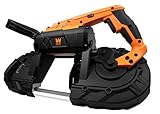
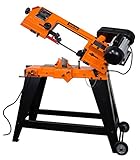

Compare the Candidates by Capacity and Ownership Cost
| Saw | Typical price range | Approx. capacity | Typical blade length | Best fit | Likely extra cost |
|---|---|---|---|---|---|
| WEN 3939T, 9-inch benchtop | $150–$220 | 9-inch throat; about 3-5/8-inch cutting height | 59-1/2 inches | Small curves and occasional hobby work | $20–$40 for a task-appropriate replacement blade; possibly a bench or clamping solution |
| WEN 3959T, 9-inch benchtop | $180–$260 | 9-inch throat; about 3-1/2-inch cutting height | 62 inches | Compact general-purpose cutting with a tilting table | $20–$40 for a better blade; stand or bench space if needed |
| Rikon 10-3061, 10-inch benchtop | $350–$500 | 10-inch throat; about 5-inch cutting height | 70-1/2 inches | A more capable compact saw for curves and modest resawing | $25–$50 for a suitable blade; dust collection hookup or stand may add cost |
| WEN 3962, 10-inch with stand | $300–$450 | 10-inch throat; about 6-inch cutting height | 72 inches | Buyers who want a stand and more height in one package | $25–$50 for a better blade; verify whether the included stand suits your floor and workflow |
| Entry-level 14-inch bandsaw, such as a used or sale-priced model | Often near or above $500 new; used prices vary | Commonly around 13-1/2-inch throat and 6-inch cutting height, model-dependent | Model-dependent, commonly around 93-1/2 inches | Wider stock and future upgrades, if the machine is sound | Potentially substantial: blade, tires, guides, stand, or motor work |
Capacities are manufacturer-listed figures for representative configurations; confirm them for the exact model and revision. Throat capacity is the distance from blade to frame, not the width of cut a saw can make with a fence. Cutting height is the maximum stock thickness that fits under the upper guide, not a promise that the saw can resaw it cleanly.
Which Saw Fits Your Work?
- For occasional curves, small parts, and tight space: Choose the WEN 3939T or 3959T. Their low cost leaves room in the budget for a sharper blade and a stable bench. They are not substitutes for a large saw when you need to resaw wide boards.
- For a compact saw you will use regularly: Compare the Rikon 10-3061 with the WEN 3962. The Rikon’s smaller footprint may appeal if you already have a sturdy bench; the WEN includes a stand and lists more cutting height. Favor the package that fits your space and the stock you actually cut, rather than choosing on height alone.
- For resawing or wider stock: Look for a 14-inch machine with a meaningful resaw capacity and a rigid frame. Under $500, that may mean buying used, waiting for a sale, or accepting setup and upgrade work. A used 14-inch saw with worn tires or a weak motor can cost more to make useful than a new 10-inch saw.
- For a beginner: A 9- or 10-inch saw is easier to budget for, but expect to learn blade tracking, tensioning, and guide adjustment. A larger saw is not automatically easier to set up, and a fence does not fix a dull or poorly tracked blade.
What the $500 Budget Really Buys
Think of the budget as the complete cost of a working setup, not just the sticker price. A realistic calculation for a $400 saw might be: $400 purchase + $35 replacement blade + $30 dust hose or adapter = $465. If the saw requires a $90 stand, the total becomes $555 before tax. In that case, a less expensive benchtop model may be the more capable purchase overall because it leaves money for the parts that affect cut quality.
Blade choice matters. A narrow blade turns tighter curves, while a wider blade is generally easier to keep straight for resawing. Tooth count and geometry should match the material and cut: a fine-tooth blade can leave a cleaner edge in thin stock but may cut slowly in thick material. Buy the exact length specified for the saw, and do not assume a blade advertised as “universal” will fit.
Also check what is included: a fence, miter gauge, stand, work light, and dust port are useful only if they meet your needs. A basic fence can help with straight cuts, but its alignment and rigidity matter. A dust port is not dust collection by itself; confirm its diameter and whether your extractor can connect to it.
When the Best Band Saw Under $500 Is a Used 14-Inch Saw
If your main goal is resawing, a used 14-inch bandsaw can offer more headroom than a new compact saw. Inspect it before purchase, and price any repairs into the deal. With the machine unplugged, check that the wheels turn freely, the tires are not cracked or separating, and the table is not badly rusted or distorted. Ask whether the motor runs and whether the original guards, guide parts, and tension mechanism are present. Missing parts can be difficult or uneconomical to replace.
Do not count on a riser block or other modification to deliver extra capacity unless the manufacturer supports that configuration and the saw has the necessary blade length, frame strength, and guide arrangement. A taller cut can also put more demand on the blade and motor. For many buyers, a sound 10-inch saw is a better choice than a larger machine that needs repairs.
Setup and Ownership: What Wears and What Goes Wrong
Blades are the regular consumable. Tires and guide bearings can wear too, especially on a saw that has been stored with the blade under tension or used heavily. Keep dust from building up around the wheels and lower cabinet, and inspect the tires and blade before each session. Unplug the saw before opening covers or adjusting internal components.
For a clean setup, first install a blade of the correct length and width. Set tension according to the saw’s manual rather than relying blindly on a tension scale, then track the blade on the wheels as instructed. Adjust thrust and side guides so they support the blade without pinching it, and check the table and fence alignment. Make a test cut in scrap before cutting project stock. Common trouble comes from a dull blade, excessive feed pressure, guides set too far from the work, or trying to force a tight curve that the blade cannot follow.
Dust collection and a stable work surface are ownership essentials, not cosmetic upgrades. A small saw that moves on a light bench can be frustrating to use; secure it properly and leave enough room to handle long stock. If you regularly cut hardwood, thick material, or production quantities, a sub-$500 saw may be an entry point rather than a long-term solution.
What About the Best Bandsaw Under $1,000?
For shoppers searching for the best bandsaw under $1,000, the comparison changes: that budget can open up new 14-inch models and potentially larger capacities, depending on the market and configuration. If your work includes frequent resawing, compare those machines before spending nearly $500 on a compact saw. Look at throat and cutting height, motor, frame design, blade availability, guide system, and the cost of a suitable stand and blade—not capacity claims alone.
For a strict $500 ceiling, choose a compact model for curves and small stock, or a carefully inspected used 14-inch saw for resawing. The most capable choice is the one that handles your regular cuts with enough money left for the correct blade, a stable installation, and dust management.