
What's inside
As an Amazon Associate I earn from qualifying purchases. This post may contain affiliate links at no extra cost to you.
Best Inexpensive Band Saws for DIY Woodworking
The best inexpensive band saw for most DIY woodworkers is a 14-inch cast-iron-frame saw with a 1-horsepower motor, a 6-inch resaw capacity, and standard 93½-inch blades—provided you budget for setup and possibly a better blade. If you have limited space or mainly cut small parts, a 9- or 10-inch bench-top saw costs less and is easier to store, but its capacity and cut stability are noticeably more limited.
Among established options, the Rikon 10-305 is a compact choice for smaller projects, while the WEN 3962 is a value-oriented 10-inch saw with a stand and two speeds. For a step up in capacity and a more substantial platform, compare 14-inch models such as the Grizzly G0555LX and Rikon 10-326. Prices vary by configuration and retailer, so treat the ranges below as broad U.S. market guides, not quotes.
As an Amazon Associate we earn from qualifying purchases at no extra cost to you.

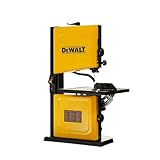


Shortlist by workshop and workload
| Saw | Typical configuration | Useful capacity | Approximate price range | Best fit |
|---|---|---|---|---|
| Rikon 10-305 | 10-inch benchtop, ½-hp motor, single speed | 4⅝-inch cutting height; 9⅝-inch throat | $300–$450 | Small shops, curves, and occasional stock cutting |
| WEN 3962 | 10-inch saw, 3.5-amp motor, two speeds; stand included in common configurations | 6-inch cutting height; 9¾-inch throat | $250–$400 | Budget-minded beginners wanting extra height over many 10-inch saws |
| Grizzly G0555LX | 14-inch cast-iron saw, 1-hp motor, stand | 6-inch cutting height; 13½-inch throat | $700–$950 | Regular furniture parts and general-purpose shop work |
| Rikon 10-326 | 14-inch cast-iron saw, 1¾-hp motor, two speeds | 13-inch cutting height with included riser; 13-inch throat | $1,000–$1,400 | Frequent resawing and buyers who want more capacity without moving to a large industrial saw |
Specifications are based on manufacturers’ published configurations; included stands, risers, and motor ratings can differ by model version or package. Confirm the exact model suffix and manual before buying. Cutting height is the maximum stock thickness the saw can accept, not a guarantee that it will resaw that thickness cleanly.
Choose by the work you actually do
- Occasional curves and small parts: Choose a 10-inch saw if your stock fits its capacity and you have a solid bench. The Rikon 10-305 favors a simpler, compact setup; the WEN 3962 offers more cutting height on paper and a two-speed arrangement. Either may need careful setup and a suitable blade to improve tracking and cut quality.
- Furniture parts, brackets, and routine shop use: A 14-inch saw is the more useful long-term purchase. Its larger wheels and heavier frame generally provide a steadier platform than a small benchtop machine, and a 13½-inch throat gives more room for broad workpieces.
- Resawing boards into thinner stock: Prioritize frame rigidity, motor power, blade width, and a fence that can be adjusted parallel to the blade’s drift. A 1-hp 14-inch saw can handle modest resaw work with an appropriate blade and patient feed rate; it is not equivalent to a larger, heavier resaw machine. The Rikon 10-326 has more published capacity, but its higher cost and footprint make sense mainly if that capacity will be used.
- Very tight budget or limited storage: Buy a 10-inch model only if its capacity matches your projects. If you expect to cut thick hardwood often, saving for a 14-inch saw is usually better value than spending on a small saw and replacing it soon.
What separates a bargain from a frustrating saw
Cut quality depends on setup as well as the machine
A saw that drifts or leaves a rough edge may need a sharp, suitable blade—not simply more motor power. For general curves, a narrower blade turns more readily; for straight cuts and resawing, a wider blade is usually easier to control. Match the blade’s width and tooth pattern to both the saw’s manual and the cut. A wide blade cannot make a tight curve, and a fine-tooth blade can cut slowly in thick stock.
Before judging a saw, check that the table is square to the blade, the blade tracks consistently on the wheels, and the guides support it without pinching. Use the manual’s tension procedure rather than relying on a tension scale alone. A fence that adjusts for drift is particularly useful for resawing; a basic fence may need shimming or careful alignment.
Adjustment effort is part of the price
Entry-level machines can require more initial tuning than higher-priced saws. Expect to spend time setting blade tension, tracking, thrust bearings, side guides, table alignment, and fence position. Read the manual before assembly: guide settings differ between models, and guides set too close can wear the blade or create heat. A stable bench or properly secured stand also matters; vibration can make an otherwise serviceable saw harder to control.
Budget for the blade and essential setup
A practical ownership budget includes more than the saw. A general-purpose replacement blade may cost roughly $20–$50; a quality resaw blade can cost more. A basic square, accurate ruler, and dust-collection hose may already be in your shop, but allow another $30–$100 if you need small setup supplies or a suitable connection. Optional upgrades such as a better fence or replacement guides can add $50–$200 or more, depending on the saw.
For example, a $350 benchtop saw plus a $35 blade and $40 in setup supplies totals about $425 before tax. If your projects require repeated resawing, compare that total with the cost of a 14-inch machine rather than assuming a series of upgrades will turn a small saw into one.
Durability and ownership: what to watch
On an inexpensive saw, blades are the routine consumable. Dull or damaged teeth, poor storage, excess tension, and twisting a blade through a cut shorten blade life. Guides and tires can also wear or need replacement over time; check the manual for approved parts and service procedures. Keep the table and wheel housings clear of sawdust, especially after cutting resinous wood, and inspect the cord, blade, and guards before use.
Common sources of poor results are feeding too quickly, forcing a blade around a curve that is too tight, and using a narrow blade for a long straight resaw cut. Let the blade do the work, make relief cuts when needed, and disconnect power before changing a blade or reaching into the wheel area. Dust collection helps keep the machine and shop cleaner, but it does not replace eye protection or safe operating practices.
For a first saw, the WEN 3962 or Rikon 10-305 is a reasonable direction when compact size and low initial cost matter more than thick-stock capacity. For a more versatile DIY shop, the Grizzly G0555LX is a stronger all-around class of machine to compare. Choose the Rikon 10-326 when its extra resaw capacity is a real requirement, not just an appealing specification.