What's inside
As an Amazon Associate I earn from qualifying purchases. This post may contain affiliate links at no extra cost to you.
Short answer: choose for the wall and the tools
Pegboard is the cheaper, space-efficient choice for light hand tools on a flat, well-supported wall. French cleats make more sense when you want to move tool holders around, carry heavier loads, or build storage that can grow with the shop. Neither system is automatically strong: the wall, fasteners, panel thickness, and holder design determine whether a loaded rack stays put.
For most home shops, a small pegboard section above the bench and cleats on a separate wall is a practical combination. Before buying either, count the tools, check their weight, and locate the wall studs. A tidy layout that fits the work you actually do beats a large storage wall that becomes a jumble.
As an Amazon Associate we earn from qualifying purchases at no extra cost to you.


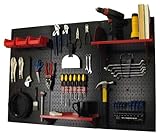

How the two systems work
Pegboard is a perforated panel with holes that accept hooks, bins, and other accessories. Common boards have 1-inch hole spacing; the holes may be round or slotted, and accessories must match. Standard thin hardboard is inexpensive but can sag or tear around holes under concentrated loads. Thicker wood or metal panels cost more and generally tolerate heavier use.
A French cleat is a pair of matching beveled strips: one is fastened to the wall with its bevel facing up and out, and the other is attached to a tool rack with the bevel facing down and in. The rack hangs on the wall strip. You can make cleats from plywood, or buy a compatible rail system. A cleat can run horizontally, but the wall rail still needs solid attachment to studs or appropriate masonry anchors.
Pegboard vs French cleat
| Factor | Pegboard | French cleat |
|---|---|---|
| Initial cost | Usually lower for a small, simple layout | More material and build time; purchased rails add cost |
| Best fit | Light tools, small parts, dense layouts | Tool racks, heavier items, changing layouts |
| Rearranging | Easy if accessories fit and holes remain sound | Easy to move whole holders along the rail |
| Wall access | Needs enough space behind the panel for hooks | Holders project from the wall; no clearance behind them |
| Main failure risk | Hooks pull through or panel bows | Rail, holder, or wall fasteners fail under load |
| Installation | Panel must be supported and spaced off the wall | Rails must be level and securely fastened |
Load, fasteners, and common failures
Do not rely on a panel’s advertised load capacity without checking how it was mounted. A pegboard panel screwed only into drywall can pull loose as tools are lifted and replaced. For a typical 4-by-8-foot sheet, plan support at the edges and across the panel, following the maker’s guidance; a frame or vertical furring strips also create the clearance hooks need. Use washers where specified, and avoid overloading one small area with a heavy wrench set.
Cleats spread a rack’s load along a rail, but that advantage disappears if the rail is attached only to drywall. Fasten into studs where possible, ideally at each stud the rail crosses, using screws long enough to pass through the rail and wall finish and engage the framing. If the wall has masonry, use anchors rated for that material and load. A rack that tilts, lifts off the cleat, or makes the rail creak is a warning to unload and inspect it.
For either system, account for leverage. A long holder loaded with tools pulls harder on its upper fasteners than a compact holder carrying the same weight close to the wall. Keep frequently used tools within easy reach, put heavier items lower, and leave clearance for handles and for opening drawers or cabinet doors. Keep sharp edges and heavy striking tools away from head-height storage.
When pegboard is the better buy
Choose pegboard when most items are light: screwdrivers, pliers, tape measures, small clamps, and frequently used accessories. It is a good fit for a compact bench wall where you want to see what is missing at a glance. It is also easy to change one hook at a time as the tool lineup shifts.
Check the panel thickness and accessory compatibility before ordering. If a hook slips out when you lift a tool, use a locking pegboard hook or a retaining clip rather than bending the hook and hoping it holds. If you want a ready-made metal option, compare metal pegboard panels for workshops; they cost more than basic hardboard but resist hole wear better. For a light-duty setup, inexpensive hardboard is fine when it is properly framed and not overloaded.
When French cleats are worth the work
Choose cleats if you expect to rearrange whole holders, want to build custom racks, or need to store heavier hand-tool groups. A rack for chisels, for example, can be lifted off and moved without removing every tool. Cleats also work well when one wall needs to serve different tasks over time.
Cutting your own cleats from plywood is often economical if you have a table saw or track saw and can make a consistent bevel. A 45-degree bevel is common, but a clean, matching cut matters more than a particular brand or kit. If you prefer a modular rail, look for wall-mounted French cleat rail systems. Verify rail capacity, compatible holder dimensions, and how the rail is meant to attach to your wall; a convenient kit does not remove the need for sound framing.
Plan the layout before you buy
Lay tools out on the bench or floor in roughly the space available, leaving room to grasp each handle. Mark the wall studs and measure around outlets, lights, and cabinets. Put the tools used every day near the bench, but keep the area above the work surface clear enough that a dropped tool cannot land on a project or your hands.
For a mixed collection, use pegboard for light, small tools and a cleat rail for removable racks or heavier groups. Buy enough accessories for the tools you own, not every possible attachment. If a layout later changes, add a short cleat section or move a few hooks rather than replacing an entire wall. The right system is the one that keeps tools secure, visible, and easy to put back.