4 Best AC TIG Welders for Aluminum (November 2026)
Find the best ac tig welder for aluminum: AC balance, pulse control, foot pedals, and dual-voltage picks for clean, strong welds on aluminum and alloys.
Find the best ac tig welder for aluminum: AC balance, pulse control, foot pedals, and dual-voltage picks for clean, strong welds on aluminum and alloys.
As an Amazon Associate I earn from qualifying purchases. This post may contain affiliate links at no extra cost to you.
Aluminum needs alternating current TIG welding because the AC cycle breaks through the oxide layer that forms on aluminum within minutes of exposure to air. A DC-only TIG machine cannot clean that layer, so the weld puddle stays dirty and weak. An AC TIG welder alternates between cleaning and penetration, and the balance control lets you favor one side or the other depending on how oxidized the metal is. Pulse control adds a further refinement, letting the puddle cool between pulses on thin sheet. That control separates a clean bead from a dirty one.
This guide covers four AC TIG welders built for aluminum, from a compact 200-amp inverter to a 225-amp machine with a full pulse and balance range. The welders below were chosen using the names and specifications printed on their Amazon listings. Compare the amperage, the AC balance range, and the included torch and pedal before choosing, since the accessories decide the real outlay.
Quick Picks
As an Amazon Associate we earn from qualifying purchases
Product
Best for
Key spec from title
PrimeWeld TIG225X
Widest AC control range
225 amp AC DC welder
YESWELDER TIG-200P ACDC
Compact 200-amp inverter
200 amp AC DC welder
Weldpro TIG200ACDCGD
Five-process flexibility
200 amp AC DC welder
AHP AlphaTIG 225Xi
High pulse frequency
225 amp AC DC welder
How to Choose
AC balance and cleaning action
AC balance sets how much of each cycle cleans the oxide layer and how much drives penetration into the metal. More cleaning suits old or oxidized aluminum, while more penetration suits clean new plate and thicker sections. Look for a machine with an adjustable balance range, since a fixed balance forces a compromise on every joint. A wider balance range suits shops that weld both castings and fresh sheet in the same week. Check the range on the listing before buying. The PrimeWeld in this guide lists a balance range of 30 to 70 percent, which covers most aluminum work. Set the balance toward cleaning for castings and toward penetration for fresh sheet.
Amperage and aluminum thickness
Amperage decides the aluminum thickness you can weld, and aluminum needs more current than steel of the same thickness because it conducts heat away so fast. A 200-amp machine handles sheet and plate up to about quarter-inch thick, while a 225-amp machine reaches thicker sections with more headroom. Dual-voltage machines give full output on 240 volts and reduced output on 120 volts, so check the 120-volt figure if your shop only has standard outlets. A foot pedal matters here, since it lets you taper the current as the aluminum heats up. A pedal helps here, since aluminum heats fast and the current needs tapering as the part warms.
Pulse control for thin sheet
Pulse alternates the current between a high peak and a low background, which lets thin aluminum cool between pulses instead of warping or burning through. Look for adjustable pulse frequency and pulse time, since slow pulses suit thicker material and fast pulses suit thin sheet and cosmetic beads. The AHP in this guide lists pulse frequency up to 200 hertz, which gives fine control on thin work. Pulse also helps on outside corners and edges, where heat builds fast and the metal wants to melt away. Fast pulses also steady the arc on edges where the metal thins toward the joint.
Torch, pedal, and safety setup
A TIG torch with a flexible head reaches awkward joints, and a foot pedal gives the current control that makes aluminum welding manageable. Check that the torch, pedal, ground clamp, and argon regulator come in the box, since buying them separately adds up. Weld in a ventilated area, wear a proper TIG helmet and gloves, and keep the argon flow steady so the puddle stays shielded. Check the duty cycle on long beads, and let the torch cool before handling it after a weld. A clean tungsten and steady gas flow keep the arc stable on every start.
The PrimeWeld TIG225X is the most adjustable machine in this guide, with 225 amps of AC and DC TIG plus stick capability in one inverter. The AC balance runs from 30 to 70 percent, the AC frequency reaches 40 to 200 hertz, and the pulse range covers 0.5 to 10 hertz, which gives fine control over cleaning, penetration, and heat input on aluminum. It ships with a CK17 flex-head torch and a metal foot pedal, and it runs on 110 or 220 volts. It suits welders who want full control over the aluminum puddle without stepping up to an industrial machine. Its balance range suits both castings and fresh sheet.
The YESWELDER TIG-200P ACDC packs 200 amps of AC and DC TIG with pulse into a compact dual-voltage inverter, with a large LED display that keeps the settings visible while welding. It handles aluminum and other non-ferrous metals in AC mode, switches to DC for steel and stainless, and adds stick capability for outdoor repairs. The 13-foot WP-26 torch and the included 220-volt to 110-volt adapter make setup flexible across shops. It suits buyers who want a capable aluminum TIG welder in a smaller, lighter package. The compact size suits a crowded bench with limited space. Its display keeps settings visible while the hood is down.
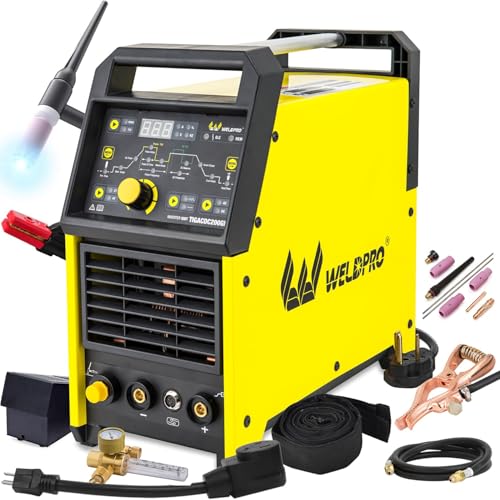
The Weldpro TIG200ACDCGD combines five welding modes in one 200-amp dual-voltage machine, covering high-frequency AC TIG, DC TIG, AC pulse TIG, DC pulse TIG, and stick. A CK17 torch and foot pedal come in the box, and the large LED screen shows the welding parameters clearly. The fully adjustable AC balance, frequency, and pulse settings suit thin and thick aluminum as well as magnesium and other non-ferrous metals. It suits welders who want one machine for aluminum TIG plus the flexibility to weld steel and stainless the same day. The five modes cover most jobs without a second machine.
The AHP AlphaTIG 225Xi delivers 225 amps of AC and DC TIG with a pulse frequency range up to 200 hertz, which gives the finest control on thin aluminum in this guide. It produces a full 225 amps on 240 volts and 150 amps on 120 volts, and the rear water-cooler outlet supports a cooler for long sessions. The box includes an SR26 torch, a Nova foot pedal, an argon regulator, and a 110-volt plug adapter. It suits welders who work thin aluminum often and want fast pulse control for clean, narrow beads. The fast pulse range gives fine control on thin sections.
Which One Fits Your Situation
First aluminum TIG machine
Choose the YESWELDER TIG-200P ACDC or the Weldpro TIG200ACDCGD when aluminum TIG is new to you and the budget favors a compact 200-amp inverter. Both give AC balance and pulse control, run on either voltage, and include the torch and pedal needed to start. Practice on clean scrap aluminum first, since the puddle behaves differently from steel, and learn the balance control before welding a real project.
Maximum control for varied aluminum
Pick the PrimeWeld TIG225X when the work ranges from thin sheet to thicker plate and castings, and the balance and frequency controls earn their keep. The 225-amp output and the wide AC frequency range handle oxidized castings as well as fresh sheet, and the CK17 flex torch reaches joints a straight torch cannot. Set the balance toward cleaning for old metal and toward penetration for new plate.
Thin sheet and cosmetic beads
Buy the AHP AlphaTIG 225Xi when thin aluminum dominates the work and the beads need to look clean. The fast pulse frequency keeps heat input low on edges and corners, and the foot pedal lets you taper the current as the part heats up. Keep the tungsten sharp and the argon flow steady, since thin aluminum shows every inconsistency in the bead.
Common Mistakes
Welding aluminum with DC polarity, which cannot clean the oxide layer.
Skipping the stainless brush and acetone wipe, so the puddle stays contaminated.
Setting AC balance toward penetration on oxidized metal, which leaves dirty welds.
Using too little amperage, so the puddle never forms and the filler balls up.
Letting the tungsten touch the puddle, which contaminates the weld and the electrode.
Frequently Asked Questions
Why does aluminum need AC TIG welding?
Aluminum forms an oxide layer within minutes of exposure to air, and that layer melts at a higher temperature than the aluminum beneath it. The AC cycle reverses polarity part of each cycle, and that cleaning half breaks up the oxide so the puddle forms on clean metal. DC welding cannot clean the layer, so the weld stays dirty and weak.
What does AC balance do on a TIG welder?
AC balance sets the share of each cycle spent cleaning the oxide versus penetrating the metal. More cleaning suits old, cast, or oxidized aluminum, while more penetration suits clean new sheet and thicker plate. Adjustable balance lets you match the setting to the metal in front of you instead of accepting a fixed compromise that suits neither case well.
Can I weld steel with an AC TIG welder?
Yes, switch the machine to DC mode for steel and stainless, since DC gives a stable arc and deep penetration on ferrous metals. The machines in this guide all run DC TIG and most add stick mode as well. Change the tungsten type for steel, and keep separate brushes for aluminum and steel so the metals never cross-contaminate.
Do I need a foot pedal for aluminum TIG?
A foot pedal is not strictly required, but it makes aluminum welding far easier because aluminum heats up fast and the puddle grows as the part warms. The pedal lets you taper the current down as the heat builds, which prevents burn-through on thin sections. All four machines in this guide include a foot pedal in the box.
J
JD's Woodworks Editorial Team
We compare specs, warranty terms, long-term owner feedback and street pricing before anything earns a spot. Rankings are never paid.
Affiliate disclosure. As an Amazon Associate we earn from qualifying purchases at no extra cost to you. Prices accurate as of the date shown.
Miter saw vs table saw: compare crosscuts, rip cuts, accuracy, space, and value to choose the right saw for your shop and your first woodworking projects.
Compare five solar portable generators for shops, campsites, and outages, covering battery size, output, solar charging, outlets, and what to check first.
The best portable CNC machines for small shops and shared spaces, compared by footprint, weight, work area, and setup. Compact benchtop picks for wood, acrylic, and soft metal.
Find the best Penn Industries dust collector on Amazon: the PSI Woodworking DC3XX blower and the DC725 tabletop unit, compared on airflow, pressure, and shop fit.
Compare five large stationary horizontal metal band saws for fabrication shops on cutting capacity, motor, power supply, blade speed, and mitering before buying.
Find the best mortising chisel bits for clean square mortises in this guide: hollow-chisel sets and singles compared by size, shank, steel, and machine fit.
Find the best drill press base for your shop. Compare rolling stands and mobile bases by capacity, footprint, casters, locking, and setup before you buy.
Find the best dewalt planer dw734 blades for your 12-1/2-inch thickness planer. Compare OEM and aftermarket 3-knife sets, steel types, and fit before you buy.


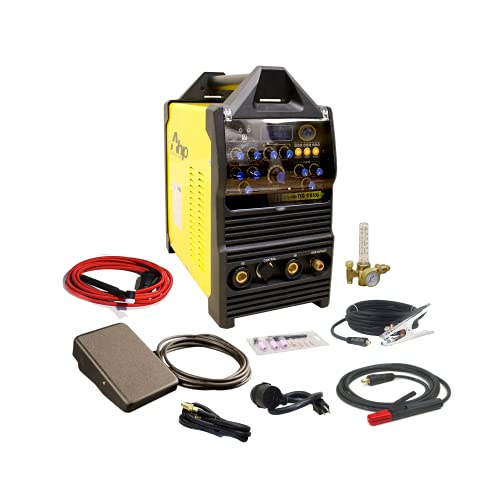 AHP AlphaTIG 225Xi AC DC TIG Welder









