Our Top Picks
What's inside
As an Amazon Associate I earn from qualifying purchases. This post may contain affiliate links at no extra cost to you.
Penn State Industries, sold under the PSI Woodworking name, has been supplying dust collection equipment to small woodworking shops for decades. The brand is best known among woodturners and small-shop woodworkers, and its collectors have a reputation for arriving with finer filter bags as standard equipment than many competing machines at the same size. The company sells most of its full-size collectors direct from its own store, which is why a search for Penn State dust collectors turns up far more models on the maker’s own site than on Amazon.
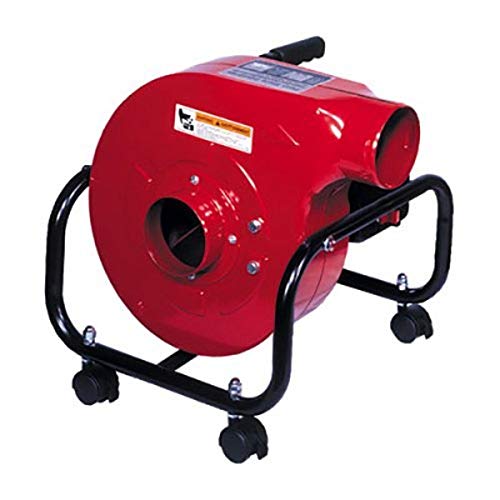
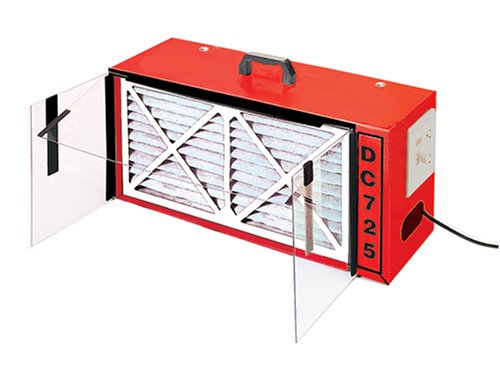
That direct-sales habit shapes this guide. Only two Penn State Industries dust collectors are listed on Amazon US with verifiable product pages: the DC3XX portable blower and the DC725 tabletop unit. Both are genuine Penn State machines, both are dust collectors in the ordinary sense, and both serve very different shops. This guide covers those two in depth, explains what each one does well, and explains which of the brand’s other well-known models you will not find on Amazon, so you do not waste time hunting for a listing that does not exist.
Disclosure: As an Amazon Associate, we earn from qualifying purchases.
At a glance
| Product | Airflow | Motor | Best for |
|---|---|---|---|
| PSI Woodworking DC3XX Portable Dust Collector Motor Blower | 850 CFM | 1.5 HP | A small shop that needs a portable blower for a hose run to one machine |
| PSI Woodworking DC725 Portable Tabletop Dust Collector | 725 CFM | Three variable-speed fans | Bench work such as carving, turning, and sanding at a tabletop station |
Why Penn State collectors are different
Most dust collector brands build their reputation on one thing: moving the most air for the least money. Penn State built its reputation on a different combination. The company’s collectors were among the first in their class to ship with fine filter bags as standard equipment, and the brand’s long-running models earned magazine awards for single-stage collection in small shops. The DC1BXL, the brand’s classic one-horsepower collector, was named a best buy by a woodworking magazine for its performance on a single machine at a time, and the DC2V2 earned a good performance rating in a magazine test of portable collectors, with its one-micron filter bag singled out as an efficient standard fitting.
That history matters because it tells you what to expect from the two Amazon-listed models. Neither is the biggest or the most powerful collector in its class. Both are built around the same idea: a compact machine that does a focused job well, with filtration and portability given as much weight as raw airflow. The DC3XX is a blower unit built to push air through a hose to a machine. The DC725 is a bench unit built to catch fine dust where it is made, at the workbench. If your shop needs a full ducted system serving several large machines at once, neither of these is the right answer, and the brand’s larger direct-sale models, such as the two-horsepower DC2000B, are the ones to look at on the maker’s own store.
How to choose
Start with the job, not the headline number. A dust collector’s airflow figure is measured with no hose and no filter resistance, so the number on the listing is always higher than the airflow at the tool. What matters is whether the machine suits the work you actually do. A tabletop unit that catches fine sanding dust at the bench is useless on a planer, and a blower that moves a large volume of air through a hose is wasted on a carving station. Match the machine to the dust source first, then compare numbers.
Understand what a blower-only unit is. The DC3XX is sold as a motor blower, which means it ships without a collection bag and without a hose. That is not a defect, and it is not a missing part. It is how the unit is designed to be sold: the buyer adds the bag and hose that fit the shop, or connects the blower into an existing duct run. If you want a collector that works the day the box arrives, a blower-only unit is the wrong choice. If you already own bags and hose, or you want to build a custom setup around a strong blower, it is a sensible one.
Read static pressure alongside airflow. Airflow tells you how much air moves. Static pressure tells you how hard the machine can push that air through resistance, and resistance is what a real shop adds: hose length, bends, reducers, and a filter. The DC3XX publishes a maximum static pressure figure of 8.5 inches of water column, which is strong for a portable unit of its size and is the reason it holds up on longer hose runs. A collector with a bigger airflow figure and a weaker pressure figure can lose more of its airflow at the end of a long hose than a smaller machine with stronger pressure.
Weigh filtration against convenience. Fine dust is the dust that matters most for the air you breathe, and a finer filter catches more of it. But finer filtration adds resistance, which costs airflow, and fine filters need cleaning and replacement. The DC725 uses a flat filter panel rather than a bag, which suits fine bench dust and keeps the unit compact. The DC3XX leaves filtration to the bag you fit, so you choose the filtration grade yourself. Either way, keep the filter clean, because a loaded filter costs more suction than the difference between filter grades.
Check the power supply before you buy. The DC3XX is pre-wired for household current and comes with instructions to convert to the higher voltage, while the DC725 draws only a small total current across its three fans. Both will run on ordinary household current, but confirm the circuit where the machine will stand, and confirm the plug and voltage on the listing before ordering. A collector that trips a breaker every time it switches on is not a bargain at any airflow rating.
Plan the hose run, not just the machine. Short, straight, wide hose keeps pressure losses low. Every extra length of hose, every sharp bend, and every reducer takes a cut. The DC3XX is built for this reality, with a four-inch inlet and outlet and a pressure figure that holds up over distance. The DC725 needs no hose at all, because it sits on the bench where the dust is made. Either way, the machine is only half the system, and the hose or the bench position is the other half.
Top picks
PSI Woodworking DC3XX 1.5 HP Portable Dust Collector Motor Blower
ASIN: B01CU7DKTI
Key specs: 1.5 HP motor, 110/220V, pre-wired for 110V with instructions to convert to 220V; airflow up to 850 CFM; maximum static pressure 8.5 inches of water column; 9-inch steel impeller; 3,450 RPM; four-inch inlet and four-inch outlet; portable air-handler unit weighing 46 pounds; casters included; two-year warranty.
Best for: A small shop that needs a portable blower to serve one machine through a hose, or a shop building a custom collection setup around a strong blower. The 8.5-inch static pressure figure is the standout number here: it is what lets this unit push air through a longer hose run without fading at the tool. The 46-pound body and the included casters make it easy to roll to the machine in use, and the four-inch ports match standard dust hose and duct fittings. It also suits laser engraving and other work where a compact blower must move air away from a small work area.
Considerations: Bag and hose are not included, so budget for both unless you already own them, and confirm the bag fitting matches the outlet before ordering. This is a single-speed unit, so there is no low-speed setting for quiet work. The 850 CFM class is a single-machine class: it will serve a table saw, a band saw, or a small planer through a short four-inch hose, but it is not the machine for a ducted system serving several machines at once. The higher-voltage conversion is possible but not plug-and-play, so read the instructions before rewiring. Because this is a blower rather than a complete bag collector, first-time buyers should be clear about what is in the box: motor, blower housing, and casters, with the collection side left to the buyer.
PSI Woodworking DC725 Portable Tabletop Dust Collector
ASIN: B000REX1UU
Key specs: Three variable-speed fans delivering up to 725 CFM of combined airflow; total running draw of 1.29 amps; portable tabletop unit weighing 24 pounds; footprint of 23 inches by 8 inches and a height of 10.5 inches; clear polycarbonate top hood and side doors to direct airflow; filter panel measuring 2 inches by 10 inches by 20 inches, one filter included; two-year warranty.
Best for: Bench work where fine dust is made in one place: carving, sanding, turning small pieces, and detail work at a tabletop station. The three-fan array is the interesting part of this design. Instead of one large impeller, three smaller fans pull air through the filter, and each fan runs on its own variable-speed motor, so the airflow can be turned down for quiet work or up for heavy sanding. The total current draw is small, the unit is quiet enough to live with on a bench, and the adjustable hood and side doors let you aim the intake where the dust is coming from. At 24 pounds it moves easily from bench to bench.
Considerations: This is a bench unit, not a replacement for a bag-and-hose collector on a large machine. A tabletop collector with a flat filter panel is built for fine dust off small work, not for the bulk chips off a planer or a jointer, and the filter panel is thin and oddly sized, so replacements need to be the right part. Keep the filter clean and replace it on schedule, because a loaded panel costs airflow fast on a fan-array machine. The variable-speed control is a real advantage, but it also means the headline airflow figure only applies at full speed. If your main problem is chips from a planer, look at the blower above instead, and if your main problem is fine dust at the bench, this is the Penn State machine built for it.
Which one fits your shop
If the dust comes from a machine with a dust port and a hose, choose the PSI Woodworking DC3XX. It is the only Penn State blower on Amazon, its pressure figure holds up over a hose run, and it rolls to the machine in use.
If the dust comes from hand work at a bench, choose the PSI Woodworking DC725. It sits where the work happens, its three fans catch fine dust at the source, and it runs quietly enough to stay on while you work.
If neither of those descriptions matches your shop, the honest answer is that Penn State’s other collectors are worth a look on the maker’s own store rather than on Amazon. The classic one-horsepower DC1BXL, the 1.5-horsepower DC2V3, and the two-horsepower DC2000B are all real Penn State collectors with long track records, and none of them has an Amazon listing to link to. Buying direct is the only route for those models, and the maker’s store lists them with the bag and hose options included.
Penn State models you will not find on Amazon
A brand guide should say plainly which models are missing, because a missing model is not a bad model. The DC1BXL is the brand’s classic one-horsepower, 850 CFM collector with a five-inch inlet, and it was the magazine best buy in its class for single-machine work. The DC2V3, sold as the Dustroyer, is the 1.5-horsepower step up, rated at 1,250 CFM, and it is available with a one-micron canister filter. The DC2000B is the two-horsepower, 1,500 CFM machine with a 12-inch steel impeller and a maximum static pressure of 9.5 inches, available with a one-micron bag or a canister filter. The DC3-1M is the complete version of the portable DC3 blower, with a one-micron bag and zipper, rated at 850 CFM. None of these four has a verified Amazon listing, and they are sold through the maker’s own store. If your shop needs one of them, order direct and confirm the bag, hose, and voltage options at checkout.
The same honesty applies to the brand’s accessories. The Long Ranger remote switches, sold as the LR110-3 and LR220-3, are remote starter switches for dust collectors, not collectors themselves, and they do not belong in a roundup of dust collectors. The TSGUARD is an overhead table saw guard with a dust hose connection, not a dust collector either. A guide that padded its list with switches and guards would look fuller and be less useful, so this guide leaves them out.
FAQ
What does Penn Industries mean here?
Penn Industries is short for Penn State Industries, the Philadelphia woodworking supplier that sells under the PSI Woodworking brand. The two names refer to the same company. On Amazon the brand appears as PSI Woodworking, and the model numbers start with DC. If a listing says PSI Woodworking and the model number matches a Penn State catalog number, it is the same product.
Why are there only two picks in this guide?
Because only two Penn State dust collectors have verified Amazon listings. The brand sells most of its full-size collectors direct from its own store, and the classic models such as the DC1BXL, the DC2V3, and the DC2000B do not have Amazon product pages. A roundup that listed those models with links to other brands, or with invented product codes, would mislead the reader. Two honest picks are better than five picks where three of them cannot be bought from the store the links point to.
Is the DC3XX a complete dust collector?
It is a complete blower, not a complete bag collector. The motor, impeller, housing, and casters are in the box, and the bag and hose are not. That is how the maker sells it, and it suits buyers who already own a bag and hose or who are building a custom setup. If you want a collector that works the day it arrives, buy the bag and hose at the same time, and confirm the fittings match the four-inch ports.
Can the DC725 replace a bag collector on a planer?
No. The DC725 is a tabletop unit for fine dust at the bench. It has no hose connection to a planer port and no capacity for bulk chips. It is built for carving, sanding, and small turning work, where the dust is fine and the source is close to the filter. For a planer or a jointer, use a hose-connected collector such as the DC3XX with a bag, or one of the brand’s larger direct-sale models.
What voltage do Penn State collectors need?
It depends on the model. The DC3XX is pre-wired for household current and includes instructions to convert to the higher voltage. The DC725 draws only a small total current and runs on household current. The larger direct-sale models are often pre-wired for the higher voltage, so read the voltage, the amperage, and the circuit requirement on the listing before ordering, and confirm that your shop can supply them where the collector will stand.
Does a finer filter reduce suction?
Yes, a finer filter adds resistance, and added resistance costs airflow at the tool. A one-micron bag catches finer dust than a five-micron bag, and a pleated canister usually has far more surface area, which offsets some of the loss. Keep any filter clean, because a loaded filter costs more suction than the difference between filter grades, and replace a worn bag rather than running it until it tears.
Bottom line
Penn State Industries makes good dust collectors, and the two you can buy on Amazon cover two very different shops. The DC3XX is the portable blower for a hose run to one machine, with a strong pressure figure and a bag and hose left to the buyer. The DC725 is the quiet tabletop unit for fine dust at the bench, with three variable-speed fans and no hose at all. Match the machine to the dust source, confirm the bag and hose situation on the blower before ordering, and if your shop needs a bigger Penn State machine, order the classic models direct from the maker rather than hunting for an Amazon listing that does not exist.
Related guides
More from Amazon
Programs that pair well with the guide above. Offers and eligibility are set by Amazon and may change.
A free business account with business pricing and bulk-buying tools for work, shop or home office.
Create a business accountFree shipping on eligible items, Prime Video and more. Eligible new members can start with a free trial.
Start a Prime free trialAudiobooks and podcasts to listen to on the go. Eligible new members can start with a free trial.
Try Audible freeAd-free music streaming. Eligible new subscribers can start with a free trial.
Try Music Unlimited freeAs an Amazon Associate we earn from qualifying purchases.