5 Best Solar Portable Generators to Buy (November 2026)
Compare five solar portable generators for shops, campsites, and outages, covering battery size, output, solar charging, outlets, and what to check first.
Compare five solar portable generators for shops, campsites, and outages, covering battery size, output, solar charging, outlets, and what to check first.
As an Amazon Associate I earn from qualifying purchases. This post may contain affiliate links at no extra cost to you.
A solar portable generator pairs a rechargeable battery with an inverter and a solar input, so it can run tools, lights, and small appliances where no outlet exists and recharge from sunlight instead of fuel. The five models below all state solar charging in their listing wording, and they span a wide range of sizes, from a light 88Wh unit for phones and lights to a 2,048Wh station that can back up larger loads during an outage.
OUR TOP PICK
BROWEY 1600W Portable Power Station with Built-in Solar Panel
Every pick states its brand, its solar-generator form, and its key ratings literally in its listing, and every ASIN below carries a warning marker because it was corroborated indirectly and needs an Amazon API re-check before posting. Match the battery size and continuous output to the loads you actually run, and confirm the solar panel arrangement, since some listings include a panel and others leave it optional.
Quick Picks
As an Amazon Associate we earn from qualifying purchases.
Product
Best for
Key spec from title
BROWEY 1600W Portable Power Station
Built-in solar charging
1600W, 3200W peak
DaranEner 192Wh Portable Power Station
Light loads with a storage bag
300W, 600W surge
EF ECOFLOW DELTA 3 Max Portable Power Station
Large backup loads
2048Wh, 2400W
HOWEASY 88Wh Portable Power Station
Ultralight carry
120W, 240W peak
EnginStar 300W Solar Generator
Camping and road trips
296Wh, two 110V outlets
How to Choose
Start with watt-hours, not watts
Watt-hours measure how much energy the battery holds, and that number decides how long a load runs, while watts only describe how much power the inverter can deliver at one moment. A phone charge takes roughly 10 to 15 watt-hours, a laptop charge takes around 50 to 60, and a small camp fridge can draw 40 to 60 watts continuously, so a small 88Wh unit covers phones and lights for a weekend while a 2,048Wh station covers far larger loads. Add up each device’s wattage times the hours you will run it, then choose a battery with headroom above that total, because running a station to empty on every trip shortens its useful life.
Check continuous output and surge separately
Continuous output is the wattage the inverter sustains, and surge or peak output is the brief extra it supplies when a motor starts, so a tool that surges past the continuous rating can trip the unit even when its running draw looks fine. The listings below state both figures where the maker publishes them, and the gap between them matters most for fridges, compressors, and power tools with motors. Match the continuous rating to the largest load you will run steadily, and treat the surge figure as start-up headroom only, not as power you can draw all day.
Read the solar charging terms carefully
Some listings bundle a solar panel with the station, and others state that a panel is optional, which means the panel must be bought separately before any sunlight charging happens. The listing wording below shows which arrangement each model uses, and buyers should confirm the panel wattage and the solar input limit, since a small panel recharges a large battery slowly and a panel above the input limit wastes its extra output. Also confirm whether the station charges from a wall outlet and a car outlet as well, because a unit that only charges from solar leaves no backup path on cloudy days.
Match outlets, chemistry, and carry weight
Count the outlets the listing states, including AC outlets, USB ports, and DC outputs, and check that the mix fits the devices you actually carry, since an extra AC outlet matters more than a higher headline wattage for a shop with several small loads. Battery chemistry matters too: lithium iron phosphate batteries generally tolerate more charge cycles than conventional lithium-ion packs, and several listings below state LiFePO4 or LFP wording directly. Finally, weigh the station against how far it travels, because a 2,048Wh unit suits a fixed backup spot while an 88Wh unit suits a pack carried on foot.
The 5 Best Options
BROWEY 1600W Portable Power Station with Built-in Solar Panel
Top Pick
BROWEY 1600W Portable Power Station with Built-in Solar Panel
Best for: buyers who want solar charging built into the station itself.
The BROWEY is the built-in solar pick, stating a 1600W portable power station with a 3200W peak and a built-in solar panel in its listing wording. The built-in panel removes the separate-panel question that complicates other models, since solar charging is part of the unit itself rather than an add-on to buy later. The 1600W continuous rating covers a broad band of shop and household loads, while the 3200W peak gives start-up headroom for motors. Buyers who want the simplest solar arrangement, with no panel matching to work out, will find this the most direct option of the five.
DaranEner 192Wh Portable Power Station with Storage Bag
Runner-Up
DaranEner 192Wh Portable Power Station with Storage Bag
Best for: light loads on short trips and small backup jobs.
The DaranEner is the light-load pick, stating a 192Wh portable power station with 300W of continuous output, a 600W surge, and a storage bag in its listing wording. The lithium iron phosphate battery and the stated solar-generator form suit short trips and small backup jobs, and the two AC outlets plus 60W power delivery cover phones, lights, and small electronics without excess bulk. The included storage bag keeps the unit and its cables together in a vehicle or a shop cabinet. It is the pick for buyers whose loads stay small and who value a tidy, grab-and-go package over raw capacity.
EF ECOFLOW DELTA 3 Max Portable Power Station
EF ECOFLOW DELTA 3 Max Portable Power Station
Best for: large backup loads during outages at a fixed spot.
The EF ECOFLOW DELTA 3 Max is the large-backup pick, stating a 2048Wh lithium iron phosphate battery, 2400W of output, and 3400W of X-Boost output in its listing wording. The large battery and high continuous rating cover refrigerators, power tools, and several smaller loads at once during an outage, and the stated fast charging from 0 to 80 percent in 1.13 hours shortens the wait between uses. The solar-generator wording with an optional panel keeps sunlight charging available for buyers who add a panel. It is the pick for a fixed backup spot where capacity and output matter more than carry weight.
HOWEASY 88Wh Portable Power Station
HOWEASY 88Wh Portable Power Station
Best for: ultralight carry for phones, lights, and small electronics.
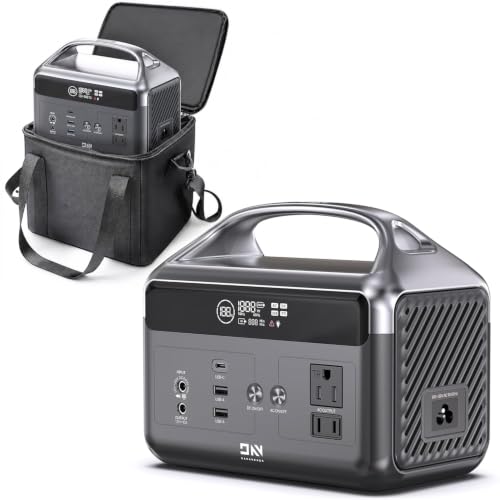
The HOWEASY is the ultralight pick, stating a portable power station with 120W of output, a 240W peak, and an 88Wh lithium battery in its listing wording. The 110V AC outlet plus DC, USB, and an LED light cover phones, small lights, and other light electronics, and the small battery keeps the unit easy to carry on foot for camping trips, hunting, and emergency kits. The solar-generator wording suits buyers who want sunlight charging for a light kit rather than a shop backup. It is the pick for buyers who count every ounce and whose loads stay within phone and light territory.
EnginStar 300W Solar Generator Portable Power Station
EnginStar 300W Solar Generator Portable Power Station
Best for: camping, road trips, RV use, and blackout kits.
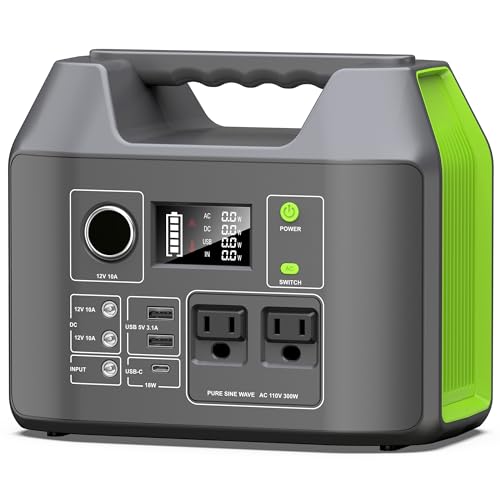
The EnginStar is the camping pick, stating a 300W solar generator portable power station with a 296Wh lithium battery and two 110V pure sine wave AC outlets in its listing wording. The two AC outlets run a pair of small devices at once, and the pure sine wave output suits sensitive electronics that rough waveforms can disturb. The stated 80000mAh figure describes the same battery in milliamp-hour terms, and the listing frames the unit for camping, road trips, RV use, and blackouts. It is the pick for buyers who want a mid-size station with two AC outlets for a campsite or a vehicle kit.
Which One Fits Your Situation
You need backup during a power outage
Choose the EF ECOFLOW DELTA 3 Max when the job is keeping essentials running through an outage, since its 2048Wh battery and 2400W output cover a refrigerator, lights, phones, and a laptop together. Keep it in a fixed spot near the loads it will serve, and add a solar panel if you want sunlight recharging between outages. The fast wall charging shortens recovery time, and the high surge headroom handles motor start-up from a fridge compressor without tripping the unit.
You camp or work away from outlets
Choose the EnginStar or the DaranEner when the station travels to a campsite, a job site, or a vehicle, since both sit in the mid-to-light band that carries easily and still runs lights, phones, and tools. The EnginStar suits a two-device campsite setup with its two AC outlets, while the DaranEner suits a lighter kit with its storage bag and smaller battery. Confirm the panel arrangement, since sunlight charging depends on a panel that may be optional.
You carry gear on foot
Choose the HOWEASY when every ounce counts and the loads stay light, since its 88Wh battery and compact form fit a pack for camping trips, hunting, and emergency kits. It runs phones, small lights, and USB devices comfortably, and the LED light adds a camp lantern function without a separate device. Do not expect it to run appliances or power tools, and plan recharging around its small capacity rather than treating it as a shop backup.
You want solar charging without extra parts
Choose the BROWEY when the priority is a station that charges from sunlight with nothing extra to buy or match, since its built-in solar panel is part of the unit itself. The 1600W output covers a broad band of loads, and the arrangement suits buyers who want to set the unit in sunlight and skip panel shopping entirely. Confirm the battery capacity and outlet mix from the listing before relying on it, since the listing wording states neither figure directly.
Common Mistakes
Buying headline watts instead of watt-hours, and ending up with a unit that runs a load strongly but only briefly.
Assuming a solar panel is included when the listing states the panel is optional.
Running a motor load past the continuous rating and treating the surge figure as all-day power.
Choosing a large station for a pack carried on foot, or a small station for outage backup.
Ignoring recharge time, and discovering too late that a small panel needs a full day to refill a large battery.
Frequently Asked Questions
Can a solar portable generator run a refrigerator?
A station can run a fridge if its continuous output covers the running draw and its surge headroom covers compressor start-up. The EF ECOFLOW DELTA 3 Max states 2400W of output with 3400W of X-Boost headroom for that job, while the smaller units suit phones and lights only. Check the fridge’s rating plate for running and start-up watts, and keep the station charged, since a fridge draws power constantly.
Do I need to buy a solar panel separately?
It depends. The BROWEY states a built-in solar panel, so sunlight charging needs nothing extra, while the DaranEner and the EF ECOFLOW DELTA 3 Max state that a panel is optional, which means sunlight charging needs a separate purchase. The HOWEASY and EnginStar listings state solar-generator form without stating the panel arrangement, so confirm it before buying. Match any panel to the station’s solar input limit.
How long does solar charging take?
Recharge time depends on battery size, panel wattage, and sunlight, so a small panel refills a large battery slowly. The listings state little about recharge time beyond the EF ECOFLOW charging figure, so confirm the solar input rating and panel wattage. Divide battery watt-hours by panel watts to estimate full-sun hours, then allow extra time for clouds and losses.
Can I use a solar portable generator indoors?
Yes, with battery precautions, since these stations store energy in a battery and produce no exhaust, unlike fuel generators. Keep the unit dry, ventilated, and away from heat sources, and follow the maker’s charging guidance. The solar panel needs sunlight, so place it outdoors or in a window while the station stays inside, and use an extension cable rated for the panel’s output if the run is long.
J
JD's Woodworks Editorial Team
We compare specs, warranty terms, long-term owner feedback and street pricing before anything earns a spot. Rankings are never paid.
Affiliate disclosure. As an Amazon Associate we earn from qualifying purchases at no extra cost to you. Prices accurate as of the date shown.
Miter saw vs table saw: compare crosscuts, rip cuts, accuracy, space, and value to choose the right saw for your shop and your first woodworking projects.
The best portable CNC machines for small shops and shared spaces, compared by footprint, weight, work area, and setup. Compact benchtop picks for wood, acrylic, and soft metal.
Find the best Penn Industries dust collector on Amazon: the PSI Woodworking DC3XX blower and the DC725 tabletop unit, compared on airflow, pressure, and shop fit.
Compare five large stationary horizontal metal band saws for fabrication shops on cutting capacity, motor, power supply, blade speed, and mitering before buying.
Find the best mortising chisel bits for clean square mortises in this guide: hollow-chisel sets and singles compared by size, shank, steel, and machine fit.
Find the best drill press base for your shop. Compare rolling stands and mobile bases by capacity, footprint, casters, locking, and setup before you buy.
Find the best dewalt planer dw734 blades for your 12-1/2-inch thickness planer. Compare OEM and aftermarket 3-knife sets, steel types, and fit before you buy.



 HOWEASY 88Wh Portable Power Station
 EnginStar 300W Solar Generator Portable Power Station