What's inside
As an Amazon Associate I earn from qualifying purchases. This post may contain affiliate links at no extra cost to you.
Start with the scrap, not the rack
Plywood offcuts are awkward because they come in two different shapes: broad leftovers that need support across their width, and narrow strips that tip, slide, or disappear behind a bench. A storage setup that handles one may make the other harder to sort. Before buying anything, measure the largest pieces worth keeping and set a limit for what earns shelf space.
For many small shops, a useful cutoff is 12 inches wide and 2 feet long. Smaller pieces can go in a bin for blocking, test cuts, or jigs, but a deep pile of random scraps is hard to inspect and often gets ignored. Store only clean, flat panels; scraps with water damage, delamination, or severe bowing usually aren’t worth the space.
As an Amazon Associate we earn from qualifying purchases at no extra cost to you.
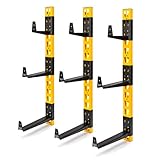

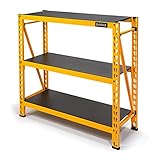
Choose a storage style
Vertical racks use little floor area and make sheet goods easy to see, but they need a solid wall or a stable freestanding frame. Horizontal shelves are simpler to build and better for heavier pieces, though a tall stack can be difficult to sort without unloading it. Narrow strips are best kept in shallow, divided bins rather than mixed into a large sheet rack.
| Storage type | Best for | Main trade-off |
|---|---|---|
| Wall-mounted vertical rack | Large panels and wide offcuts | Needs secure wall anchoring and clear floor access |
| Freestanding vertical rack | Shops where wall space is unavailable | Uses floor space; must be braced against tipping |
| Horizontal shelf or cart | Heavy pieces and frequent access | Stacks hide lower sheets and collect dust |
| Divided bins or slots | Narrow strips and short offcuts | Can waste space if compartments are too small |
Vertical racks for wide offcuts
A wall rack is a good buy if you regularly save pieces around 2 feet or wider. Look for arms or slots deep enough to support the panel without letting it lean at a sharp angle. A mild backward lean is useful; a steep lean puts more pressure on the bottom edge and makes pieces harder to pull out. Keep panels low enough to handle without lifting them over shoulder height.
Mount the rack into studs or masonry with hardware rated for the load. Dry plywood is heavy: a 4-by-8-foot sheet of 3/4-inch plywood commonly weighs roughly 60 to 75 pounds, depending on its construction. Several offcuts can add up quickly. Don’t rely on drywall anchors, and don’t assume a rack’s advertised capacity applies when the load is concentrated on one arm. A wall-mounted plywood storage rack can save floor space, but check its arm spacing, rated capacity, and mounting instructions before ordering.
Leave enough clearance to remove one piece without scraping it across every other panel. A rack packed tight may technically hold more, but it encourages you to drag sheets by their corners, damaging veneer and risking a dropped panel. Keep the bottom edge off the concrete with a low rail or spacer; concrete can transfer moisture to plywood.
Keep narrow strips in divided slots
Strips under about 6 inches wide tend to fall behind a vertical rack or rotate into a tangled bundle. Use a divided rack with compartments sized for the lengths you actually save. Several 4-to-6-inch-wide slots work better than one large opening: strips remain visible, and you can pull out a group without disturbing the whole pile.
A simple DIY option is a sturdy shelf with vertical dividers, or a deep crate divided into a few length ranges. Sand or round sharp divider edges so they don’t catch veneer. Label slots with practical ranges—such as under 2 feet, 2 to 4 feet, and over 4 feet—rather than material descriptions you won’t maintain. A set of divided storage bins is convenient for short strips, but a homemade plywood organizer is usually cheaper if you already have usable offcuts.
Don’t make bins too deep. If you can’t see the pieces at the back, the bin becomes a dumping spot. Keep heavy strips in low compartments, and avoid storing long pieces where their ends can project into an aisle.
When a shelf or cart is better
Horizontal storage suits panels that are too heavy to lift upright or pieces you use often. A fixed shelf is inexpensive, but a stack more than a few inches deep becomes inconvenient: the bottom pieces are effectively buried. A rolling sheet-goods cart is easier to access and can serve as a staging point near the saw, though it needs brakes, a clear route, and enough room to turn.
Support plywood along its length rather than balancing it on two narrow points. A sagging sheet can develop a permanent bow, especially in humid conditions. If you use a shelf, keep supports close enough that the panel doesn’t visibly flex under its own weight. A rolling sheet-goods cart is useful when sheet handling is routine; for a few small offcuts, a fixed shelf costs less and has fewer parts to maintain.
Prevent tipping, moisture, and clutter
Store material in a dry area, away from floor drains and exterior walls that get damp. Don’t lean sheets against a door, heater, or electrical panel. Keep the rack clear of walkways and the infeed or outfeed path of saws. A falling panel can injure someone, and a protruding strip can catch clothing or block an exit.
Check fasteners and rack stability periodically, especially after adding material. Mark the maximum load or number of sheets where it’s easy to see, and remove damaged pieces rather than letting them take up prime slots. If dust collects on horizontal shelves, a quick vacuum during normal shop cleanup is easier than moving a large stack later.
A practical buying plan
For a modest shop, start with one secure vertical rack for broad offcuts and one shallow, divided organizer for strips. Add a horizontal shelf only if you have a genuine need for quick access or cannot safely lift pieces upright. Measure the wall, check stud locations, and compare the rack’s usable depth with your largest saved panel before buying. The cheapest solution is often a well-braced DIY rack; the upgrade is worth paying for when it improves safe access, not merely when it holds more scraps.