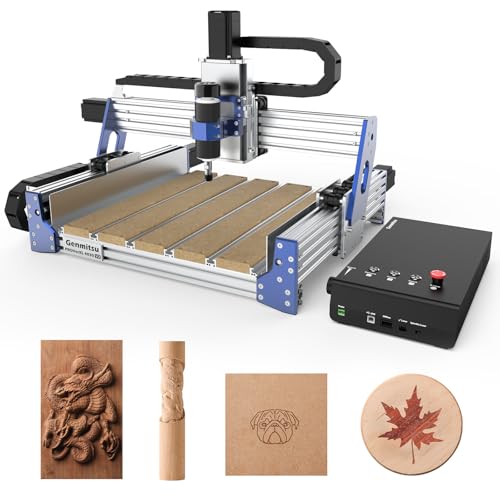
4 Best 3D CNC Wood Routers for Carving (November 2026)
Four CNC routers picked for 3D wood carving and relief work, compared on Z travel, drive rigidity and spindle power, with specs from each Amazon listing.
As an Amazon Associate I earn from qualifying purchases. This post may contain affiliate links at no extra cost to you.
A 3D carve is the hardest job you can hand a desktop router. A relief of a woodland scene or a portrait plaque means thousands of tiny Z-axis moves spread over hours of cutting, so the buying decision is really about depth and stiffness: how much Z travel the machine gives you for thick stock and long ball-nose bits, and whether the frame and drive stay rigid enough that fine detail survives the finishing pass instead of washing out into chatter marks.
OUR TOP PICK
Genmitsu 4040-PRO MAX CNC Router Machine with 710W Spindle
This roundup is for woodworkers moving past flat signs and V-carved lettering into true relief work, whether that is a first machine for learning 3D toolpaths or a sturdier desktop unit for selling carved panels. Every machine below was picked from the names and specifications on its Amazon listing, with the emphasis on the figures that matter for carving: working area, Z travel, spindle, drive type and frame construction.
Quick Picks
As an Amazon Associate we earn from qualifying purchases
Relief depth is bought with Z travel, not with software settings. The usable carving depth is the machine’s Z range minus the thickness taken up by your spoilboard, clamps and the length of bit sticking out of the collet. A machine listing 110 mm of Z travel can work a thick hardwood blank and still leave room for a long-reach ball-nose bit on the finishing pass, while a 60 mm machine tops out at shallow plaques and dished trays. Before ordering, measure the thickest blank you realistically plan to carve and compare it against the listed Z figure, not the headline work area.
Drive Rigidity Decides Whether Detail Survives
A 3D finishing pass follows the model’s surface with a fine stepover, so any flex or backlash in the drive shows up as ridges and lost detail. Ball screws and linear rails hold position more tightly than belts and V-wheels, and closed-loop steppers correct steps that an open-loop motor would silently lose mid-carve. For shallow decorative work the difference is subtle, but on a deep relief that runs for hours, the stiffer drive is what keeps the last pass aligned with the first. Check the listing for the actual drive components named, rather than relying on general claims about precision.
Spindle Power and Collet Size for Carving Bits
Roughing out a relief means hogging away waste with a flat or ball-nose end mill before the detail pass begins, and that is where small stock spindles struggle in hardwood. A trimmer-class spindle in the 710W range clears waste far more calmly than a small DC spindle, and it accepts the common quarter-inch shank bits used for roughing. Collet size matters just as much: confirm the machine takes the shank sizes your planned bit set uses, and check which spindle clamps are included if you intend to swap in a compact router later.
Software and the 3D File Workflow
The machine only follows the toolpath your software generates, so the control system shapes your whole workflow. GRBL-based controllers pair with a wide range of CAM programs that can import STL models and build roughing and finishing passes, which is the standard route for relief work. Look at whether the controller supports offline running from a card or touchscreen, since a multi-hour carve ties up a computer otherwise. Also check the upgrade path on the listing: a supported fourth-axis rotary module turns the same machine toward cylindrical carving later, which extends its life considerably.
The 4 Best Options
Genmitsu 4040-PRO MAX CNC Router Machine with 710W Spindle
Top Pick
Genmitsu 4040-PRO MAX CNC Router Machine with 710W Spindle
Best for: Carvers stepping up to a trimmer-class spindle for detailed hardwood relief panels.
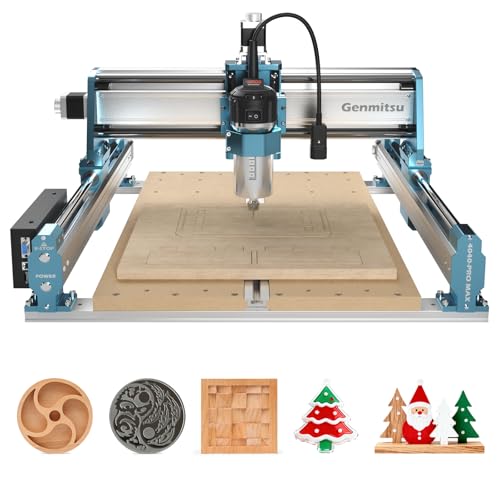
This is the pick for carvers who want trimmer-router power without giving up a guided, rigid frame. The 710W compact router handles hardwood roughing passes that would stall a small DC spindle, and the linear-rail X-axis with a reinforced, T-track spoilboard keeps the work planted during long finishing runs. Its Z travel is the shallowest trade-off here, so it suits relief panels and plaques of moderate depth rather than deep sculptural blanks. The mainboard also supports wireless control through an optional module, and a fourth-axis rotary kit is listed as a compatible upgrade for later.
Genmitsu PROVerXL 4030 V2 CNC Router Machine
Runner-Up
Genmitsu PROVerXL 4030 V2 CNC Router Machine
Best for: Deep relief carving in thick hardwood blanks where Z travel matters more than bed width.
Deep relief carving in thick hardwood blanks where Z travel matters more than bed width.
Watch out for
The 400 x 300 mm footprint rules out wide panels, and listing variants bundle different accessories, so confirm exactly what the selected option includes.
Depth is the reason to choose this one. Its 110 mm of Z travel is the most in this group, which opens up thick blanks, dished relief work and long ball-nose bits that the shallower machines cannot accommodate. Ball screws on the axes and closed-loop stepper motors address the other half of the 3D problem, holding position through the thousands of small moves a relief toolpath demands. The footprint is smaller than the 4040-class machines, so wide panels are off the menu, but for deep, detailed carving in hardwood this is the most purpose-suited specification here.
FoxAlien Masuter Pro 3-Axis CNC Router Machine
FoxAlien Masuter Pro 3-Axis CNC Router Machine
Best for: Beginners and panel carvers who want a large bed, quick assembly and shallow relief work.
Working area: 400 x 400 x 60 mm (15.75 x 15.75 x 2.36 inches)
The Masuter Pro trades depth for convenience and bed size. The all-aluminum frame arrives with the main parts pre-assembled and pre-wired, and the listing puts setup at ten to fifteen minutes, which is a genuine advantage for a first carving machine. A linear rail Z-axis keeps vertical movement steadier than wheel-based designs, and the two included spindle clamps accept both 52 mm and 65 mm spindles, leaving a clear upgrade path to a compact router. With 60 mm of Z travel, plan on shallow relief, carved trays and textured panels rather than deep sculptural work.
Twotrees TTC450 Pro CNC Router Machine
Twotrees TTC450 Pro CNC Router Machine
Best for: Wide, shallow relief panels and carved wall pieces where bed size beats spindle power.
If your relief projects run wide, this machine offers the largest working area in the group at 460 x 460 mm, with 80 mm of Z travel sitting between the shallow and deep ends of this roundup. The all-metal frame, lead screw drive and 3.5-inch touchscreen controller make it a self-contained setup that can run a carve without staying tethered to a computer interface the whole time. The honest compromise is the spindle: the listed 80W unit is the lightest here, so roughing passes in hardwood need to stay shallow and patient, and many owners will treat a spindle upgrade as part of the plan.
Which One Fits Your Situation
You Carve Deep Relief in Thick Hardwood
Choose the Genmitsu PROVerXL 4030 V2. Its 110 mm Z travel is the deciding figure: it swallows thick blanks and long bits that simply do not fit under the gantry of the shallower machines, and the ball screw drive with closed-loop motors protects detail across the long toolpaths deep relief demands. Accept the smaller footprint as the price of that depth.
You Want One Machine for Panels, Trays and Gifts
The Genmitsu 4040-PRO MAX fits the busy generalist. The 710W router clears waste quickly on panel roughing, the T-track spoilboard speeds up workholding changes between jobs, and the optional rotary module gives the machine a second life carving cylindrical pieces. It is the most rounded specification here for mixed relief work of moderate depth.
You Are Learning 3D Carving for the First Time
Start with the FoxAlien Masuter Pro. Pre-assembled modules and a short setup get you to a first test carve quickly, the bed is large enough for meaningful projects, and the dual spindle clamps mean the machine can grow with you. Learn toolpaths on shallow relief first, where its 60 mm Z travel is not yet a limitation.
Your Carves Run Wide Rather Than Deep
Take the Twotrees TTC450 Pro for its 460 mm square bed, the largest surface in this group. Wide wall panels, multi-piece relief layouts and shallow textured work all benefit from that room. Keep roughing passes conservative to suit the light spindle, and the touchscreen controller makes long, shallow carves easy to babysit.
Common Mistakes
Judging a carving machine by its X and Y work area while ignoring Z travel, then discovering the dream relief blank does not fit under the gantry.
Running a deep roughing pass with a small stock spindle at sign-making feed rates, which stalls the motor and gouges the surface the finishing pass then has to repair.
Skipping the roughing pass entirely and asking a fine ball-nose bit to remove all the waste, multiplying carve time and wearing the bit out early.
Holding a thick blank with clamps that sit higher than the carving surface, so the gantry or collet collides with them mid-job.
Choosing software that cannot import STL models or generate a separate finishing pass, which limits the machine to flat work no matter how capable the hardware is.
Frequently Asked Questions
Can a 3-axis CNC router really carve 3D shapes?
Yes, within limits. A 3-axis machine carves relief: raised designs cut into a flat surface, viewed from above, which covers plaques, panels, trays and most decorative 3D woodwork. It cannot undercut or carve fully in the round without a rotary fourth axis, which some machines here support as an add-on module.
What software do I need for 3D carving?
You need CAM software that imports a 3D model, usually an STL file, and generates two toolpaths: a roughing pass that removes waste and a finishing pass that follows the surface. GRBL-based machines like these work with a wide range of such programs, so confirm your chosen software outputs GRBL-compatible code before buying.
Which bits are used for 3D relief carving?
Most relief work uses two bit families. Flat end mills or larger ball-nose bits handle the roughing pass, while a small tapered ball-nose bit traces the surface on the finishing pass to capture fine detail. Check the collet and clamp sizes on the listing so the bits you plan to use actually fit the spindle.
How long does a 3D carve take on a desktop router?
Expect hours, not minutes. A detailed relief panel commonly runs a roughing pass followed by a long finishing pass with a fine stepover, and total time grows quickly with panel size and detail level. Machines with offline or touchscreen control help here, since the computer does not need to stay connected and awake for the entire job.
J
JD's Woodworks Editorial Team
We compare specs, warranty terms, long-term owner feedback and street pricing before anything earns a spot. Rankings are never paid.
Affiliate disclosure. As an Amazon Associate we earn from qualifying purchases at no extra cost to you. Prices accurate as of the date shown.
Table saws under the 1500 mark compared: the Grizzly G0771Z and Shop Fox W1837 hybrid saws with cast iron tables, 2 HP motors and T-square fences, specs from their listings.
Table saws for fine woodworking compared: the SawStop Professional Cabinet Saw and Powermatic PM1000, judged on fence precision, table flatness and vibration from listing specs.
Table saw combos explained: saws sold with a stand and accessories in one listing, what to check in the box, and which bundle fits your shop or jobsite.
Compare the best planer digital thickness gauges and digital readout kits for portable planers, with fit, resolution and mounting checks before you buy.
Model table saws for scale modelling and hobby work compared: the precision Proxxon FET 37070 and the compact Saker mini table saw, with specs taken from their Amazon listings.
Three CoreXY 3D printers for product development, each with the architecture stated on its listing: an enclosed multicolor machine, a large-format enclosed model and a heated-chamber model.



 Twotrees TTC450 Pro CNC Router Machine