As an Amazon Associate I earn from qualifying purchases. This post may contain affiliate links at no extra cost to you.
An affordable CNC router opens a kind of woodworking that hand tools cannot match: repeatable signs, inlays, joinery, and carved panels, all cut the same way every time. The challenge is that affordable machines vary widely in work area, rigidity, and software, and a machine that is too small forces you to split every project into pieces. The right pick balances a bed that fits your usual stock, a frame stiff enough to hold accuracy, and controls a beginner can learn in a weekend.
This guide is for woodworkers, sign makers, and hobbyists buying a first CNC router for a home shop. The four machines below were chosen from the names and specifications shown on their Amazon pages, spanning the compact entry class up to a larger frame that handles furniture-sized parts. Work area, rigidity, and software are the three things to compare first.
Quick Picks
As an Amazon Associate we earn from qualifying purchases
Product
Best for
Key spec from title
Genmitsu 3018-PRO
First desktop CNC router
3018-PRO 3-axis router kit
Genmitsu 4040-PRO
Larger work area
4040-PRO CNC router machine
FoxAlien 4040-XE
Bigger signs and panels
4040-XE CNC router machine
FoxAlien Masuter Pro
Sturdy all-metal frame
Masuter Pro CNC router
How to Choose
Work area decides what fits
Work area is the first specification to check, because it sets a hard limit on the size of every project. A compact 300-by-180-millimeter bed suits plaques, small signs, and inlay work, while a 400-by-400-millimeter bed handles larger panels and furniture parts without splitting the design. Measure the stock you actually cut most often, including the largest sign or panel blank, and compare it against the listed work area rather than the machine’s overall footprint. A bed that is just big enough today becomes too small the moment a larger commission arrives. Buying the larger frame now is cheaper than replacing the machine later. A bed that fits today can still feel small next year.
Frame rigidity and spindle power
Rigidity decides how clean a cut the machine makes and how fast it can move without chatter. An aluminum extrusion frame with linear rails holds accuracy better than a plastic or thin-sheet frame, especially on hardwood and plywood. Spindle power matters too: a stronger spindle cuts deeper per pass and handles dense material without bogging down, while a weaker spindle needs slow, shallow passes that stretch a job for hours. Check the listing for the frame material, the rail type, and the spindle rating. A stiff frame with a modest spindle usually beats a flimsy frame with a strong one. Hardwood and plywood expose a weak frame faster than soft pine does.
Safety around a spinning cutter
A CNC router spins a sharp cutter at high speed and throws chips across the bench, so safety setup belongs in the purchase decision. Eye protection is essential whenever the machine runs, and hearing protection helps during long jobs. Keep hands clear of the work area while the spindle turns, and never reach across a moving cutter to adjust a clamp. Dust collection matters because fine wood dust builds up fast and irritates lungs, so connect a shop vacuum or an extractor to the dust shoe. Disconnect power before changing bits, and read the manual that ships with the machine before the first cut. A dust shoe connected to a vacuum keeps the bench usable.
Software and the learning curve
A CNC router needs design software, control software, and a workflow that connects them, so confirm the chain before buying. Most affordable routers use GRBL-based control and accept standard G-code, which works with widely available design programs. Some machines include a starter software bundle, while others expect you to bring your own. Check the listing for the supported file formats and whether an offline controller is included, since a machine that needs a computer tethered to it behaves differently in a dusty shop. A clear manual and an active user community shorten the learning curve more than any feature. An active user community shortens the learning curve considerably.
The 4 Best Options
Genmitsu 3018-PRO
Top Pick
Genmitsu 3018-PRO
Best for: beginners learning CNC carving on small projects.
300 x 180 x 45 mm work area
GRBL control with offline controller support
120-watt spindle
Maximum spindle speed 20,000 RPM per the listing spec table
The Genmitsu 3018-PRO is the entry point in this guide and the most popular first CNC router in its class. Its 300-by-180-by-45-millimeter work area suits plaques, small signs, PCB work, and inlay, and the GRBL control works with widely available design software. Assembly takes a couple of hours and teaches the owner how the machine goes together, which pays off when maintenance comes due. The compact bed is the honest limit: furniture panels and large signs need splitting into sections. For a first machine in a home shop, it is the lowest-risk way to learn CNC carving.
Watch out for: the compact bed forces large designs into sections.
Genmitsu 4040-PRO
Runner-Up
Genmitsu 4040-PRO
Best for: woodworkers moving up to furniture-sized parts.
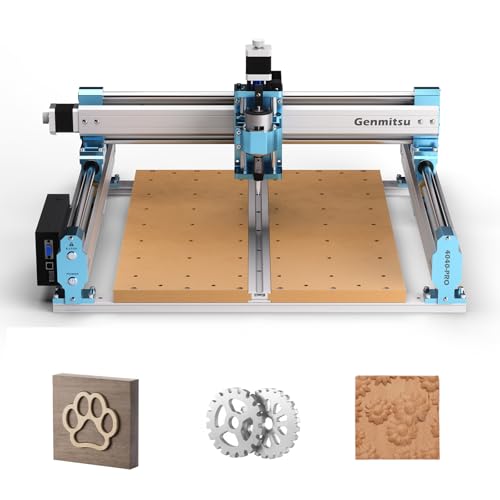
The Genmitsu 4040-PRO steps up to a 400-by-400-millimeter work area, which changes the kind of project the machine can take on. Full-size signs, cabinet door panels, and furniture parts fit in one setup instead of two, and the larger frame adds rigidity that shows in cleaner edges on hardwood. It uses the same GRBL-based workflow as the 3018-PRO, so a maker who learned on the smaller machine moves up without relearning the software. The larger footprint needs more bench space and a sturdier table, which is the real cost of the upgrade. For a shop outgrowing a compact router, this is the natural next step.
Watch out for: needs a larger, sturdier bench than a compact router.
FoxAlien 4040-XE
FoxAlien 4040-XE
Best for: sign makers cutting panels and plaques in batches.
The FoxAlien 4040-XE is the larger-frame pick for sign makers and woodworkers who cut panels and plaques all day. Its 400-by-400-millimeter work area swallows the stock sizes a sign shop actually buys, and the frame is built for repeat jobs rather than occasional hobby use. The machine suits a shop that has outgrown a compact router but does not need an industrial frame, since it keeps the desktop workflow and standard software chain. Assembly and calibration take an afternoon, and the payoff is a machine that runs the same sign file identically every time. For production-style sign work on a home-shop budget, it is a strong fit.
Watch out for: assembly and calibration take an afternoon before the first job.
FoxAlien Masuter Pro
FoxAlien Masuter Pro
Best for: woodworkers who run a router daily on hardwood.
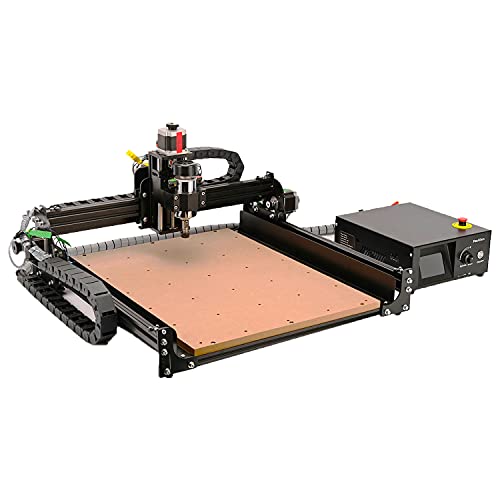
The FoxAlien Masuter Pro is the sturdiest machine in this guide, with an all-metal frame that holds accuracy through long hardwood jobs. Its 400-by-400-millimeter work area matches the other large-frame picks, but the rigidity is the difference: the frame resists flex when the cutter bites into dense stock, which shows in smoother edges and less chatter. That build suits a woodworker who runs the machine for hours at a time rather than in short hobby sessions. The heavier frame needs a solid bench and a little more assembly patience. For a shop that treats the router as a daily tool, it is the most durable pick here.
Watch out for: the heavier frame needs a solid bench and more assembly time.
Which One Fits Your Situation
First CNC router for a home shop
A first-time buyer should start with the Genmitsu 3018-PRO. It costs the least, assembles quickly, and teaches the full CNC workflow on small projects. The compact size is a limit, but it is also a teacher: learning feeds, speeds, and clamping on small stock is cheaper than learning on a large frame. Move up only when projects regularly exceed the bed. Learning on small stock costs less.
Signs and panels in batches
Sign makers need a bed that fits standard stock and a frame that repeats the same file cleanly. The FoxAlien 4040-XE suits batch sign work, while the Genmitsu 4040-PRO offers the same work area with a simpler upgrade path from the 3018-PRO. Either one handles plaques, house numbers, and cabinet panels without splitting designs into sections. Either machine handles plaques and panels without splitting designs.
Furniture parts and larger stock
Furniture work needs both work area and rigidity, since hardwood panels punish a flexing frame. The FoxAlien Masuter Pro is the pick here: its all-metal frame holds accuracy through dense stock, and the 400-by-400-millimeter bed fits door panels and drawer fronts. The Genmitsu 4040-PRO is the alternative when the shop already knows the Genmitsu workflow. The all-metal frame holds accuracy through dense hardwood stock.
A small shop with limited bench space
Bench space decides the machine as much as any specification. The Genmitsu 3018-PRO fits on a standard workbench with room to spare, while the 400-millimeter machines each need a dedicated table. Measure the bench before ordering, and remember that clamps, a dust shoe, and a vacuum add to the footprint. A machine that crowds the bench will not get used. Leave room beside the machine for the stock you are about to cut.
Common Mistakes
Buying the smallest machine and then splitting every project into sections that never align cleanly.
Ignoring frame rigidity and blaming the bit when chatter ruins an edge.
Skipping dust collection and filling the shop with fine wood dust on every job.
Choosing a machine before confirming the design software and control workflow.
Forgetting clamps, bits, and a spoilboard when budgeting for the first project and the first cut.
Frequently Asked Questions
What can an affordable CNC router cut?
Affordable desktop routers cut wood, plywood, MDF, acrylic, plastic, and soft metals such as aluminum, plus PCB material on the smaller machines. Hardwood needs slower passes and sharp bits, while steel is outside the range of these machines. Check the listing for the supported materials before buying, since the spindle and frame set the real limits.
How big a work area do I need?
Match the bed to the largest stock you cut regularly. A 300-by-180-millimeter bed suits plaques and small signs, while a 400-by-400-millimeter bed handles cabinet panels and larger signs in one setup. Measure your usual blanks before ordering, since a bed that is just big enough today becomes too small with the first larger commission.
Is assembly difficult on these routers?
Assembly takes a couple of hours on the compact machines and an afternoon on the larger frames. The process teaches how the machine works, which helps with maintenance later. Follow the manual step by step, check the frame for square before tightening, and run a test cut on scrap before starting a real project.
Do I need special software for a CNC router?
Most affordable routers use GRBL-based control and accept standard G-code, which works with widely available design programs. Some machines include a starter software bundle, while others expect you to bring your own. Confirm the supported file formats on the listing, and check whether an offline controller is included for shops that prefer not to tether a computer.
J
JD's Woodworks Editorial Team
We compare specs, warranty terms, long-term owner feedback and street pricing before anything earns a spot. Rankings are never paid.
Affiliate disclosure. As an Amazon Associate we earn from qualifying purchases at no extra cost to you. Prices accurate as of the date shown.
Miter saw vs table saw: compare crosscuts, rip cuts, accuracy, space, and value to choose the right saw for your shop and your first woodworking projects.
Compare five solar portable generators for shops, campsites, and outages, covering battery size, output, solar charging, outlets, and what to check first.
The best portable CNC machines for small shops and shared spaces, compared by footprint, weight, work area, and setup. Compact benchtop picks for wood, acrylic, and soft metal.
Find the best Penn Industries dust collector on Amazon: the PSI Woodworking DC3XX blower and the DC725 tabletop unit, compared on airflow, pressure, and shop fit.
Compare five large stationary horizontal metal band saws for fabrication shops on cutting capacity, motor, power supply, blade speed, and mitering before buying.
Find the best mortising chisel bits for clean square mortises in this guide: hollow-chisel sets and singles compared by size, shank, steel, and machine fit.
Find the best drill press base for your shop. Compare rolling stands and mobile bases by capacity, footprint, casters, locking, and setup before you buy.
Find the best dewalt planer dw734 blades for your 12-1/2-inch thickness planer. Compare OEM and aftermarket 3-knife sets, steel types, and fit before you buy.


 FoxAlien Masuter Pro











