What's inside
As an Amazon Associate I earn from qualifying purchases. This post may contain affiliate links at no extra cost to you.
A wood lathe throws dust in every direction, but not all dust is equally easy to capture. Shavings from roughing a bowl are large and fall quickly. Fine dust from sanding can hang in the air, settle on shelves, and get pulled into your lungs. The choice between a dust collection hood and a full enclosure comes down to how much of that mess you need to contain, how much access you need around the lathe, and how much shop space you can give up.
As an Amazon Associate we earn from qualifying purchases at no extra cost to you.


The Basic Difference
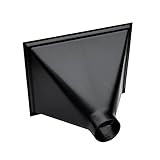
A dust collection hood is an open capture point placed close to the work. It may sit behind the turning, above the lathe bed, or on an articulated arm. A full enclosure surrounds most or all of the turning area and connects to a dust collector through one or more ports.
The hood is simpler and easier to live with. You can move tools, check the cut, and remove the workpiece without opening doors or working through a fixed opening. The enclosure contains more dust, especially when sanding, but it costs more, takes more room, and can make access awkward.
| Factor | Dust collection hood | Full enclosure |
|---|---|---|
| Large shavings | Good if positioned close to the cut | Very good containment |
| Fine sanding dust | Fair to good; depends heavily on placement | Best overall control |
| Access to the work | Excellent | Limited or slower |
| Cost and construction | Lower and easier to build | Higher; requires panels, doors, and seals |
| Space requirement | Small | Large, with clearance for doors and maintenance |
| Noise containment | Little benefit | Some benefit, but not soundproof |
When a Hood Is the Better Choice
For most home shops, start with a hood. A practical setup uses a 4-inch dust hose connected to a rigid hood or a flexible capture arm. The opening should be as close to the cutting or sanding area as possible without interfering with your hands or turning tools. A gap of roughly 2 to 6 inches is a useful target. If the hood is a foot away, even a powerful collector may leave a visible cloud behind.
Position matters more than advertised collector horsepower. Put the hood behind the work for roughing and spindle turning, then move it closer to the underside or side of the piece for sanding. A hood that only sits at the back of the lathe will miss dust thrown forward by an abrasive strip or sanding bowl.
A wide, open hood works better than a narrow hose end because it captures air over a larger area. However, oversized openings reduce air velocity unless the collector and ducting can move enough air. For a typical 4-inch connection, a collector capable of roughly 500 to 800 CFM at the machine is a sensible range. The actual airflow will be lower after hose length, bends, blast gates, and filters are included.
A hood is also the better choice when you frequently change between faceplate work, spindle work, and sanding. You can swing it aside, remove the tailstock, and reach the tool rest without fighting a cabinet. If you already own a capable collector, adding a well-shaped hood may solve most of the problem for the cost of a short hose and a few fittings. Browse wood lathe dust collection hoods for ready-made options, or build one from plywood and clear sheet material.
When an Enclosure Makes Sense
An enclosure earns its space when you do a lot of sanding, turn dusty materials, or share the shop with other people. It keeps airborne dust from spreading while the collector pulls air through the work area. This is especially useful in a small shop where the lathe is close to a workbench, tool storage, or a furnace return.
A good enclosure is not simply a box around the lathe. It needs a planned airflow path. Provide a large intake opening or filtered make-up air area, then place the exhaust connection so air travels across the turning and toward the collector. If the enclosure is almost airtight and the collector cannot draw enough air, airflow collapses and dust leaks through every gap.
Clear polycarbonate or acrylic panels let you watch the cut, but thin panels can flex and vibrate. Hinged doors need durable latches and seals that will survive constant dust. Leave enough room to remove the workpiece, swing open the tailstock, and service the drive belt. A cramped enclosure is likely to be left open, defeating its purpose.
For an enclosure, a 6-inch duct connection is often more useful than a 4-inch hose if your collector supports it. Do not reduce the entire system to a small hose immediately at the enclosure. That restriction can turn a strong collector into a weak one. A 6-inch dust collection ducting kit can help maintain airflow, but use smooth pipe where possible and keep flexible hose short.
Common Failure Modes
The most common mistake is relying on the collector rating printed on the box. Those figures are usually measured with little or no duct resistance. Check airflow at the machine, not just the motor size. A long flexible hose with several sharp bends can remove a large part of the available airflow.
Another failure is using a hood that is too small or too far away. The collector may capture chips directly below the lathe while fine dust escapes around the spinning work. A hood should overlap the likely dust path, and it should be adjustable for different diameters.
Do not use a dust collector as a substitute for personal protection. Wear a properly fitted respirator rated for fine particulates, especially while sanding. Use eye protection and hearing protection, and keep loose clothing, hair, and rags away from the spindle. Never reach around a moving workpiece to adjust a hood.
Fine dust can also create a fire risk, particularly with oily rags, metal dust contamination, or a collector that develops a spark. Keep the dust bin from overflowing, ground conductive ducting where appropriate, and avoid mixing metal grinding debris with wood dust. A fine-particle filter improves air quality after capture; it does not fix poor hood placement.
What to Buy
Choose a hood if you want the lowest-cost improvement, need unrestricted access, or mainly produce shavings. Choose an enclosure if sanding is a major part of your turning routine and you can dedicate floor space to it. In either case, prioritize a smooth duct route, a filter rated for fine dust, and an adjustable capture point over a larger motor with poor ducting.
A sensible staged setup is a close-fitting hood, a short 4-inch hose, and a high-efficiency cartridge filter. If airborne dust remains visible after sanding, add a ceiling-mounted air cleaner and improve the hood before building a full enclosure. For shops that need a stronger general-purpose collector, compare woodworking dust collectors with cartridge filters rather than choosing by horsepower alone.
The cheaper hood is fine for many turners. It becomes the wrong choice when you routinely sand large bowls, cannot keep the hood close to the work, or find dust coating the entire shop despite reasonable airflow. At that point, an enclosure is not just more convenient; it gives the collector a controlled volume of air to clean.