What's inside
As an Amazon Associate I earn from qualifying purchases. This post may contain affiliate links at no extra cost to you.
An overarm hood and a blade-guard dust port collect dust from different places. The hood sits above the blade and catches chips thrown upward; the port built into a blade guard draws air near the teeth. A conventional cabinet or under-table port pulls from below. These setups are not interchangeable, and the best choice depends on the saw, the work you do, and whether your existing collector can move enough air.
As an Amazon Associate we earn from qualifying purchases at no extra cost to you.

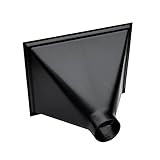


What Each System Catches
A table saw sends debris in several directions. The lower cabinet port collects much of the dust that falls beneath the table, but the blade’s rotation can fling fine dust above the work surface and toward the operator. A guard-mounted port sits close to the blade and can capture some of that upward-moving dust. An overarm hood does the same from above, usually with a larger, adjustable canopy connected to a separate hose.
“Blade guard port” can describe a port molded into a conventional guard or a port attached to a blade-cover assembly. Check the actual opening and hose connection rather than assuming every guarded saw includes a usable upper collection port. Some stock guards have no port at all.
Overarm Hood vs. Guard Port
| Factor | Overarm hood | Blade-guard port |
|---|---|---|
| Coverage | Broad capture area above the blade | Close to the blade, but limited by guard size and port position |
| Setup | Needs an arm, support, hose, and room to position it | Usually simpler if the saw’s guard accepts a hose |
| Workpiece access | Can obstruct long stock or awkward cuts if poorly placed | Moves with the guard, but the hose can tug on it |
| Best fit | Frequent ripping, fine-dust control, or a fixed saw station | Lower-cost improvement to a compatible saw and guard |
| Common drawback | More space, cost, and ducting to manage | Smaller capture area and limited compatibility |
Airflow and Ducting Matter
Neither accessory works well if the collector cannot supply enough airflow at the tool. A narrow hose, long run, sharp bends, clogged filter, or undersized collector can reduce flow enough that dust simply escapes around the hood. A guard port may be small, but it still needs a clear path for air. Follow the saw and collector manufacturers’ connection guidance; do not assume a shop vacuum or dust collector is suitable just because the hose fits.
Many small shop vacuums use hoses around 1-1/4 to 2-1/2 inches, while table-saw cabinet ports commonly take larger ducting. Those are common sizes, not a guarantee—measure your fittings. Splitting one collector line between the cabinet and an upper hood can also reduce airflow at both. A properly sized collector and duct layout matter more than adding a second port that barely draws.
For an overhead setup, a flexible hose around 2 to 4 inches is common, but choose to match the hood and collector, not by guesswork. Keep the run short and supported so the hose does not pull the guard out of position. If you are building a dedicated station, compare table-saw overarm dust-collection hoods by mounting method, hose size, and adjustment range—not just canopy appearance.
Which One Should You Buy?
A guard port is usually the sensible first upgrade when your saw already has a compatible guard and you want better collection without adding an overhead arm. It keeps the setup compact and may be enough for occasional ripping in a small shop. Confirm that the guard remains stable with the hose attached and can still rise and lower freely. If the hose twists the guard, catches on stock, or blocks a cut, the theoretical collection benefit is not worth the interference.
An overarm hood is a better candidate if you rip frequently, process dusty sheet goods, or see a visible plume above the blade despite good lower collection. Its larger capture area can collect debris that misses a small port, but it takes floor or bench space for support and may need repositioning for different stock widths. Before buying, check clearance for long boards, crosscuts, blade tilt, and any sliding table or router attachment. A hood that must be removed for every other cut tends not to get used.
Look for an adjustable support and a way to keep the hood clear of the work without placing it so high that dust escapes. Products sold as table-saw blade-guard dust ports vary in guard fit and hose connection. Check the saw’s manual and the guard’s dimensions before ordering; avoid modifying a guard in a way that weakens it or interferes with its safety function.
Safety and Setup Checks
Keep the blade guard, riving knife, and anti-kickback features installed and functional whenever the cut allows. Do not remove a guard just to make a hose fit. For cuts that require a different guarding arrangement, use the saw maker’s recommended method and appropriate push sticks or other work-holding tools. A dust hood is not a substitute for guarding, and a hose should never pull a guard sideways or limit its movement.
Position the hood to leave safe clearance for the tallest workpiece and keep its edges away from the blade’s path. Secure overhead arms to a stable surface; a flexible stand that tips or swings into the cut creates a new hazard. With the collector off, move the guard through its full travel and feed a scrap board through the saw to check for snags. Then test collection on a representative cut. Dust escaping upward suggests poor capture, while dust accumulating under the saw points to weak lower airflow, a leak, or a blocked cabinet path.
When to Keep It Simple
If you make occasional cuts, already have a decent cabinet connection, and see little dust above the table, a separate overarm hood may add more clutter than value. Fix leaks, clear blockages, and improve the existing duct run first. If you frequently breathe visible fine dust or clean a layer from nearby shelves after ripping, an upper pickup is worth considering—but assess your whole collection system, not just the attachment.
Choose the guard port for a compact, lower-cost improvement when it fits securely and your collector can pull through it. Choose an overarm hood when you need broader upper capture and can give it a stable, out-of-the-way mount. In either case, judge the result by dust left around the saw after a real cut, while keeping every safety feature working as intended.