What's inside
As an Amazon Associate I earn from qualifying purchases. This post may contain affiliate links at no extra cost to you.
A dust collector that starts when a tool starts sounds like a small convenience, but it changes how a shop is used. With a manual switch, you must stop, reach for the collector, and remember to shut it off. An automatic dust collection switch handles that sequence for you by sensing the tool’s electrical load and switching the collector on and off.
Neither system is automatically better. Automatic controls cost more, add another electrical component that can fail, and may have limits on motor size. Manual controls are cheap and dependable, but they rely on your habits. The right choice depends on your tools, collector, wiring, and tolerance for cleanup.
As an Amazon Associate we earn from qualifying purchases at no extra cost to you.

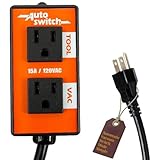

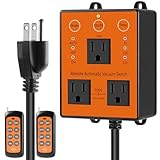
How automatic dust switches work
Most automatic switches use a current-sensing circuit. The power tool plugs into the switch, and the dust collector plugs into the switch’s outlet. When the tool draws power, the switch detects the load and energizes the collector. When the tool shuts off, the collector usually continues running for a short delay—often 3 to 10 seconds—to clear dust from the hose.
Some units are built into shop vacuums or small collectors. Others are standalone boxes with one or more tool outlets. The important specification is not just the advertised horsepower. Check the maximum tool load, maximum collector load, voltage, and whether the device is rated for inductive motor loads. A 15-amp circuit does not mean every automatic switch can safely control a 15-amp collector motor.
For a typical 120-volt setup, a 1.5-horsepower dust collector can draw roughly 10 to 14 amps while running, with a higher startup surge. A switch designed only for a shop vacuum may not tolerate that load. If the collector is hardwired, 240 volts, or larger than a compact single-stage unit, use a properly rated control rather than a general-purpose plug-in switch.
Automatic versus manual controls
| Factor | Automatic control | Manual control |
|---|---|---|
| Convenience | Starts with the tool and may run briefly after shutdown | Requires a separate switch or remote press |
| Cost | Typically $30 to $100 for a plug-in unit, more for larger systems | Often already included with the collector; add-on switches are inexpensive |
| Reliability | Extra relay, sensor, and electronics can fail | Very simple; fewer components to troubleshoot |
| Best for | Portable tools, intermittent work, and shared shop vacuums | Dedicated machines, batch work, and collectors controlled from one location |
| Main failure mode | Wrong load rating, nuisance triggering, or failed relay | Collector forgotten, causing dust buildup and poor capture |
Automatic control is most useful when the tool and collector are close together but the switch is awkward to reach. A router table, miter saw, benchtop planer, or portable sander can produce dust in short bursts. The automatic switch keeps the vacuum or collector tied to the work instead of depending on memory.
Manual control is often fine for a stationary table saw or jointer when the collector has a large wall switch, a remote control, or a clearly visible disconnect. It is also the better choice when several machines feed one collector. A single current-sensing switch cannot always tell which machine should start the system, and plugging multiple tools into an undersized control can overload it.
Where automatic control pays off
Choose an automatic dust collector switch when you regularly forget to start the collector or work with tools that are used for only a few seconds at a time. The benefit is not just convenience. Starting collection immediately improves capture at the source, before dust spreads across the bench and floor.
Automatic controls are particularly useful with a shop vacuum. A sander may run for 20 seconds, stop for an adjustment, and run again. Manually switching the vacuum for every cut is irritating, so people eventually leave it running or skip it. A short run-on delay also helps pull residual dust from a hose after the tool stops.
Buy an automatic shop vacuum tool-trigger switch only after checking the electrical ratings. Some switches work with tools drawing as little as 1 amp, while others need a higher minimum load. A battery-powered tool, low-wattage trim router, or electronic speed-controlled tool may not trigger a basic sensor reliably.
When manual control is the better buy
Manual control makes sense for a collector that runs for long periods or serves several machines through blast gates. If you are milling boards for 30 minutes, turning the collector on once is no burden. A heavy-duty dust collector remote control can provide most of the convenience without placing the collector’s full motor load through a small automatic module.
It is also preferable when your collector has a high startup current. Motors can trip breakers even when their running amperage appears acceptable. An automatic switch with marginal contacts may weld closed, fail to start the motor, or overheat at the plug. For larger collectors, a magnetic starter or manufacturer-approved control panel is a safer route than improvising with a plug-in accessory.
The cheapest reliable solution is sometimes a labeled wall switch placed near the main work area. Add a red pilot light so you can see when the collector is running, and use a written shutdown routine: close the blast gate, turn on the collector, start the tool, then reverse the sequence when finished. This costs less than automation and works well in a disciplined shop.
Installation and safety details
Do not defeat the collector’s overload protection or use an extension cord smaller than the load requires. A long, undersized cord can cause voltage drop and motor heating. Keep connections off the floor, protect cords from sharp table edges, and leave enough slack that vibration cannot pull plugs partly out of receptacles.
Automatic switching does not replace a blast gate. Keep gates closed on unused branches so the collector pulls air through the active tool. A wide-open duct system with several leaks may run continuously yet provide poor pickup at the cutter. Inspect hoses, grounding provisions, filters, and collection bags regularly. A clogged filter can reduce airflow long before the motor sounds abnormal.
Test the complete setup with the tool running under a normal load. Watch for breaker trips, delayed starting, hot plugs, buzzing relays, or a collector that continues running indefinitely. If any component becomes hot to the touch, stop using it and verify the ratings or have the circuit checked by a qualified electrician.
A practical buying decision
Buy automatic control for convenience and better habits when using a shop vacuum or small collector with one portable tool at a time. Buy manual control when the collector is large, shared, hardwired, or used in long batches. If you already have a remote-controlled collector, spend the money on better hose fittings, a properly sized filter, or clearer blast-gate labels instead.
The best system is the one that starts collection before dust escapes and shuts down without creating a new electrical risk. For many small workshops, that means automatic control on the shop vacuum and a simple manual or remote switch for the main collector.