What's inside
As an Amazon Associate I earn from qualifying purchases. This post may contain affiliate links at no extra cost to you.
Why drawer storage works for small hardware
Screws, washers, brad nails, drill bits and spare fittings are easy to lose in a crowded shop. A drawer cabinet keeps them visible and protected from most bench dust without taking up much wall or bench space. The key is matching drawer size to the parts: a deep drawer full of mixed screws is just a box you have to rummage through.
Before buying, sort your hardware into rough groups and measure the largest items. Also measure the space where the cabinet will sit, including clearance for the drawers to open. A cabinet that fits the bench but blocks a walkway or a machine’s infeed is the wrong size.
As an Amazon Associate we earn from qualifying purchases at no extra cost to you.


Choose the cabinet around the parts
For small fasteners and electrical connectors, look for many shallow drawers with dividers or removable bins. For hinges, clamps, sanding discs and small tool accessories, fewer deeper drawers are more useful. A mixed cabinet is often the most practical choice: shallow drawers up top for hardware, larger ones below for bulky items.
Plastic parts cabinets are light, inexpensive and easy to rearrange. They suit low-weight hardware and a shop where the cabinet stays put. Their drawbacks are brittle drawers, flexible dividers and limited capacity. Metal cabinets usually tolerate more weight and rough handling, but cost more and can rattle if the drawers have loose fits. Check the stated load capacity; a drawer packed with steel fasteners gets heavy quickly.
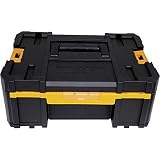
For a compact bench-side setup, compare small-parts drawer cabinets by drawer dimensions rather than the total number of compartments. A cabinet advertised with dozens of drawers is not useful if each drawer is too shallow for the hardware you actually keep.
Compare common storage options
| Storage type | Best for | Advantages | Limits |
|---|---|---|---|
| Plastic parts cabinet | Lightweight screws, nuts, connectors | Low cost, easy to move, many small compartments | Drawers may crack or sag under heavy loads |
| Metal drawer cabinet | Frequent use and heavier hardware | More rigid, better suited to workshop handling | Higher cost; can be noisy or heavy |
| Shallow organizer trays | Parts used at one project or bench | Contents are easy to see and carry | Open trays collect dust and can spill |
| Deep general-purpose drawers | Bulky accessories and mixed supplies | Flexible storage for larger items | Small parts become buried without bins |
Plan the layout before labeling
Keep frequently used sizes between waist and shoulder height, where you can reach them without bending or stretching. Put heavy drawers low to reduce the chance of a loaded cabinet tipping. If the cabinet is tall or narrow, secure it to a wall or bench; pulling several drawers open at once can shift its center of gravity.
Use dividers or small bins to separate sizes within a drawer. A simple system is to group by type first, then size: wood screws in one drawer, machine screws in another, with each size in a divided compartment. Do not pack compartments so tightly that parts spill over when you open the drawer. Leave a little room to pinch out a fastener.
For lots of mixed sizes, adjustable drawer dividers make it easier to change the layout later. Fixed compartments are simpler and often cheaper, but they can waste space when the bin sizes do not match your stock.
Keep dust out and labels readable
Drawer cabinets are not dustproof. Fine sanding dust can settle on hardware, especially if drawers are left open near a sander or saw. Keep the cabinet away from the direct dust path, close drawers between tasks, and use your shop’s dust collection for the machine producing the dust. For especially clean parts, use lidded bins inside the drawer.
Label the front of every drawer with a large, plain description. Put the size on the inside divider or bin as well. Labels that only say “miscellaneous” tend to become permanent junk drawers. If you change stock often, use removable labels or a marker on masking tape rather than printing a detailed inventory you will not maintain.
What to check before buying
Look at the interior drawer width, depth and height, not just cabinet dimensions. Check whether dividers are included, whether drawers can be removed, and whether replacement bins are available. Pull a sample drawer fully out if buying in person: it should not tip forward easily, bind under a modest load or fall out unexpectedly.
For a low-cost setup, plastic hardware organizers are fine for light parts and occasional use. Avoid overloading them with dense metal fasteners, and keep them off a high shelf where a full cabinet could fall. If you need a sturdier unit, look for metal parts cabinets with drawers, checking drawer capacity and overall footprint before choosing.
Avoid common storage mistakes
Do not sort every fastener into a separate drawer if you have only a handful of each. That creates a cabinet full of nearly empty compartments and slows down restocking. Combine uncommon sizes in clearly divided bins, and reserve dedicated drawers for the sizes you reach for often.
Also avoid placing a loose cabinet where vibration can walk it toward the edge of a bench. Add a nonslip mat or fasten it down, and do not use the top as a storage shelf for heavy items. A well-sized cabinet with a simple layout is easier to maintain than a larger one filled with unlabeled, overstuffed drawers.