What's inside
As an Amazon Associate I earn from qualifying purchases. This post may contain affiliate links at no extra cost to you.
A benchtop belt and disc sander can fill a shop with fine dust in minutes. The built-in port helps, but it rarely captures everything by itself. The belt throws dust in a different direction than the disc, and the disc’s open edge can launch particles below the table. The best setup combines a close-fitting hood, a short hose, and enough airflow to keep dust moving.
As an Amazon Associate we earn from qualifying purchases at no extra cost to you.

Start With the Sander’s Dust Ports
Measure the actual port before buying hose or adapters. Common benchtop sanders use ports around 1-1/4, 1-1/2, 2-1/4, or 2-1/2 inches, and nominal sizes are not always accurate. A loose reducer leaks air; a restrictive reducer reduces capture at the sanding surface.
Use the largest hose that fits the tool without blocking the work area. For most small sanders, a 2-1/2-inch hose is a practical compromise. A 1-1/4-inch shop-vac hose may connect easily, but its smaller cross-section creates more resistance and clogs faster. If the machine has separate belt and disc ports, connect both when possible rather than relying on a single improvised opening.
Useful accessories include 2-1/2-inch dust collection hose kits, stepped reducers, and rubber couplers. Avoid long runs of flexible hose. The ridges inside typical dust hose create substantially more resistance than smooth pipe.
Best Setups by Shop Size
| Setup | Best for | Typical performance | Main trade-off |
|---|---|---|---|
| Shop vacuum with fine-dust filter | One benchtop sander and occasional use | Good capture at one 2-1/2-inch port | Noise, filter loading, limited debris capacity |
| Shop vacuum with cyclone separator | Frequent sanding and mixed cleanup | Nearly the same suction with less filter clogging | Extra floor space and another hose connection |
| 1.5- to 2-hp dust collector | Dedicated woodworking shop | Higher airflow through larger ducting | Bulky; may perform poorly through tiny tool ports |
| Dust collector plus sanding hood | Maximum capture around belt and disc | Best control of airborne dust | Requires fabrication and access can be tighter |
The Cheap Option: A Shop Vacuum
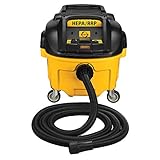
For one benchtop sander, a shop vacuum is usually sufficient. Look for a unit with a real cartridge filter rated for fine dust, not just a coarse foam sleeve. A vacuum that provides roughly 60 to 100 CFM at the tool is generally useful for a small 2-1/2-inch port. Advertised peak horsepower is not a reliable comparison; hose length, filter condition, and static pressure matter more.
Put a cyclone dust separator for a shop vacuum between the sander and vacuum. It catches sanding dust and chips before they reach the vacuum filter. This is a worthwhile upgrade if the filter clogs after a few minutes, because a loaded filter can cut suction dramatically. A five-gallon bucket separator is inexpensive, but a rigid container with a sealed lid works better than a flexible bucket that collapses under vacuum.
The cheaper setup is fine when you sand small parts for short periods and clean the filter regularly. It becomes frustrating when sanding hardwood, MDF, or large batches of parts. These materials produce a lot of fine dust, and a small vacuum can overheat if its airflow is restricted for long periods.
When a Dust Collector Makes Sense
A dust collector is a better choice when the sander is used daily or shares collection with a table saw, planer, or router table. A typical portable collector moves more air than a shop vacuum, but it may not develop enough suction through a tiny 1-1/4-inch port. Use it with a short 2-1/2-inch hose and a well-sealed connection.
Do not assume a larger collector automatically captures more dust. A ten-foot hose, several sharp bends, and a restrictive adapter can reduce airflow below useful levels. Keep the hose under about six feet where practical, use broad-radius bends, and seal leaks with foil HVAC tape or purpose-made clamps. Never tape over a moving belt, cooling vent, or access panel.
For a permanent station, a 2-1/2-inch dust collection blast gate lets you shut off unused branches. This improves airflow if the sander shares a collector with another tool. Install the gate where it remains easy to reach, and close every unused branch before sanding.
Add a Hood When the Port Is Not Enough
The factory port only captures dust that reaches its opening. A simple hood behind the disc or below the belt can catch the stream that escapes around the platen. Make one from 1/4-inch plywood, sheet metal, or clear polycarbonate. Leave enough clearance for the workpiece and belt tracking, but keep the opening close—about 1/2 to 1 inch from the sanding area is a useful starting point.
For a disc sander, concentrate collection below and behind the disc, where centrifugal force throws much of the dust. A removable lower hood is easier to clean and safer than a fully enclosed box. For the belt, a narrow hood behind the work zone works better than covering the entire belt, which can restrict access and trap heat.
Seal stationary joints with silicone or foam gasket tape. Do not seal panels that must be removed for belt changes, tracking adjustments, or emergency access. A hood that takes ten minutes to remove will eventually be left off, defeating its purpose.
Filters, Static, and Safety
Use a filter rated for fine dust, and wear a properly fitted N95 or better respirator while testing or cleaning the system. Collection is not the same as elimination. MDF and hardwood dust can remain suspended after the machine stops, so let the vacuum run for several minutes after sanding.
Keep the hose and collector grounded if your system uses long plastic ducting and your equipment manufacturer recommends it. Static shocks are usually an annoyance, but dust buildup and loose connections are avoidable problems. Never vacuum hot metal particles, solvents, or an active fire with an ordinary shop vacuum. Sanding aluminum, especially with contaminated dust, can also create a fire risk; keep metal sanding debris separate from wood dust.
A Practical Buying Order
Begin with a short 2-1/2-inch hose, a fine-dust vacuum filter, and sealed couplers. If suction drops quickly, add a cyclone separator before buying a larger collector. If dust still escapes around the belt or disc, build a close hood before increasing motor size. That order usually fixes the real failure—poor capture at the source—without spending money on airflow the sander cannot use.