What's inside
As an Amazon Associate I earn from qualifying purchases. This post may contain affiliate links at no extra cost to you.
A benchtop drum sander produces a deceptively large amount of fine dust. The sanding drum breaks material into powder, and the open end of the machine can throw it directly into the shop unless the collector captures it at the source. In a compact shop, the best setup is usually not the largest dust collector you can fit. It is a short, airtight hose run connected to a collector with enough airflow and a filter that can handle fine sanding dust.
As an Amazon Associate we earn from qualifying purchases at no extra cost to you.
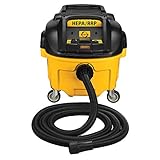

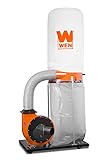

What a benchtop drum sander needs
Most benchtop drum sanders have a dust port around 2-1/2 inches, though some use a 4-inch outlet or a molded adapter. Check the machine manual before buying hose. A 2-1/2-inch connection is convenient, but its narrow passage creates much more resistance than a 4-inch duct.
For practical use, aim for roughly 350 to 500 CFM at the sander inlet, not merely the collector’s advertised free-air rating. A small shop vacuum may claim strong suction, but its airflow usually falls sharply with a long hose, a separator, and a clogged filter. That can be adequate for light passes on narrow boards, but it is a weak choice for continuous drum-sanding work.
A typical 1-1/2 to 2 horsepower dust collector with a 4-inch inlet is a better match. The important specifications are airflow under resistance, filter quality, and the ability to maintain suction as the filter loads. A collector rated at 1,200 CFM with no hose attached tells you little about performance at the machine.
Which collector type works best in a compact shop?
| Collector type | Best use | Advantages | Limitations |
|---|---|---|---|
| Shop vacuum with fine-dust filter | Occasional sanding and very small shops | Compact, inexpensive, easy to store | Lower sustained airflow; filters load quickly |
| Single-stage 1-1/2 to 2 HP collector | Regular use with one machine at a time | Good airflow and reasonable cost | Needs a larger footprint and careful filter maintenance |
| Portable cyclone collector | Frequent sanding and mixed shop use | Separates chips before they reach the filter; steadier performance | More expensive and often taller |
| Two-stage cyclone system | Heavy use or several machines | Excellent separation and large collection capacity | Usually excessive for one benchtop sander |
For most compact shops, a portable cyclone or a single-stage collector is the sensible middle ground. If the sander is used only for a few boards each month, a shop vacuum with a fine-dust filter can be the cheaper option that works well enough. Keep the hose short, clean the filter often, and do not expect it to collect as effectively as a full-size dust collector.
Use separation and a proper filter
A separator placed between the drum sander and the collector catches larger chips and abrasive debris before they reach the filter. A cyclone separator is preferable to a simple bucket lid because it removes more material from the airstream. It also protects the collector’s filter from rapid loading.
There is a trade-off: every separator adds resistance. A poorly designed separator, undersized inlet, or sharply bent hose can reduce airflow enough to cancel its benefit. Use a separator with a 4-inch inlet if your collector and sander can support one. Empty the drum before it becomes heavy enough to deform the lid or block the inlet.
Fine sanding dust requires a filter rated for fine particles. A felt bag alone is not an adequate final filter for a drum sander. Look for a pleated cartridge filter rated around 1 micron or better, and keep it sealed to the collector. A filter shaker or external cleaning handle is useful, but it does not replace periodic washing or replacement when the filter becomes embedded with dust.
A 1-micron dust collector cartridge filter is a worthwhile upgrade when the stock bag leaves a visible haze in the shop. Do not rely on the filter rating alone: leaks around the lid, bag, hose, or collector housing can bypass it completely.
Keep the hose run short and airtight
Put the collector near the sander, ideally within 6 to 10 feet. Use one smooth hose rather than several flexible sections joined together. Every extra foot, reducer, and bend costs airflow. Avoid routing the hose through a narrow gap behind a bench where it can kink during a cut.
If the sander has a 2-1/2-inch port, use the manufacturer’s adapter and a short length of matching hose at the machine. Do not reduce a 4-inch line to 2-1/2 inches several feet away and then run the smaller hose across the shop; that creates unnecessary resistance. Seal loose joints with foil HVAC tape or proper hose clamps. Ordinary cloth duct tape dries out and leaks.
A 4-inch dust collection hose with grounding wire can help when you are building a dedicated run. Static shocks are usually more nuisance than ignition hazard in a small woodshop, but grounding the hose and metal components is sensible. Never use a thin plastic bag as a homemade dust container without confirming that the collector is designed for it.
Operating practices that prevent failures
Start the collector before starting the sander, and let it run for several seconds after the workpiece exits. Feed boards at a moderate rate and avoid taking an unnecessarily deep pass. Heavy passes generate more dust than the collector can capture and can overload the abrasive, creating heat and an uneven surface.
If dust escapes from the front or rear of the machine, stop and inspect the setup. Common causes include a full collection drum, a loaded filter, a collapsed hose, an open blast gate elsewhere in the system, or a board that is too wide for the hood design. A simple airflow test is to hold a thin strip of paper near the dust port; it should pull firmly toward the opening while the drum is running.
Never treat source collection as a replacement for respiratory protection. Wear a properly fitted NIOSH-approved N95 respirator for wood dust during sanding and cleanup. Do not sweep fine dust into the air. Use a vacuum rated for fine dust, and clean the surrounding floor and benchtop after the collector has stopped.
Placement, noise, and storage
Place the collector where it does not obstruct the sander’s infeed and outfeed. Drum sanders need room for long boards, so a collector directly behind the machine may become a trip hazard. A corner location with the hose coming from the side is often better. Lock the collector’s casters and provide enough clearance to remove the filter and empty the drum.
Noise matters in a small room. A collector inside a sealed cabinet may sound quieter, but restricting its intake or exhaust can overheat the motor and reduce airflow. Instead, use vibration pads, keep the motor ventilated, and consider hearing protection. For a single benchtop drum sander, a short hose, a fine cartridge filter, and a compact cyclone usually outperform a larger but poorly connected system.