What's inside
As an Amazon Associate I earn from qualifying purchases. This post may contain affiliate links at no extra cost to you.
A shared dust collector can serve several machines well, but only if the duct layout and blast-gate routine match the way the shop is used. The main trade-off is straightforward: a permanently connected main duct is convenient and tidy, while a flexible hose moved between tools costs less and avoids running ductwork across the shop. Neither setup compensates for an undersized collector, a clogged filter, or too many open branches.
As an Amazon Associate we earn from qualifying purchases at no extra cost to you.

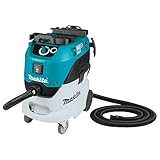


Choose a layout that suits your tools
For a small shop where only one machine runs at a time, a collector connected to one tool with a hose is often the cheapest workable arrangement. A 4-inch hose is common for many benchtop machines and portable tools. Keep it as short and straight as practical: long, ribbed hose and tight bends add resistance and reduce airflow. Move the hose to the table saw, planer, or sander as needed, and cap unused ports so they do not leak air.
If moving the hose becomes a daily nuisance, run a main duct along a wall or ceiling and use short drops to frequently used machines. Put a blast gate at each drop, and open only the gate for the machine in use. A central trunk can make the shop neater and faster to switch between tools, but every branch, elbow, and leak adds resistance. Avoid reducing a large trunk to a small diameter right at a machine’s dust port unless the tool itself requires it.
Compare the common setups
| Setup | Best fit | Advantages | Limitations |
|---|---|---|---|
| One movable hose | Small shop, occasional machine use | Low cost, quick to install, easy to change | Must be moved by hand; hose can snag or get crushed |
| Main duct with gated drops | Several stationary tools used regularly | Less hose handling; cleaner floor and machine access | More fittings and setup; poor sizing or leaks can weaken suction |
| Dedicated collector for a high-demand tool | Planer or other machine with a large chip load | Less competition for airflow; useful when the shared system struggles | More equipment, space, and filter maintenance |
For a shared system, the practical goal is adequate airflow at one active machine—not running every branch at once. If you regularly run two machines simultaneously, size the collector and ducting for that actual demand or use separate collection. Closing gates is not optional: a forgotten open branch can leave the working tool with too little airflow to capture chips effectively.
Match the collector to the work
Check the collector’s specifications and the machine ports before buying. A large horsepower label alone does not tell you how much air reaches a tool once duct resistance is included. Look for airflow information at a stated static pressure, and compare it with the tool maker’s collection requirements when available. A chip-producing planer generally needs more airflow and a larger connection than a small sander.
A standard single-stage collector can be a reasonable budget choice for intermittent use, especially when it sits near the machine and handles chips rather than fine sanding dust. A single-stage dust collector sends collected material through the impeller before it reaches the bag or filter. Keep bags and filters clean, and inspect them for tears; a full bag or loaded filter reduces airflow.
Fine dust needs more attention than visible chips. A pleated cartridge filter or a separate fine-dust filter can capture smaller particles better than a coarse collection bag, but it still needs cleaning and does not make dust extraction perfect. For sanding and other dusty work, use a properly fitted respirator as appropriate, and do not treat a room air cleaner as a substitute for source capture. A canister filter for a dust collector can be a useful upgrade when the collector’s current filter is the limiting factor.
Size ducts and manage gates
Use smooth-wall metal duct for fixed runs where practical. Flexible hose is useful at a machine connection, but a long run of corrugated hose slows airflow and traps chips. Keep elbows gentle, avoid unnecessary branches, and seal joints that leak. Plastic drain pipe is sometimes used in small shops, but it is not automatically a safe substitute for purpose-built ducting: some plastic systems can build static charge, and airborne wood dust presents a fire and explosion hazard. Follow local codes and the collector maker’s instructions; do not use improvised ducting where a safer approved option is required.
Choose gates that fit the duct and can be reached without climbing over stock. Cheap slide gates may leak or jam with packed dust; clean them periodically and check that they close fully. Labeling gates is worthwhile if several drops look alike. If chips collect in a horizontal run, look for poor slope, a low point, a blockage, or insufficient airflow rather than assuming a stronger collector will solve everything.
Install and maintain the system
Place the collector where it can be emptied without moving a bench, and keep its filter accessible for cleaning. If it is indoors, consider noise, heat, and the fine dust that can escape from imperfect filters or connections. A collector outside the main work area may reduce noise, but outdoor placement still needs weather protection and a suitable return-air plan. Do not vent heated shop air outdoors without accounting for replacement air in cold weather.
Before buying extra duct, fix basic bottlenecks: a crushed hose, a blocked machine port, an overfilled bag, a dirty filter, or multiple open gates. A simple routine helps: open the gate for the active tool, check that the hose is secure, start the collector before the machine, and inspect collection at the hood during a test cut. If dust escapes at the blade or cutter, improve the hood, connection, or airflow before relying on cleanup afterward. Sweep or vacuum settled dust regularly; compressed air sends it back into the breathing zone.