
What's inside
- Quick picks by beginner situation
- What your $1,500 budget really buys
- Head-to-head: 3018 versus 4040 versus Shapeoko 4
- Best entry-level CNC choices by use
- Software learning curve: choose the workflow, not just the hardware
- Setup steps that prevent most beginner failures
- Durability and ownership realities
- Is an entry-level CNC mill the right choice?
- Final buying recommendation
- Related Guides
As an Amazon Associate I earn from qualifying purchases. This post may contain affiliate links at no extra cost to you.
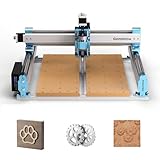
The best entry level CNC machine for most beginners in 2026 is a 3018-class desktop router for the lowest-cost path, a FoxAlien Masuter Pro or similar 4040 machine for larger signs, and a Shapeoko 4 when you want the strongest upgrade path under or near a $1,500 total budget.
Those choices are not interchangeable. A 3018 machine is compact and inexpensive but limits sign size; a 4040-class router gives more useful work area without becoming difficult to learn; and a Shapeoko 4 offers a more polished ecosystem, better rigidity, and room to grow. For first projects such as wooden signs, inlays, engraving, and small parts, work area and software usually matter more than maximum advertised spindle speed.
As an Amazon Associate we earn from qualifying purchases at no extra cost to you.



Quick picks by beginner situation
| Situation | Best fit | Typical machine budget | Why it fits |
|---|---|---|---|
| Lowest-cost entry level CNC | Genmitsu 3018-PROVer V2 or comparable 3018 router | $250–$450 | Small footprint, common parts, suitable for engraving and small inlays |
| Signs up to roughly 16 inches wide | FoxAlien Masuter Pro or comparable 4040 router | $500–$900 | More useful cutting area and a stronger frame than a 3018 |
| Frequent woodworking and future upgrades | Carbide 3D Shapeoko 4 | $1,300–$1,500 before optional accessories | More rigid construction, capable software workflow, and expandable accessories |
| Actual metal milling | Desktop CNC mill, not a hobby wood router | Usually above $1,500 when properly equipped | Rigid frame, leadscrews, and metal-cutting capability are different requirements |
What your $1,500 budget really buys
A machine’s advertised price is only part of the entry cost. Plan for a spoilboard, clamps, router bits or end mills, workholding, dust collection, and a way to protect your computer and lungs from dust. A realistic first-machine budget looks like this:
- Machine: $300–$1,400
- Starter end mills and engraving cutters: $50–$150
- Clamps, wasteboard material, and screws: $40–$120
- Dust shoe and shop-vac connection: $40–$150
- Optional trim router or spindle upgrade: $100–$250
For example, a $650 4040 router plus $100 in cutters, $75 in workholding, $100 for dust control, and $50 for spoilboard material produces a more useful setup than a $900 machine bought without accessories. Keep at least $250–$400 of the total budget for the items that make the machine usable.
Head-to-head: 3018 versus 4040 versus Shapeoko 4
| Characteristic | 3018-class router | 4040-class router | Shapeoko 4 |
|---|---|---|---|
| Typical usable work area | About 11.8 × 7.1 × 1.8 in. | About 15.7 × 15.7 × 2.4 in. | About 17.5 × 17.5 × 3.0 in. on the standard model |
| Common cutting tool | 775 W-class spindle or compact trim-router-type spindle | 300–800 W spindle or compact router, depending on configuration | Compact router or compatible spindle package |
| Best materials | Softwood, hardwood with light passes, plywood, plastic, engraving stock | Wood, plywood, plastics, and occasional light aluminum work | Wood, plywood, plastics, and more demanding woodworking cuts |
| Typical machine footprint | Roughly 20 × 18 in. | Roughly 30 × 27 in. | Roughly 33 × 29 in. |
| Learning curve | Moderate: basic controller and sender software | Moderate: more setup, but more forgiving work area | Lower for many beginners using Carbide Create |
Actual dimensions vary by package and spoilboard arrangement, so treat these as planning figures rather than guaranteed cutting envelopes. The key comparison is practical: a 3018 can make a 10-inch plaque, but it cannot comfortably cut a 14-inch sign in one setup. A 4040 machine can handle that size while still fitting on a sturdy workbench. Shapeoko 4 adds rigidity and a smoother beginner-to-intermediate path, but leaves less money for accessories.
Best entry-level CNC choices by use
For engraving, inlays, and small parts: a 3018-class machine
The Genmitsu 3018-PROVer V2 is a sensible entry level CNC router when your projects are small. Its roughly 12-by-7-inch work area suits nameplates, box components, guitar inlay practice, coasters, templates, and small relief carvings. A 3018 is also less intimidating mechanically: cutters are inexpensive, replacement parts are widely available, and the machine can sit on a compact bench.
Its limitations are important. The frame is light, so aggressive cuts cause vibration, chatter, and poor edge quality. You will normally remove material in shallow passes, especially in hardwood. It is a poor choice if your main goal is making full-size cabinet doors, large signs, or production quantities.
For useful wooden signs: a 4040-class entry level CNC router
A FoxAlien Masuter Pro is representative of the 4040 class. The larger bed gives you room for signs, cutting boards, drawer fronts, and multiple small parts in one setup. A 4040 machine is often the best compromise for a first-time woodworker with $700–$1,000 available after accessories.
Do not choose solely by spindle wattage. A larger motor does not eliminate frame flex, poor clamping, or incorrect feeds and speeds. Look for adjustable eccentric rollers, a reasonably rigid gantry, lead screws or well-supported drive components, limit switches, and a documented controller. Those features reduce setup frustration and make repeatable work easier.
For a longer ownership horizon: Shapeoko 4
Carbide 3D’s Shapeoko 4 is worth considering when you expect to use the machine weekly and can approach the top of the budget. Its standard work area is large enough for many sign and furniture-component projects, and the Carbide Create software workflow is relatively approachable for beginners. The machine also has a clearer upgrade path than many low-cost kits.
The trade-off is total cost. A machine near $1,500 can leave little room for a dust shoe, clamps, cutters, and a router if those are not included in the selected package. Buy it only after pricing the complete setup, not the base machine alone.
Software learning curve: choose the workflow, not just the hardware
Every entry level CNC workflow has three stages: design, toolpath generation, and machine control. Carbide Create is a convenient starting point with Shapeoko hardware. Low-cost 3018 machines commonly use sender software such as Candle or Universal Gcode Sender, with design and toolpath work handled by software such as Carbide Create, Easel, or Fusion. The exact compatibility depends on the controller and post-processor.
For a first project, use a simple two-dimensional sign. Draw text and a border, select a V-bit engraving toolpath, add an outside contour, simulate the result, and export the machine code. This teaches zeroing, workholding, tool selection, depth control, and feeds without the complexity of a three-dimensional carving.
Setup steps that prevent most beginner failures
- Level and secure the machine. A flexible table magnifies vibration. Bolt or clamp the frame to a rigid surface.
- Install and flatten a spoilboard. Surface it lightly so the cutting plane is parallel to the machine’s motion.
- Measure the actual cutter. A nominal 1/8-inch bit may differ slightly; tool diameter affects pockets and inlays.
- Set zero deliberately. Establish X, Y, and Z zero from the same reference corner used in the CAM file.
- Begin with conservative cutting values. Use shallow passes and make a test cut in scrap from the same material.
- Simulate before cutting. Check for collisions, tabs, excessive depth, and whether the design fits the stock.
- Use dust extraction and eye protection. Never leave a running machine unattended.
For inlays, cut the pocket first and measure it before cutting the mating plug. A practical starting allowance is often only a few hundredths of an inch, but the correct value depends on the cutter, material, machine rigidity, and finishing method. Make a small test pattern rather than risking a whole board.
Durability and ownership realities
The first parts to wear are usually cutters, collets, spoilboards, and V-wheel or roller components—not the main frame. Dull cutters create heat and fuzzy edges, while a dirty collet can introduce runout and visible ridges. Replace or resurface the spoilboard when it is no longer flat, and vacuum chips from rails, screws, and rollers after each session.
Common mistakes include tightening a cutter too shallow in the collet, cutting without tabs, using a feed rate that is too slow for the spindle speed, and assuming a higher wattage motor makes a light frame suitable for deep cuts. Keep cutters clean, inspect the emergency stop before use, and periodically check fasteners and belt or screw tension.
Is an entry-level CNC mill the right choice?
An entry level CNC mill is designed around rigidity and controlled cutting forces, especially for aluminum and other metals. Most inexpensive desktop machines marketed to woodworkers are CNC routers, even when they can make very light aluminum cuts. A router is the better choice for signs, inlays, plywood, hardwood, plastics, and small wooden parts.
If metal is your primary material, prioritize a cast or heavily braced frame, supported linear motion, leadscrews, coolant or chip-management provisions, and a rigid spindle. A credible complete desktop CNC mill setup generally consumes more than $1,500 once tooling and workholding are included. Do not buy a lightweight 3018 expecting it to perform like a metal-cutting mill.
Final buying recommendation
Choose a 3018-class machine if your projects fit within roughly 12 by 7 inches and keeping the initial cost near $400 matters most. Choose a 4040-class router if signs and practical woodworking projects are your priority. Choose Shapeoko 4 if you can fund the complete setup and want a more capable platform with a smoother software path.
For most first-time woodworkers, the 4040 category is the safest middle ground: enough work area to avoid immediate frustration, modest operating costs, and a learning curve that remains manageable. Measure your largest intended project, reserve money for tooling and dust control, and treat rigidity and software compatibility as equally important as spindle power.