
What's inside
As an Amazon Associate I earn from qualifying purchases. This post may contain affiliate links at no extra cost to you.
For most small shops, a CNC plasma table is the best cnc steel cutting machine; choose a fiber laser when thin-sheet accuracy and clean edges justify the cost, or a router-style machine only when steel cutting is occasional and limited to light gauges with the correct abrasive or carbide tooling.
As an Amazon Associate we earn from qualifying purchases at no extra cost to you.
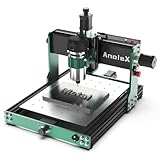


Quick choice: which CNC steel cutter fits your shop?
| Machine type | Practical mild-steel range | Typical cutting speed | Typical accuracy | Power and ventilation | Approximate machine cost |
|---|---|---|---|---|---|
| CNC plasma table | 0.8–25 mm, depending on plasma source | 0.3–8 m/min | About ±0.1–0.5 mm | 230 V commonly; downdraft or water-table extraction | $4,000–$25,000 |
| Fiber laser | 0.5–12 mm in small-shop configurations | 2–20 m/min on thin sheet | About ±0.03–0.1 mm | Usually 230/400 V; enclosed extraction and chiller | $40,000–$150,000+ |
| Router-style machine | Usually 0.5–3 mm, with specialized tooling | 0.05–1 m/min | About ±0.1–0.3 mm | 230 V often sufficient; chip and fume control required | $8,000–$40,000 |
These are practical planning ranges rather than guaranteed specifications. Actual results depend on steel grade, sheet flatness, pierce settings, nozzle condition, assist gas, CAM software, and the rigidity of the complete machine. “Cutting speed” also excludes loading, piercing, repositioning, and cleanup.
Head-to-head comparison
CNC plasma: the practical production choice
Plasma is usually the strongest value for a small fabrication shop cutting mild-steel plate. A mechanized air-plasma system can cut thin sheet quickly and can handle plate that would be uneconomical for a small laser. Higher-capacity systems may sever roughly 20–25 mm steel, although the best-quality cut thickness is lower than the maximum severance rating.
The trade-off is a wider kerf, a small heat-affected zone, and more edge taper than a laser. Hole quality suffers particularly in holes smaller than the material thickness. A good height-control system, stable torch mounting, and carefully tuned lead-ins make a substantial difference.
- Best for: brackets, signs, gussets, agricultural repairs, frames, and general plate work.
- Strengths: low entry cost, fast cutting, broad thickness capability, and relatively simple consumable supply.
- Weaknesses: dross, smoke, noise, electrical interference, and less precise small holes.
Fiber laser: the accuracy and thin-sheet specialist
A fiber laser produces the cleanest and most dimensionally consistent cuts in thin and medium-gauge steel. A 1.5–3 kW source can cut common mild-steel sheet efficiently, while larger sources extend capacity but also increase electrical, gas, cooling, and service requirements. With suitable settings, a laser can produce narrow kerfs, small holes, sharp internal corners, and little dross.
Fiber lasers are not simply faster versions of plasma tables. They normally require an enclosed Class 1 machine, interlocked doors, fume extraction, a chiller, compressed air or nitrogen, and a carefully maintained optical path. Oxygen can reduce nitrogen cost for some mild-steel work, but it may create a more oxidized edge.
- Best for: repeatable sheet-metal parts, nameplates, electrical enclosures, precision brackets, and intricate profiles.
- Strengths: narrow kerf, high accuracy, small holes, low dross, and excellent thin-sheet productivity.
- Weaknesses: high purchase price, greater safety complexity, gas cost, and expensive optical or laser-source repairs.
Router-style machines: use cautiously on steel
A conventional woodworking CNC router is not a general-purpose steel cutter. Its high-speed spindle, gantry, bearings, and frame are normally designed for wood, plastics, and aluminum. Steel requires much lower cutting speeds, high rigidity, suitable carbide tooling, and effective flood or mist cooling. Without those features, heat rapidly destroys cutters and can damage spindle bearings.
Some specialized router-style machines use abrasive cutting, low-speed milling, or reinforced construction. They can be useful for thin sheet, engraved steel, or occasional small parts, but they are usually slower than plasma and less clean than laser. Never assume that a router advertised for aluminum is automatically suitable for steel.
Decision matrix for a small shop
| Your situation | Recommended type | Why | Important limitation |
|---|---|---|---|
| Budget below $10,000; occasional plate work | Entry-level CNC plasma | Lowest practical cost per cutting capability | Budget for extraction, consumables, and a suitable electrical circuit |
| Frequent mild-steel work from 3–12 mm | Production plasma | Good throughput and lower capital cost than laser | Edge taper and hole quality need process control |
| Mostly 0.8–3 mm sheet with small holes | Fiber laser | Fast, precise, and clean on thin material | Needs enclosure, extraction, chiller, and assist gas |
| Very limited floor space | Compact plasma or enclosed small laser | More manageable than a full production table | Check material loading space, not just machine footprint |
| Existing woodworking router used a few times per year | Do not convert it casually; outsource steel or buy a dedicated plasma | Protects the spindle and avoids poor-quality cuts | Steel machining needs different tooling, speeds, and chip control |
What ownership really costs
The purchase price is only part of the calculation. Plasma consumables commonly include an electrode, nozzle, shield, and sometimes a retaining cap. A set may last from several hours to dozens of cutting hours, depending on piercing frequency, amperage, air quality, and whether the torch height is correct. Piercing too close to the plate is one of the fastest ways to damage a nozzle.
Fiber lasers have fewer routine cutting consumables, but their high-cost items are less forgiving. Protective windows, nozzles, ceramic rings, lenses, filters, and assist gas all affect operating cost. A contaminated protective window can reduce power transmission and lead to much more expensive optical damage.
Router-style machines consume carbide cutters quickly when cutting steel. Coolant management, chip removal, and tool changes can make their labor cost higher than the machine’s electricity cost.
A simple cost-per-part example
Suppose a plasma table consumes 8 kW while cutting, electricity costs $0.18 per kWh, and a part takes 2 minutes of active cutting. Electricity costs approximately:
8 kW × (2 ÷ 60 hours) × $0.18 = $0.05 per part.
If consumables average $0.20 per cutting minute, the same part adds $0.40 in consumable cost. Add $0.10 for compressed air, plus loading and cleanup labor, and the machine-related cost is roughly $0.55 before labor and material. This is why short parts can be more expensive than their arc time suggests: piercing, handling, and consumable wear matter.
Power, ventilation, and shop layout
Confirm the electrical service before comparing machines. A small plasma system may operate from 230 V single-phase, while a larger source can require substantially more amperage or three-phase power. Fiber lasers commonly need a dedicated circuit for the laser source, chiller, extraction, and auxiliaries. A router may have modest electrical demand but still need a spindle inverter and coolant equipment.
Plasma produces smoke, fine particulates, ozone, and metal fumes. A water table reduces airborne smoke, while a downdraft table pulls fumes through filtration or ductwork. Neither approach eliminates the need for proper ventilation and suitable respiratory and fire-safety procedures. Laser enclosures need interlocks and purpose-designed extraction; do not improvise an open laser setup.
Allow space for full sheets, not only the table. A 1,500 × 3,000 mm sheet requires safe loading clearance and room to move the material without striking the gantry. Keep the machine away from wood dust, standing water, vibration, and grinding debris.
Maintenance mistakes that shorten machine life
- Dirty plasma air: water and oil in the air line damage electrodes and create unstable arcs. Use a correctly sized dryer and filtration system.
- Incorrect torch height: a torch that drags or pierces too low destroys consumables and worsens dross.
- Unlevel material: warped plate changes the arc gap and causes inconsistent cuts. Use good height sensing and support the sheet properly.
- Ignoring slag: accumulated dross restricts airflow, raises the plate, and can cause collisions. Clean slats on a scheduled basis.
- Neglecting motion components: inspect rails, pinions, belts, bearings, and cable carriers; remove abrasive dust before lubrication.
- Using a router without chip control: hot chips can damage seals, contaminate ways, and start fires. Steel requires a machine and cooling strategy designed for it.
Bottom line
Buy a CNC plasma table if your work includes plate, repair parts, or general fabrication and you want the best capability per dollar. Buy a fiber laser when thin-sheet accuracy, small holes, appearance, and repeatable production pay back the much higher investment. Treat router-style equipment as a niche solution rather than a substitute for either machine.
Before ordering, specify your thickest steel, smallest hole, monthly cutting hours, available voltage, ventilation method, sheet size, and acceptable edge cleanup. Those six requirements will identify the right machine more reliably than maximum advertised wattage or cutting speed.