What's inside
As an Amazon Associate I earn from qualifying purchases. This post may contain affiliate links at no extra cost to you.
In a woodworking shop, an extinguisher is useful only if you can reach it without walking toward the fire. Place one near an exit and another near likely ignition areas, but keep both outside the spots where a fire could block access. Choose an extinguisher rated for ordinary combustibles and energized electrical equipment, and make sure its label permits use on the hazards in your shop.
As an Amazon Associate we earn from qualifying purchases at no extra cost to you.
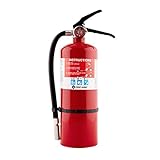
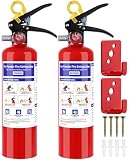
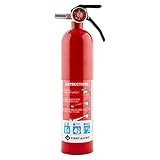

Choose the right extinguisher
Most home shops need an extinguisher labeled ABC. Class A covers wood, paper, and cloth; Class B covers flammable liquids such as some finishes and solvents; Class C indicates suitability around energized electrical equipment. The rating numbers on the label indicate relative firefighting capacity within a class: a larger number generally means more capacity, but also a larger, heavier unit.
A 5-pound ABC extinguisher is a practical starting point for a small shop. A 10-pound unit can offer more capacity, but it is heavier and harder to handle quickly. Check the label and the manufacturer’s instructions for the extinguisher’s rating, weight, inspection schedule, and operating range; don’t choose by canister size alone.
For dust-producing work, an ABC extinguisher is usually a better general-purpose choice than a water-only unit. Water can be dangerous around energized equipment, and a water extinguisher will not handle every shop hazard. However, no portable extinguisher is a substitute for leaving the building and calling emergency services when a fire is growing, producing heavy smoke, or blocking your exit.
Where to place extinguishers
Put at least one extinguisher on the normal path to an exit, near the doorway but not where a fire inside the shop could trap you from reaching it. In a detached shop with a side and garage-door exit, place units near both routes if you can do so without putting them beside likely fire sources. The goal is to reach an extinguisher while keeping the exit behind you.
For a typical one-car shop, a second extinguisher may be useful near the finishing and flammable-liquid storage area, provided it remains accessible from the exit side. Keep it away from the immediate splash or heat zone. Don’t mount an extinguisher behind a lumber rack, inside a locked cabinet, beside a dust collector where a fire could isolate it, or over a machine where stock and cords can block access.
Mount units where they are visible and not likely to be struck by workpieces. Follow the height and mounting instructions on the extinguisher label and local fire code; accessible mounting limits can vary by unit weight and jurisdiction. A wall bracket is generally more reliable than setting the unit on a bench or shelf, where it can get buried under offcuts or knocked onto the floor.
Placement by shop area
| Shop area | Placement approach | Common mistake |
|---|---|---|
| Main work area | Mount near an exit and within easy view from the benches and machines. | Putting it behind a machine or stacked sheet goods. |
| Finishing and solvent storage | Place a suitable ABC unit on the exit side of the area, outside the likely fire zone. | Mounting it directly beside stored finishes where flames could cut off access. |
| Dust collector or electrical panel | Keep the nearest unit reachable from a safe route, not trapped behind equipment. | Assuming the panel location makes a unit above or beside it easy to reach during a fire. |
How many and what size
For a small, single-room shop, one appropriately rated extinguisher near the exit is better than none. Add another when the room has separate exit routes, an isolated finishing area, or equipment that makes one unit difficult to reach from the rest of the shop. More units do not help if they are all clustered together.
Compare a compact unit with a larger one before buying. A lighter extinguisher is easier to lift and aim, which matters if you have limited strength or need to carry it down steps. A larger unit provides more agent and may be a better fit for a larger shop, but only if you can operate it and keep it accessible. For a typical small shop, start by comparing 5-pound ABC fire extinguishers and their listed ratings, mounting hardware, and service instructions.
A basic wall bracket may be enough if it securely fits the canister and is mounted to a stud or suitable masonry anchor. A cabinet can protect a unit from dust and impact, but avoid a locked or difficult-to-open enclosure. If dust is a concern, choose an accessible enclosure intended for extinguisher storage rather than improvising a sealed box that delays access.
Keep access clear and check it
Mark the location with a visible sign if the extinguisher is easy to miss, especially in a crowded shop. Keep at least the approach and mounting area clear; a few feet of uncluttered floor is a practical target in a cramped room. Recheck the sightline after moving a tool cabinet, lumber rack, or dust-collection duct. A newly installed shelf can quietly turn a reachable extinguisher into a blocked one.
Check the pressure gauge, tamper seal, hose, and canister condition at the interval stated by the manufacturer, and after any use. Replace or have the unit serviced if it is discharged, corroded, damaged, or outside its service life. Disposable and rechargeable models have different maintenance requirements, so read the label before buying. A lower-cost disposable unit can be reasonable for a small shop if it has the right rating and you replace it when required; a rechargeable unit may make sense when its service costs and local servicing options are favorable.
Finally, plan around escape, not a heroic attempt to save a project. If you can’t reach the extinguisher with a clear path to the exit, don’t approach the fire. Leave, close the door if safe, and call emergency services. The best placement helps with a small, early fire; it doesn’t make a dangerous one safe to fight.