What's inside
As an Amazon Associate I earn from qualifying purchases. This post may contain affiliate links at no extra cost to you.
A small woodworking shop does not need industrial equipment, but it does need a deliberate safety setup. Most workshop injuries and damage come from predictable failures: airborne dust, poor visibility, clutter around machines, unstable workpieces, and hearing protection that gets abandoned because it is uncomfortable. Spend first on controls that prevent those problems at the source.
As an Amazon Associate we earn from qualifying purchases at no extra cost to you.


Start with Dust Collection at the Source
Respirable wood dust is the safety issue most likely to be underestimated. A shop vacuum with a fine-dust filter is adequate for a random-orbit sander, track saw, router, and other portable tools. Use a hose sized for the tool: a 1-1/4-inch hose is convenient for sanders, while a 2-1/2-inch hose is a better general choice for routers and saws.
For a table saw, planer, or jointer, a dedicated dust collector with a 4-inch hose generally moves more air than a shop vacuum. The collector needs to be connected tightly; an open blast gate, loose fitting, or undersized hose can waste much of its capacity. A cyclone separator or pre-separator is worthwhile if you make a lot of chips, because it keeps the filter from loading and reduces suction loss.
Use a HEPA shop vacuum for woodworking dust when sanding or routing. Empty it before it becomes packed, and never remove the filter to improve airflow. A dust mask is backup protection, not a substitute for collection. For dusty work, a properly fitted N95 is a reasonable minimum; a half-mask respirator with P100 filters is more comfortable for frequent exposure, provided you are clean-shaven where the seal sits.
Protect Your Eyes, Ears, and Lungs
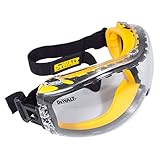
Wear impact-rated safety glasses whenever a machine is running, including during setup if the blade or bit could start unexpectedly. Clear lenses are the practical default indoors. Add a face shield when turning, grinding, routing large pieces, or working with operations that can throw chips toward your face. A face shield alone is not a replacement for safety glasses.
Woodworking noise can exceed safe exposure levels quickly. Table saws, routers, planers, and dust collectors can all produce damaging sound, especially in a small room with hard walls. Keep disposable foam plugs or reusable earplugs near the entrance, and use earmuffs over plugs for long sessions or particularly loud machines. Electronic hearing protectors are useful if you need to hear conversation, but basic plugs are cheaper and work fine when fitted correctly.
Keep first-aid supplies, a charged phone, and a suitable fire extinguisher within easy reach. A 2-A:10-B:C extinguisher is a sensible general-purpose choice for a small shop. Do not store oily rags in an open pile. Put them in a listed, self-closing metal container, because drying oils can generate heat and start a fire without a flame.
Make Machines Hard to Use Incorrectly
The best machine safety equipment is often a reliable switch and enough clearance. A paddle-style emergency stop is easier to hit with a knee or hand than a small toggle switch. Position the switch where you can reach it without leaning across a blade. Unplug machines before changing blades, clearing jams, or reaching below a table.
A table saw needs a riving knife or splitter, a blade guard when the cut allows it, and push sticks for narrow work. Keep at least 6 inches between your hands and the blade; use a push block or jig when the workpiece makes that distance difficult. Never freehand a cut that should be guided by a fence or miter gauge. A zero-clearance insert can reduce small offcuts dropping into the throat plate, but it does not replace a guard or riving knife.
For routers and planers, secure the workpiece before starting. A clamp that slips can turn a routine cut into a projectile. Use featherboards or hold-downs when stock can lift or wander, and inspect them for cracks before applying pressure.
Use the Workbench and Storage as Safety Equipment
A sturdy bench prevents more accidents than many specialized accessories. It should not rock when you plane or chisel. A practical small-shop bench is around 30 to 36 inches deep and 34 to 38 inches high, adjusted for your height and the work you do. Add a bench vise with wooden jaw faces, and keep clamps within arm’s reach rather than balanced on the floor.
For compact tool storage, choose wall-mounted tool storage for a woodworking shop that keeps handles and sharp edges visible. A French cleat wall is inexpensive and easy to rearrange. Drawers are better for small bits and measuring tools; open racks are better for frequently used clamps and hand tools. Store chisels, plane irons, and saws so their edges cannot be contacted accidentally.
Do not overload a shallow shelf with lumber. Long boards should be supported at several points, with heavier stock low to the ground. Keep a clear aisle at least 30 inches wide around machines where possible. A single sheet of plywood leaning unsecured against a wall can fall when another board is removed, so use vertical dividers or a dedicated lumber rack.
Fix Visibility and Trip Hazards
General room lighting should be bright and even, while task lighting should illuminate the cut line without putting your head in the path of dust or kickback. LED shop lights in the 4,000K to 5,000K range give useful color and contrast. Aim for roughly 500 lux, or about 50 foot-candles, at benches and machine surfaces. Eliminate dark areas behind machines where defects and offcuts disappear.
Use cord reels, overhead drops, or wall-mounted cable hooks to keep extension cords out of walkways. Avoid daisy-chaining power strips and extension cords. A grounded, properly sized extension cord is safer than a thin cord that becomes warm under load. If the shop is in a garage or basement, have questionable outlets inspected and use GFCI protection where required by local code, particularly near damp floors or concrete.
| Shop problem | Best first purchase | Cheaper option that can work |
|---|---|---|
| Sanding dust | HEPA shop vacuum with tool connection | Existing vacuum with a new fine-dust filter and separator |
| Large chip-producing machines | Dedicated dust collector with 4-inch ducting | Portable collector used with short, direct hose runs |
| Poor visibility | LED shop lights plus adjustable task light | One additional LED fixture aimed at the work surface |
| Unstable workpieces | Solid bench, vise, clamps, and hold-downs | Heavy plywood-top bench with inexpensive clamps |
A Sensible Buying Order
If the budget is limited, buy eye protection, hearing protection, a proper respirator, and a fire extinguisher first. Next, make the dust collection fit the tools you already own rather than buying a large collector with incompatible fittings. Then improve the bench, lighting, and storage. A woodworking bench vise and clamp setup is often more useful than an expensive accessory system.
Finally, test every safety improvement under real working conditions. Run the dust collector while sanding, check whether chips escape at the blade, and confirm that you can reach the emergency stop without stepping around the workpiece. Equipment that is inconvenient, noisy, or difficult to connect will eventually be left unused. Simple systems that stay installed are safer than impressive systems that live in a box.