3 Best Industrial Laser Cutting Machines (November 2026)
best industrial laser cutting machine guide: three fiber and CO2 cutters for metal plate and sheet goods, compared on power, bed size, and your shop fit.
best industrial laser cutting machine guide: three fiber and CO2 cutters for metal plate and sheet goods, compared on power, bed size, and your shop fit.
As an Amazon Associate I earn from qualifying purchases. This post may contain affiliate links at no extra cost to you.
An industrial laser cutter is a serious shop investment, and the wrong choice wastes floor space, power, and money for years. The decision starts with material: a fiber laser cuts metal fast and clean, while a CO2 laser handles wood, acrylic, and sheet goods with a smoother edge on non-metals. Power and bed size then decide what actually fits through the machine. A 1200-watt fiber unit slices plate that a 55-watt CO2 machine cannot touch, and a large bed swallows full sheets without pre-cutting.
This guide is for small fabrication shops, metalworkers adding in-house cutting, and makers moving from a desktop engraver to real production work. The three machines below were selected from the names and specifications on their Amazon pages, covering the fiber and CO2 classes side by side so the trade-offs stay visible. Floor space, power, and ventilation all shape the final choice. Power, bed size, and software then narrow the field to the machines that fit your floor space and your workflow.
Quick Picks
As an Amazon Associate we earn from qualifying purchases
Product
Best for
Key spec from title
xTool MetalFab 1200W 4-in-1
Cutting steel and stainless plate
1200W fiber laser cutter, 4-in-1
OMTech 60W CO2 16×24
Sheet goods, signs, and craft production
60W CO2 laser cutter, 16×24
xTool P2S 55W CO2
Versatile non-metal shop cutting
55W CO2 laser cutter
How to Choose
Fiber or CO2: match the laser to the material
The laser source decides what the machine cuts well. A fiber laser concentrates its energy in a beam that metal absorbs readily, so it slices steel plate, stainless, and aluminum with speed and a narrow kerf. A CO2 laser spreads its energy differently and excels on wood, acrylic, leather, and other non-metals, leaving a clean edge on sheet goods. Cutting metal on a CO2 machine is slow, and cutting thick plate on a low-power fiber unit is equally frustrating. Before comparing models, list the materials you cut most often and rule out any source that cannot handle them. The wrong source turns an expensive machine into a storage problem.
Power and bed size decide real capacity
Wattage and bed size together set the ceiling on what a cutter can do in a day. Higher wattage cuts thicker material in a single pass and moves faster through thin stock, which matters when a job involves dozens of identical parts. Bed size decides whether a full sheet loads without pre-cutting, and a bed that is too small forces extra handling on every job. Check the listing for the rated cutting thickness per material rather than the headline wattage alone, since a high number on the wrong material still cuts slowly. Measure your floor space too, because an industrial cutter needs clearance around it for loading and maintenance.
Safety and ventilation in the shop
Laser cutting produces fumes, fine particles, and a bright beam that demands respect, so plan the safety setup before the machine arrives. Ventilation is the first requirement: cutting metal and acrylic releases fumes that must leave the building through ducting or a filtered extractor, never into a closed shop. Eye protection rated for the laser wavelength belongs on everyone near the machine while it runs, and the work area should stay clear of flammable offcuts and solvents. Never leave a running cutter unattended, and keep a fire extinguisher within reach. The listings for these machines include their safety guidance and ventilation requirements. Keep the beam path clear and never bypass the enclosure interlocks.
Software, support, and running costs
A cutter is only as useful as the software that drives it, so confirm the file formats and workflow before buying. Most industrial cutters accept common vector formats and pair with design software you already use, but the details vary by brand. Consumables add up: lenses, nozzles, and assist gas need regular replacement, and fiber machines need clean, dry air or nitrogen for the best edge. Check what the listing includes, since some machines ship with a chiller or an air assist and others sell them separately. A brand with reachable support and stocked spare parts saves weeks when something breaks mid-job. Ask the seller which spare parts ship fastest.
The 3 Best Options
xTool MetalFab 1200W 4-in-1
Top Pick
xTool MetalFab 1200W 4-in-1
Best for: small fabrication shops cutting steel and stainless plate.
1200W fiber laser power
4-in-1 multifunction design
Cuts metal plate and sheet
Listed on Amazon with stock confirmed by third-party trackers
The xTool MetalFab 1200W is the metal-cutting pick in this guide, and its fiber source is the reason. At 1200 watts, it slices steel plate and stainless far faster than any CO2 machine in this class, and the 4-in-1 design bundles cutting with engraving and other functions so one machine covers several shop tasks. That breadth suits a small fabrication shop that cannot justify a separate machine for every process. The trade-offs are real: a fiber machine costs more, needs a suitable power supply, and still needs ventilation for metal fumes. For a shop whose work is mostly metal, though, nothing else here keeps up. Bundled functions save floor space.
Watch out for: higher power draw and cost than the CO2 machines in this guide.
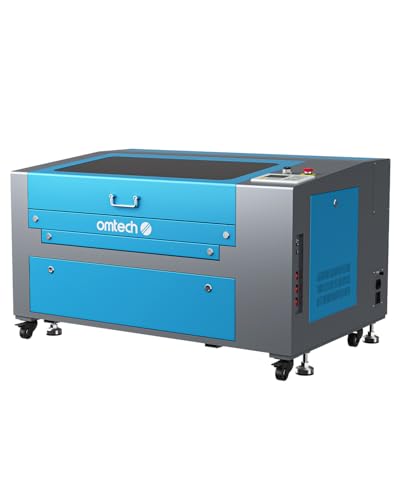
OMTech 60W CO2 16×24
Runner-Up
OMTech 60W CO2 16×24
Best for: sign shops and makers cutting wood and acrylic sheets.
The OMTech 60W CO2 is the sheet-goods workhorse for shops that cut wood, acrylic, and signs all day. Its 60-watt tube handles plywood, MDF, and acrylic sheets faster than a desktop machine, and the 16-by-24-inch bed swallows standard sheet sizes without pre-cutting. CO2 cutting leaves a smooth, sealed edge on acrylic and a clean char line on wood, which suits signage and craft production. Sealed acrylic edges need no finishing. Metal is outside its range, so a shop that needs steel should look at the fiber pick instead. For non-metal sheet work, this is the most capable machine here. The enclosed cabinet keeps fumes contained for ducting outside.
Watch out for: not suited to cutting metal plate.
xTool P2S 55W CO2
xTool P2S 55W CO2
Best for: mixed non-metal cutting in a compact shop.
The xTool P2S 55W is the versatile CO2 pick for a shop that wants strong cutting across many non-metal materials without stepping up to a larger industrial frame. Its 55-watt tube cuts plywood, acrylic, leather, and cardboard cleanly, and the enclosed design keeps fumes contained for ducting outside. Compared with the OMTech, it trades a little raw power for a more compact footprint and a simpler workflow, which suits a crowded shop or a maker moving up from a desktop engraver. It will not cut metal plate, and thick hardwood needs slower passes. For mixed non-metal work in a small space, it is the balanced choice. It fits crowded shops.
Watch out for: thick hardwood needs slow passes, and metal is out of range.
Which One Fits Your Situation
Cutting steel and stainless plate
Metal work belongs to the fiber machine. The xTool MetalFab 1200W cuts plate at a speed and edge quality neither CO2 machine can approach, and its 4-in-1 design adds engraving without a second purchase. Budget for power and ventilation, since a fiber cutter is not a plug-and-play desktop tool. A shop that cuts metal daily will recover the difference in throughput. Throughput decides the pick when metal work fills the schedule.
Signage and sheet-goods production
Sign shops live on plywood, MDF, and acrylic, and the OMTech 60W CO2 is built for that volume. Its bed fits standard sheet sizes, the 60-watt tube keeps pace with repeat jobs, and the sealed acrylic edge needs no finishing. The xTool P2S is the alternative when floor space is tight and the job mix leans toward smaller pieces rather than full sheets. Repeat jobs reward a machine that holds its settings between runs.
Moving up from a desktop engraver
A maker outgrowing a desktop engraver should look at the xTool P2S 55W first. It keeps the enclosed, approachable workflow of a desktop machine while adding real cutting power for plywood and acrylic. The OMTech 60W is the next step when sheet size and volume outgrow the P2S, and the MetalFab is the jump for anyone whose work turns to metal. A compact footprint matters when the shop already feels crowded.
A small shop with mixed materials
Mixed work splits the decision by material, not by brand. If the mix includes metal plate, the MetalFab is the only pick that covers it. If the mix is wood, acrylic, and leather, the OMTech 60W handles the largest sheets while the P2S fits the tightest space. Buying a CO2 machine for occasional metal cutting is the mistake to avoid. Match the machine to the material first and the brand second.
Common Mistakes
Buying a CO2 laser for metal plate and discovering it cannot cut steel at any useful speed on plate no matter the settings in the shop.
Choosing a bed smaller than the sheet sizes you actually buy, forcing pre-cutting and extra handling on every single job and wasted stock.
Skipping ventilation planning and then filling a closed shop with cutting fumes on the very first job.
Comparing wattage across fiber and CO2 machines as if the numbers meant the same thing for every material in the listing.
Forgetting consumables, assist gas, and spare lenses when budgeting for the first year of ownership, maintenance, and downtime.
Frequently Asked Questions
Can a CO2 laser cut metal?
A CO2 laser can mark some metals and cut very thin foil, but it cannot cut steel plate at a useful speed. Metal absorbs the fiber wavelength far better, which is why fiber machines dominate metal cutting. If your work includes steel plate, choose a fiber machine like the MetalFab rather than forcing a CO2 unit beyond its range.
How thick a metal can a 1200W fiber laser cut?
Thickness depends on the metal type and the assist gas, so check the listing for the rated thickness per material. A 1200-watt fiber unit handles common plate gauges in a single pass, while thicker plate needs slower speeds or multiple passes. The listing states the rated range, and a live check with the seller settles any borderline case.
Do I need ventilation for a laser cutter?
Yes, every laser cutter needs fumes moved out of the shop. Cutting wood, acrylic, and metal all release smoke and fine particles that should never build up indoors. Most machines duct through a window or a dedicated vent, and a filtered extractor suits shops without an outside wall. Plan the ducting route before the machine arrives. Duct fumes outside the shop.
What file formats do industrial laser cutters use?
Most industrial cutters accept common vector formats such as SVG and DXF, and many pair with design software you already own. The exact workflow varies by brand, so confirm the supported formats on the listing before buying. A machine that cannot read your files will slow every job, no matter how powerful its laser is. Confirm supported formats before ordering.
J
JD's Woodworks Editorial Team
We compare specs, warranty terms, long-term owner feedback and street pricing before anything earns a spot. Rankings are never paid.
Affiliate disclosure. As an Amazon Associate we earn from qualifying purchases at no extra cost to you. Prices accurate as of the date shown.
Miter saw vs table saw: compare crosscuts, rip cuts, accuracy, space, and value to choose the right saw for your shop and your first woodworking projects.
Compare five solar portable generators for shops, campsites, and outages, covering battery size, output, solar charging, outlets, and what to check first.
The best portable CNC machines for small shops and shared spaces, compared by footprint, weight, work area, and setup. Compact benchtop picks for wood, acrylic, and soft metal.
Find the best Penn Industries dust collector on Amazon: the PSI Woodworking DC3XX blower and the DC725 tabletop unit, compared on airflow, pressure, and shop fit.
Compare five large stationary horizontal metal band saws for fabrication shops on cutting capacity, motor, power supply, blade speed, and mitering before buying.
Find the best mortising chisel bits for clean square mortises in this guide: hollow-chisel sets and singles compared by size, shank, steel, and machine fit.
Find the best drill press base for your shop. Compare rolling stands and mobile bases by capacity, footprint, casters, locking, and setup before you buy.
Find the best dewalt planer dw734 blades for your 12-1/2-inch thickness planer. Compare OEM and aftermarket 3-knife sets, steel types, and fit before you buy.