What's inside
- Best Planer Machines: Benchtop and Stationary Thickness Planers
- Benchtop or stationary?
- Representative machines compared
- Choose by the work you actually do
- Straight knives versus helical cutterheads
- Feed rate, dust collection, and real capacity
- Ownership costs and setup details worth checking
- What To Look For On The Spec Sheet
- Snipe: Why It Happens and How To Stop It
- Common Mistakes When Buying A Planer
- Knife and Insert Upkeep: What Ownership Actually Involves
- Noise Levels and Workshop Practicalities
- Setting Up A New Planer: First-Board Checklist
- Myths vs Facts About Thickness Planers
- Matching Planer Width To Your Typical Stock
- Reading Common Planing Defects: What Each One Tells You
- Storage and Long-Term Care Between Projects
- Entry-Level, Mid-Range, and Upgrade-Tier Planers: What Actually Changes
- Handling Rough-Sawn and Reclaimed Stock Without Tearing It Up
- Blade and Insert Replacement Cost Over the Machine’s Life
- Dust Collection CFM: Matching Your Planer to a Shop Vac or Dust Collector
- When a Drum Sander or Jointer Is the Better Tool Instead
- Portable and Jobsite Use: What Changes Outside a Fixed Shop
- Warranty Coverage and What Voids It Early
- Flattening Cupped, Bowed, or Twisted Boards With a Planer Sled
- Building Infeed and Outfeed Support for Long Boards
- Humidity and Seasonal Wood Movement After Planing
- Frequently Asked Questions
As an Amazon Associate I earn from qualifying purchases. This post may contain affiliate links at no extra cost to you.
Our Top Picks
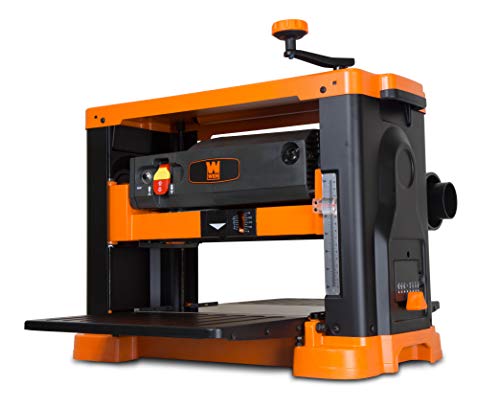 WEN PL1326 15-Amp 13-Inch Spiral Benchtop Thickness PlanerSpiral, 13-Inch, Single Speed81 poundsCheck on Amazon
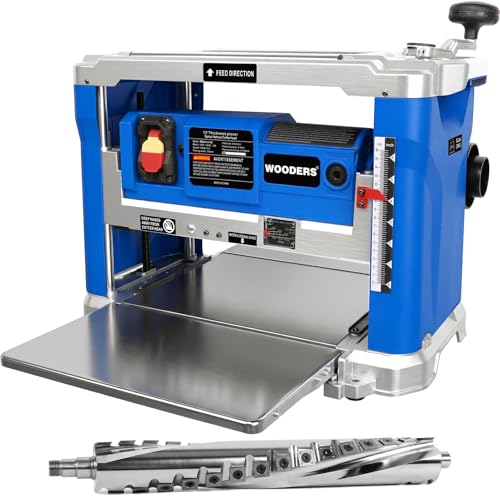 WOODERS 13-Inch Thickness Planer with Spiral Helical Cutterhead22.4 x 14.2 x 17.9 inches62 PoundsCheck on Amazon


Best Planer Machines: Benchtop and Stationary Thickness Planers
For most small shops, the best planer machine is a 12- to 13-inch benchtop model with a helical cutterhead if quieter cutting and easier knife changes matter; choose a straight-knife model to spend less, or step up to a stationary 15-inch machine when you regularly plane wide, heavy stock.
The right choice depends less on headline horsepower than on the widest boards you handle, how often you use the machine, and whether your dust collector can keep up. The comparison below focuses on those practical limits. Capacities and weights are manufacturer-published figures; verify the exact configuration before buying, since cutterhead versions and specifications can vary.
As an Amazon Associate we earn from qualifying purchases at no extra cost to you.


Benchtop or stationary?
A benchtop planer suits a garage or shared shop where floor space is limited and boards are usually narrower than 12 inches. It can be moved or stored, but long boards need infeed and outfeed support, and frequent heavy use can make the lighter frame feel less convenient.
A stationary planer is the better fit for repeated milling, wider boards, and heavier stock. Its mass helps resist vibration, but it needs dedicated floor space and typically requires a 240-volt circuit. Check your electrical service, dust collection, and delivery access as part of the purchase—not after it arrives.
Representative machines compared
| Model | Type and cutterhead | Maximum width | Maximum thickness | Feed rate | Approx. weight | Dust port |
|---|---|---|---|---|---|---|
| DEWALT DW735X | Benchtop, three-knife straight | 13 in. | 6 in. | 96 or 179 cuts per inch settings | About 92 lb. | 4 in. |
| Makita 2012NB | Benchtop, two-knife straight | 12 in. | 6-3/32 in. | 28 ft/min | About 62 lb. | 2-1/2 in. |
| DeWalt DW735 with aftermarket helical head | Benchtop, segmented carbide inserts | 13 in. | 6 in. | Two speed settings; check head compatibility | Varies by configuration | 4 in. |
| JET JWP-15B | Stationary, helical cutterhead | 15 in. | 6 in. | 16 or 20 ft/min | About 500 lb. | 4 in. |
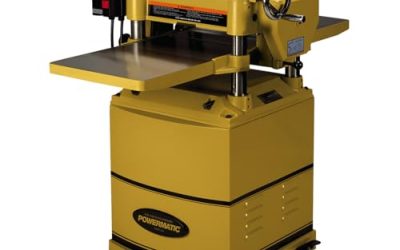
| Powermatic 15HH | Stationary, helical cutterhead | 15 in. | 6 in. | 16 or 20 ft/min | About 500 lb. | 4 in. |
These figures describe different design trade-offs, not a direct ranking. The DW735X is a common high-capacity benchtop choice, while the Makita is lighter and has a smaller dust outlet. The JET and Powermatic are examples of 15-inch stationary machines; confirm current specifications and included accessories with the manufacturer. A retrofit cutterhead is a separate purchase, and compatibility should be checked by exact planer model.
Choose by the work you actually do
| Your situation | Best fit | Why |
|---|---|---|
| Occasional furniture projects, tight budget, limited storage | 12-inch straight-knife benchtop planer | Lowest entry cost; knives are replaceable or resharpenable depending on design. |
| Weekly use, mostly boards under 13 inches, noise-sensitive shop | Benchtop planer with helical head | Staggered inserts can reduce tear-out on difficult grain and avoid changing a full knife set. |
| Frequent milling, wide stock, space and 240-volt power available | 15-inch stationary planer | More stable handling and greater width capacity for production or larger furniture parts. |
| Mostly rough lumber, occasional wide panels, no room for a 500-pound machine | Benchtop planer plus a jointer or flattening workflow | Planer thicknesses parallel faces; it does not flatten a cupped board by itself. |
Straight knives versus helical cutterheads
A straight-knife head uses long blades spanning the cutter width. It is usually less expensive up front and can leave a clean finish on straight-grained stock. Knives eventually dull or nick, and a small defect can leave a line along the board. Replacing or setting blades takes care: uneven projection can cause ridges, poor finish, or unsafe operation.
A helical head uses rows of small, typically carbide inserts set at an angle. The shearing cut often handles figured grain with less tear-out and can run more quietly, though results still depend on grain direction, depth of cut, and feed rate. If an insert gets nicked, rotate or replace that insert rather than removing a full-width blade. The trade-off is higher initial cost and the need to keep the correct replacement inserts on hand.
Neither head eliminates tear-out or maintenance. Avoid deep cuts in figured wood, keep knives or inserts sharp, and make a light finishing pass. A planer is also not a substitute for a jointer: first create one flat face, then plane the opposite face parallel.
Feed rate, dust collection, and real capacity
Feed rate affects the balance between finish and throughput. Some benchtop machines offer a slower setting for more cuts per inch and a finer surface, and a faster setting for rough dimensioning. Stationary models may list feed in feet per minute; compare that number only alongside cutterhead speed and knife or insert arrangement. A faster feed is not automatically better for finish quality.
Dust-port diameter is a compatibility check, not a guarantee of adequate extraction. A 4-inch port is common on larger benchtop and stationary planers; some compact machines use a 2-1/2-inch outlet. A reducer can connect different duct sizes, but the narrow section may restrict airflow. Planer chips are bulky, so use a collector and ductwork capable of moving them without frequent clogging. Keep the hose short where possible, avoid sharp bends, and check the hood for packed chips after use.
Maximum width is not the same as comfortable working width. A nominal 13-inch machine has little margin for a board that is slightly oversized or irregular. Measure your widest finished parts, then allow room for rough-stock variation. Maximum thickness is also only a pass-through limit: a board must be short and stable enough to feed safely, and long stock needs support to prevent snipe or tipping.
Ownership costs and setup details worth checking
- Knives and inserts: Include replacement costs in the budget. Keep a spare set of straight knives or several matching inserts so a nick does not stop a project.
- Rollers and feed surfaces: Dust and resin can reduce grip, leading to slipping or uneven feeding. Clean rollers and wax the table with a suitable non-staining paste wax; keep wax off the rollers.
- Snipe: Slightly deeper cuts at the board ends are common. Support long boards level with the bed, keep pressure on the infeed and outfeed ends as appropriate, and take a final light pass. Test the machine’s head-lock or roller settings if snipe persists.
- Storage and mobility: A benchtop planer still needs a rigid stand and room for long boards. A stationary model needs a stable location, safe chip collection, and enough space to feed stock without obstruction.
As a practical rule, buy for your recurring work rather than the rare widest board. A well-supported 13-inch wood planer machine can serve many small shops; the extra width, mass, and electrical demands of a stationary planer make sense when they solve a regular production bottleneck.
What To Look For On The Spec Sheet
Every planer spec sheet lists the same handful of numbers, but they do not carry equal weight. Before comparing machines by price tier or brand reputation, it helps to know which figures predict real shop performance and which ones are mostly marketing. Four specs do most of the work: cutterhead type, maximum depth and width capacity, motor amperage paired with circuit requirements, and table length with infeed and outfeed support.
Cutterhead Type and Knife Count
A cutterhead carries either two or three straight knives spanning the full width of the drum, or a helical arrangement of small, individually indexed carbide inserts set in a spiral pattern. Straight-knife heads cut with the entire blade edge engaged at once, which is efficient but means every knife nick shows up as a line across the board. Helical heads engage wood with a shearing, staggered action from dozens of small cutting edges, so a single damaged insert affects only a narrow strip and can be rotated or swapped without removing the whole head. The trade-off is that helical heads add to the purchase cost and the inserts are a recurring expense, while straight knives are simpler to sharpen or replace as a set and keep the machine simpler overall.
Maximum Cut Depth and Width Capacity
Depth capacity is usually quoted as a single-pass maximum in fractions of an inch, but the number that matters day to day is sustainable depth per pass on hardwood versus softwood, since pushing a benchtop machine to its rated maximum on dense stock tends to stall the motor or leave a rough, torn surface. Width capacity is more straightforward: measure the widest boards you actually plane, not the widest you might someday own, and leave a small margin. A 13-inch capacity benchtop machine covers the overwhelming majority of furniture-grade stock; anything wider, such as glued panels or wide slabs, pushes you toward a stationary machine regardless of other preferences.
Motor Amperage and Circuit Requirements
Most benchtop planers are built to run on a standard 15-amp, 120-volt household circuit, which caps the motor’s practical power regardless of what the housing badge claims. A machine drawing close to that 15-amp ceiling will trip a shared circuit if a dust collector or shop vacuum runs on the same line, so check what else is plugged into that breaker before assuming a stall is a tool defect. Stationary planers more commonly step up to a 220-volt circuit, which lets a larger motor maintain speed under load on wide, dense boards without the amperage ceiling that limits benchtop machines.
Table Length and Infeed/Outfeed Support
A longer bed, measured from infeed to outfeed roller, supports more of a board’s length at once and reduces how far an unsupported end can droop before it reaches the cutterhead. Short beds are the main reason benchtop machines need external roller stands for anything longer than a couple of feet, while stationary machines with longer cast tables handle long boards with less outside support. When comparing two machines with similar depth and width numbers, the one with the longer combined table and larger infeed/outfeed wings will generally need less extra equipment to get clean results on long stock.
| Spec | Typical Benchtop Range | Typical Stationary Range | Why It Matters |
|---|---|---|---|
| Width capacity | 12-13 in | 15-20 in | Sets the widest board you can plane in one pass |
| Motor circuit | 15-amp, 120V | 220V, often dedicated | Caps sustainable cutting power under load |
| Cutterhead | 2-3 straight knives or helical inserts | Straight knives or helical, larger diameter | Determines finish quality and knife upkeep |
| Table/bed length | Short, needs roller stands | Long, less outside support needed | Affects snipe risk on long boards |
Snipe: Why It Happens and How To Stop It
Snipe is the shallow gouge that appears near the ends of a board after planing, and it is the single most common complaint about benchtop planers. It happens because the board is held flat by an infeed roller ahead of the cutterhead and an outfeed roller behind it; when the trailing end of the board passes the infeed roller, that roller is no longer riding on the workpiece, and the slight mechanical play in a benchtop head’s support columns lets the head shift and take a deeper bite right at that moment. The same thing happens in reverse at the leading end if it is unsupported and droops before it reaches the outfeed roller.
The length of the sniped section is roughly the distance between the roller and the knives, which is why it shows up as a short mark rather than along the whole board. The most consistent fix is external support: roller stands or an auxiliary table set level with the planer’s own bed, placed both ahead of and behind the machine, so the board never loses support on either end while it is inside the cutting zone. Some benchtop models let you set the fold-down infeed and outfeed wings a fraction above level rather than perfectly flat, which holds the board down against the bed instead of letting it rise; this helps on some machines and does nothing on others, so it is worth testing on your own setup rather than assuming a fix will transfer between models. A sacrificial backer board longer than your workpiece, run through underneath or alongside it, keeps the rollers engaged on the sled instead of the short piece and removes snipe entirely for small parts. For a batch of same-thickness boards, feeding them end to end so only the first and last pieces of the run take the hit is a simple way to limit the damage to pieces you can trim anyway.
Common Mistakes When Buying A Planer
Most buyer’s remorse with planers traces back to one of a handful of avoidable mistakes made before the purchase rather than any defect in the machine itself.
- Sizing to the widest board you might ever plane, not the widest you plane regularly. Paying for 15 inches of width capacity that sits unused for years adds expense and bench footprint without a corresponding benefit.
- Ignoring the dedicated circuit question. A machine that needs its own 220-volt line is a different installation project than one that plugs into an existing outlet, and that distinction should be settled before the machine arrives, not after.
- Assuming a higher depth-of-cut rating means faster work. Taking the maximum rated depth on hardwood in one pass usually produces a worse surface and more snipe than two lighter passes, so the headline number rarely reflects how the machine should actually be run.
- Overlooking dust collection fit. A planer removes a large volume of shavings quickly, and a chute that does not match your shop vacuum or collector’s hose diameter turns every session into a cleanup chore.
- Skipping the knife-change method. Straight-knife heads that require precise shimming or jig-based setting take longer to service than insert-style heads, and that difference only becomes obvious the first time a knife nicks.
- Buying a stationary machine without checking the footprint. A 15-inch planer is heavy and needs a permanent spot plus usually help to move; measuring the space before ordering avoids a difficult return.
Knife and Insert Upkeep: What Ownership Actually Involves
Every planer eventually needs its cutting edges addressed, and the process differs enough between cutterhead types that it is worth planning for before you buy rather than after the first nick. Straight-knife heads on most benchtop machines use double-edged, reversible blades: when one edge dulls, the knife is removed, flipped, and reinstalled so the second edge does the work, which means a set of knives gives two working edges before they need sharpening or full replacement. Setting knife height correctly matters more than the swap itself, since even a few thousandths of misalignment between the two knives shows up as a visible ridge down the board; most manufacturers include a magnetic or jig-based setting tool for this reason, and skipping it in favor of eyeballing the height is a common cause of uneven cuts after a blade change.
Helical heads spread wear across many small inserts rather than two long knives, so a single nick from a stray staple or embedded grit affects one insert rather than the full cutting width. Inserts are typically four-sided, so rotating a worn edge to a fresh one is a quick process with a hex key rather than a full knife removal, and because only the damaged inserts need attention, a session with rough-sawn or reclaimed lumber does not necessarily mean servicing the whole head. The trade-off is that a full set of replacement inserts covers more individual pieces than a set of straight knives, which is worth weighing against how often your material includes embedded debris. Either way, keeping the cutterhead, rollers, and table surface clean of resin and pitch buildup reduces feed inconsistency that otherwise gets blamed on the knives themselves.
Noise Levels and Workshop Practicalities
Thickness planers are among the loudest machines in a typical home shop, and the two cutterhead types differ noticeably here as well. A straight-knife head strikes the board with the full blade edge at once, producing a sharp, repetitive impact noise, while a helical head’s staggered inserts produce a lower-pitched, more continuous cutting sound that many woodworkers describe as less fatiguing over a long session even when the measured volume is similar. Hearing protection is worth treating as mandatory equipment rather than optional, regardless of which head you choose.
Beyond noise, a few practicalities tend to get overlooked until after setup. Benchtop machines need a stable, vibration-resistant surface; running one on a flimsy folding table amplifies both noise and vibration and can introduce chatter marks that look like a tool problem but are actually a mounting problem. Shaving volume is substantial even for a short run, so a shop without either a dedicated dust collector or at minimum a shop vacuum rated for continuous use will accumulate chips faster than expected, which affects both cleanup time and the risk of the chute clogging mid-cut. Finally, feeding direction relative to grain still matters even with powered infeed rollers; planing against a steep grain reversal on figured wood can tear the surface regardless of how sharp the knives are, so a light finishing pass and a quick look at grain direction before committing a wide board is cheap insurance.
Setting Up A New Planer: First-Board Checklist
A few minutes of setup before the first board goes through prevents most of the early frustration new owners report.
- Level the machine on its stand or bench, since a planer that rocks even slightly will telegraph that movement into cut depth and produce inconsistent thickness across a run.
- Check and, if needed, adjust the infeed and outfeed table wings so they are level with the main bed, or very slightly above it if the manufacturer’s manual recommends that setting for snipe control.
- Confirm the knives or inserts are seated evenly by running a straightedge or feeler gauge across them, since uneven height from the factory is not unheard of and is far easier to fix before the first cut than after a ruined board.
- Connect dust collection before running any boards; chips that pack around the cutterhead on the very first pass can affect feed consistency and are avoidable with the right hose size connected from the start.
- Run a test board of scrap in the same species and thickness range you plan to work with, taking a light pass first to confirm the depth setting and feed rate before committing a good piece of material.
- Set up external roller stands or an auxiliary outfeed table at bed height if you plan to plane anything longer than about three feet, rather than waiting until the first sniped board shows the need.
Myths vs Facts About Thickness Planers
A few persistent claims about planers do not hold up against how the machines actually work.
Myth: a higher horsepower rating always means faster, cleaner cuts. Fact: on a benchtop machine tied to a 15-amp household circuit, the motor’s usable power is capped by that circuit regardless of the horsepower figure printed on the housing, so two machines on the same circuit type perform more similarly under load than their nameplate numbers suggest.
Myth: helical cutterheads eliminate snipe. Fact: snipe is caused by how the board is supported through the infeed and outfeed rollers, which is independent of cutterhead type; a helical head can still snipe on an unsupported board, and a straight-knife machine with good outfeed support can run snipe-free.
Myth: a wider capacity machine is always the safer buy. Fact: extra width capacity that goes unused adds footprint, weight, and typically expense without a performance benefit, and a correctly sized narrower machine run well outperforms an oversized one run carelessly.
Myth: planer knives need replacing after every project. Fact: reversible straight knives offer two usable edges before replacement, and both knife types primarily dull from contact with embedded grit, old finish, or staples rather than from clean, dry lumber alone, so the actual service interval depends heavily on material condition, not project count.
Matching Planer Width To Your Typical Stock
Buyers often size a planer around an aspirational project rather than the stock they actually feed through it week to week, and that mismatch is one of the more costly planning errors because it is hard to correct after the fact without buying a second machine. Someone who mostly dimensions lumber for small furniture, boxes, or trim work rarely needs to plane boards wider than about 10 inches, since most furniture parts are glued up from narrower stock anyway; a 12- to 13-inch benchtop machine leaves comfortable margin for that work without paying for capacity that never gets used. Anyone who regularly flattens wide slabs, charcuterie-board blanks, or glued panels before final sanding benefits from the extra few inches a 15-inch stationary machine provides, since planing a panel in two overlapping passes on a narrower machine risks a visible step where the passes meet if the setup is not perfectly consistent between them.
It is also worth accounting for how width capacity interacts with motor power: a wide cut removes material across the entire cutterhead at once, which is a heavier load than a narrow cut at the same depth, so a benchtop machine’s 15-amp ceiling is reached sooner on wide boards than narrow ones. A woodworker who occasionally needs to flatten something wider than their regular machine’s capacity is often better served by taking lighter passes and flipping the board to plane from both edges toward the center, rather than buying a larger machine solely for occasional wide work.
Reading Common Planing Defects: What Each One Tells You
A board coming off the planer rarely lies about what is wrong with the setup; the defect pattern usually points to a specific cause rather than a general “something is off” problem, and recognizing the pattern saves time chasing the wrong adjustment.
Fuzzy or Torn Grain Instead of a Clean Cut
A fuzzy, torn surface rather than a clean slice almost always traces back to either dull knives or cutting against the grain direction on figured or interlocked-grain wood. Dull edges tear fibers instead of shearing them cleanly, and the fix is sharpening or replacing the cutting edges rather than adjusting feed rate. If the knives are known to be sharp, flipping the board end for end and taking a lighter pass often resolves grain-direction tearing on figured species.
Ridges or Steps Running the Length of the Board
A consistent ridge at the same spot across every board usually means one knife or insert is set slightly higher or lower than its neighbors, so it is cutting a fraction deeper and leaving a step where the two engage the wood differently. This calls for rechecking knife height with a straightedge or the manufacturer’s setting jig rather than adjusting the overall depth of cut, which will not correct an alignment problem.
Tapered Thickness From One End of a Board to the Other
A board that measures thicker on one end than the other after a single pass often means the infeed or outfeed table wings are not level with the main bed, causing the board to ride at a slight angle through the cutterhead. Rechecking and relevelling the table wings, or checking for sag in an auxiliary support table, usually resolves a consistent taper.
Chatter Marks or a Washboard Texture
A rippled, washboard-like texture across the surface points to vibration, either from the machine sitting on an unstable base, a loose cutterhead bearing, or feeding the board too quickly for the knives to keep up with a clean shearing cut. Checking that the machine is bolted to a rigid stand or bench and slowing the feed rate on dense material are the first two things to try before assuming a mechanical fault.
Storage and Long-Term Care Between Projects
A planer that sits idle between projects benefits from a few minutes of care that most owners skip until a problem forces the issue. Resin and pitch that build up on the infeed and outfeed rollers during a project will harden if left uncleaned, and hardened deposits create uneven grip on the next board fed through, which can show up as inconsistent feed speed or added strain on the motor. Wiping the table surface with a light coat of a paste wax or a dedicated table-care product after cleaning off sawdust reduces friction and helps prevent surface rust on cast-iron beds, particularly in a shop without climate control. Knives or inserts left in the machine during long storage periods are also more prone to picking up surface corrosion in a humid shop than ones given a light protective wipe-down, so a quick pass with a rust-inhibiting cloth before an extended break is cheap insurance against finding pitted edges on the next project.
Entry-Level, Mid-Range, and Upgrade-Tier Planers: What Actually Changes
Most buyers sort planers into three practical tiers rather than by brand name alone. The jump between tiers usually shows up in cutterhead type, table support, and how forgiving the machine is on figured or reclaimed lumber, not just in rated horsepower.
| Tier | Common cutterhead | Best suited for |
|---|---|---|
| Entry-level benchtop | Straight two- or three-knife | Occasional projects, narrower stock |
| Mid-range benchtop | Straight knives or basic helical | Regular hobby use, mixed species |
| Upgrade-tier benchtop or light stationary | Helical insert cutterhead | Frequent use, figured or reclaimed wood |
Stepping up a tier rarely changes the basic cut-depth numbers by much. What changes is how consistently the machine holds that depth across a full board, how quickly knives or inserts can be swapped, and how much sanding the shop has to do afterward to make up the difference.
Handling Rough-Sawn and Reclaimed Stock Without Tearing It Up
Rough-sawn and reclaimed boards hide grit, old nail holes, and reversing grain that a planer sized for finished lumber was never asked to handle. Taking lighter passes on the first few cuts lets the cutterhead find a stable reference face before the knives meet the roughest material.
- Run a hand-held metal detector or a careful visual check over reclaimed boards before the first pass; a buried fastener can chip a full set of knives in a single pass.
- Expect a slower practical feed rate on reclaimed stock than the spec sheet’s rated feed speed, since that number assumes clean, kiln-dried lumber.
- Helical cutterheads tend to shrug off small embedded grit better than straight knives, since each insert only contacts a narrow strip of the cut at a time.
Blade and Insert Replacement Cost Over the Machine’s Life
Straight-knife planers are simpler up front, but every knife change means removing, sharpening or replacing, and resetting two or three full-length blades at once. Helical cutterheads use small reversible or replaceable inserts, so a single nicked carbide square can be rotated or swapped without touching the rest of the head.
Over several years of regular use, the insert system commonly works out to less total downtime than a straight-knife head, because only the damaged inserts need attention instead of a full knife set every time something gets nicked.
Dust Collection CFM: Matching Your Planer to a Shop Vac or Dust Collector
A planer throws far more chip volume per minute than most other shop tools, so the dust port’s airflow requirement matters more here than it does on a saw or router. Benchtop machines are typically built around a 2.5- to 4-inch port intended for a shop vacuum, while stationary planers with a 4-inch port generally expect a dedicated dust collector moving substantially more air to keep the hood clear during a full-width cut.
Undersized extraction does not just mean a messier floor; chips that are not pulled away fast enough can repack against the cutterhead and show up as streaks or minor burnishing on the board’s surface.
When a Drum Sander or Jointer Is the Better Tool Instead
A planer is built to make two faces of a board parallel and bring it to a target thickness, not to flatten a board that is already twisted or bowed. A jointer pass or a hand-planed reference face should come first on stock with real cup or twist, otherwise the planer simply copies that unevenness through to the opposite face.
A drum sander, by contrast, is the better choice for thin veneers or delicate figured wood that a cutterhead’s knives could blow out; it removes material more slowly through abrasive contact instead of a shearing cut, trading speed for control.
Portable and Jobsite Use: What Changes Outside a Fixed Shop
Benchtop planers are the only realistic jobsite option, and their portability brings its own checklist. Dedicated circuits are rarely available on a job site, so confirming the machine’s running amperage against whatever generator or temporary power is on hand matters more than it does in a home shop with its own panel.
Folding or removable infeed and outfeed tables, a carry handle positioned for balance rather than just convenience, and a dust port that still seals well after repeated setup and breakdown are the practical differences that separate a planer that travels well from one that merely can be lifted.
Warranty Coverage and What Voids It Early
Most benchtop planers carry a limited warranty that covers the motor and drive components but explicitly excludes knives, inserts, and other wear parts from the start, since those are expected to need periodic replacement regardless of defects. Stationary machines sold for small shops commonly extend coverage a bit further on the motor, reflecting the heavier duty cycle they are built for.
Running a benchtop unit well past its rated duty cycle, feeding wet or chemically treated lumber, or skipping the recommended extension-cord gauge are the kinds of use patterns manufacturers point to most often when a warranty claim is denied.
Flattening Cupped, Bowed, or Twisted Boards With a Planer Sled
A thickness planer makes two faces parallel to each other, but it cannot remove warp on its own, since the rollers press a cupped or twisted board flat against the bed for just that pass and it springs back once released. A planer sled, a flat platform with shims or hot-glued wedges supporting the low spots, holds the board rigid in its warped position while the first face is cut flat, after which the newly flat face rides directly on the bed for the second pass. Skipping the sled on noticeably warped stock is one of the more common reasons a board comes out thinner on one end than the other despite a “correct” setting on the depth wheel.
Building Infeed and Outfeed Support for Long Boards
A board longer than the planer’s table has nothing to support it the moment the trailing end clears the infeed side, and that unsupported weight is what pulls the board down and creates snipe even on a machine with a reputation for handling it well. Roller stands set level with the table, a pair of sawhorses with a smooth board laid across them, or simple fold-down extension wings bolted to the machine all solve the same problem: keeping the board’s weight on a plane with the cutterhead for the entire pass, not just the portion resting on the factory table.
Humidity and Seasonal Wood Movement After Planing
Wood keeps absorbing and releasing moisture after it leaves the planer, so a board milled to a precise thickness in a humid week can measure differently a month later once it reaches equilibrium with a drier room. This is why many shop references recommend planing stock slightly thick and letting it rest for a day or two before a final light pass, rather than hitting the exact target thickness in one session. Flat-sawn boards move more across their width than quartersawn boards of the same species, which is also why a panel glued up from mixed grain orientations can develop a step at the seam weeks after assembly even though it was flat when it left the machine.
Frequently Asked Questions
Do I need a helical cutterhead, or is straight-knife good enough?
Straight-knife heads handle clean, dry lumber well and cost less to buy and maintain as a set. Helical heads are worth the added expense if you frequently plane reclaimed wood, figured grain, or material with embedded grit, since damage stays localized to a few inserts instead of the whole blade edge.
Why does my planer leave a rougher surface on one side of a board than the other?
This is usually a sign that the knives or inserts are not seated at an even height, or that the board has reversing grain direction that tears differently depending on feed direction. Check knife height with a straightedge before assuming the motor or feed rate is the problem.
Can I run a benchtop planer on an extension cord?
A planer draws significant current, especially under load, and a thin or long extension cord introduces voltage drop that can cause the motor to bog down or trip overload protection. If a cord is necessary, use a short, heavy-gauge one rated for the tool’s full amperage.
How often should I clean the inside of the planer?
Resin, pitch, and packed sawdust around the cutterhead and rollers affect feed consistency over time, so clearing shavings and wiping sticky buildup off the rollers and bed after heavy use helps maintain even feeding and accurate depth settings.
Is a stationary planer worth it for a hobby shop?
If your projects rarely exceed 13 inches of width and you do not plane daily, a benchtop machine with good infeed and outfeed support typically covers the work without the expense, weight, and dedicated circuit a stationary machine requires.
Related guides
More from Amazon
Programs that pair well with the guide above. Offers and eligibility are set by Amazon and may change.
A free business account with business pricing and bulk-buying tools for work, shop or home office.
Create a business accountFree shipping on eligible items, Prime Video and more. Eligible new members can start with a free trial.
Start a Prime free trialAudiobooks and podcasts to listen to on the go. Eligible new members can start with a free trial.
Try Audible freeAd-free music streaming. Eligible new subscribers can start with a free trial.
Try Music Unlimited freeAs an Amazon Associate we earn from qualifying purchases.