What's inside
As an Amazon Associate I earn from qualifying purchases. This post may contain affiliate links at no extra cost to you.
Router bits are small, sharp, and easy to damage. Toss them into a drawer and the carbide edges eventually hit steel, the bearings collect dust, and the bits become difficult to identify. A good storage case keeps each bit separated, protects the cutting edges, and lets you see what you own before starting a project.
For most workshops, the best setup is a removable case stored in a cabinet drawer or on a shelf at roughly chest height. That is safer and more practical than mounting individual bits loosely to a wall. Choose the case around your bit collection, not the other way around: a hobbyist with 15 common bits has different needs from someone maintaining a 50-piece set with multiple shank sizes.
As an Amazon Associate we earn from qualifying purchases at no extra cost to you.

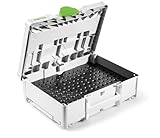

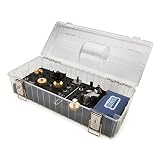
What to Look for in a Router Bit Case
Start with the bit shank. Most trim routers and compact routers use 1/4-inch shanks, while full-size routers commonly accept 1/2-inch bits. Some routers accept both with the correct collet, but the case still needs holes large enough for the bit shanks and deep enough for the cutting portion. A case designed only for 1/4-inch bits may not accept 1/2-inch bits, even if its overall footprint looks generous.
Individual storage positions matter more than the advertised capacity. A case with 50 tight holes may hold a large set, but it becomes frustrating if flutes touch neighboring bits or if the holes are too shallow. Look for at least 1/4 inch of clearance around the cutting profile. Tall bits, panel-raising bits, and large round-over cutters often need 2 1/2 to 4 inches of internal height.
For a cabinet, measure the opening rather than relying on the outside dimensions listed by a seller. Leave at least 1/2 inch of clearance on the width and depth, and about 1 inch above the case if you need to lift it by hand. A case that fits the shelf but cannot be gripped is effectively a permanent installation.
Router Bit Storage Case Types Compared
| Case type | Best for | Advantages | Limitations |
|---|---|---|---|
| Molded plastic case | Small and medium bit sets | Inexpensive, compact, good visibility | Fixed layout; may not fit unusual profiles |
| Wooden bit rack or box | Organized cabinet storage | Easy to customize and label | Can absorb moisture; takes shop time to build |
| Metal or heavy-duty tool case | Transport and larger collections | Durable shell and secure latches | Heavier, often less efficient use of space |
| Drawer insert | Permanent workshop organization | Fast access and excellent visibility | Not portable; requires a suitable drawer |
A molded plastic case is the sensible cheap option when you have a basic 12- or 15-piece set and do not move it between job sites. The plastic does not need to be thick or premium; it needs to close securely and keep bits from contacting one another. If the case rattles when shaken, expect dull edges and loose bearings over time.
The Best Buying Options for a Workshop Cabinet
For a mixed collection, shop for a router bit storage case for 1/4- and 1/2-inch bits. A dual-size case saves space, but check the actual hole diameters and the spacing between positions. Some inexpensive cases claim universal compatibility while providing only a few large holes, forcing you to lay broad bits on their sides.
If you prefer a clean cabinet layout, a router bit drawer organizer insert works well. Inserts are particularly useful when your cabinet has full-extension drawers. Arrange bits by function—straight, rabbeting, round-over, chamfer, and specialty profiles—rather than alphabetically. You will find the correct cutter faster, and the groups leave room for future additions.
A wooden case is worthwhile if you enjoy shop-built storage or need custom spacing. Use 1/2-inch plywood or hardwood for the body, drill holes with a brad-point bit, and line the bottom with thin closed-cell foam. Do not let the cutting edges rest directly on bare plywood. Sawdust and small grit can work into the flutes, and soft wood can retain moisture in a damp shop.
For frequent transport, consider a heavy-duty router bit case with foam protection. This costs more than a molded set box but handles being carried to a job site or moved between cabinets. Foam must hold the bits firmly without pressing against carbide edges. Pick-and-pluck foam is convenient, though it can crumble after repeated use.
How to Set Up the Case in a Cabinet
Keep router bits away from the floor and from the dustiest part of the shop. A cabinet shelf above the workbench is convenient, but do not place the case directly beside a dust collector exhaust or a sanding station. Fine dust can enter bearings and collet surfaces even when the lid is closed if the case seal is poor.
Use a shallow drawer or shelf no deeper than about 16 inches. Deeper storage encourages cases to be stacked, which hides the bits at the bottom and increases the chance of dropping a case while reaching for it. If you must stack them, use a simple label on the front edge showing shank size and bit group.
Label every position, including empty ones. A small adhesive label or paint marker is enough: “1/4 straight, 1/2-inch,” “3/8 round-over,” and so on. Record the bearing diameter where relevant. Two round-over bits can look nearly identical but produce different results because of a different bearing or cutting radius.
Protection and Maintenance
Clean bits before putting them away. Brush off loose dust and resin, then use a manufacturer-approved bit cleaner when buildup affects the cutting edge or bearing. Avoid soaking sealed bearings in aggressive solvents. Dry the bit completely before storage; trapped cleaner or water can stain steel and stiffen the bearing.
Do not store bits with the collet still attached. The collet belongs with the router or in a separate accessory drawer, and leaving it compressed can shorten its useful life. Inspect carbide tips for chips before returning a bit to the case. A chipped bit can damage stock and create an uneven cut, while a loose bearing can seize during use.
Add a small desiccant packet if the cabinet is in an unheated garage, but do not treat it as a substitute for dry storage. In damp climates, a sealed case with a gasket is useful. In a normal indoor workshop, a simple case with separated slots is usually enough, and spending more on a waterproof box will not make the bits cut better.
Which Case Should You Buy?
Choose a molded case for a modest collection, a drawer insert for the fastest daily access, and a custom wooden rack when your bit sizes do not fit standard layouts. Buy a heavier case only when you transport bits or need better protection from impact. Whichever style you choose, prioritize separated slots, enough height for your largest cutters, and a layout that leaves 20 to 30 percent spare capacity. That extra room prevents new bits from being forced into the wrong hole—and keeps sharp carbide away from its neighbors.