
What's inside
- Quick picks for small garages
- 1. Best budget stand: a reinforced DIY drill press stand
- 2. Best for regular woodworking: a steel tool stand with storage
- 3. Best for the smallest garage: a folding wall-mounted stand
- 4. Best for shared workspaces: a locking mobile cabinet
- 5. Best for heavy work: a bolted steel pedestal
- How to match a stand to WEN, SKIL, or Ryobi
- Ownership details that affect the choice
- Frequently asked questions
- Related Guides
As an Amazon Associate I earn from qualifying purchases. This post may contain affiliate links at no extra cost to you.
The best stand for a bench top drill press is a rigid, low-profile platform with a top plate at least 18 × 24 inches, a 150-pound-or-greater load rating, and holes that match your drill press base—or enough solid surface to drill your own pattern.
As an Amazon Associate we earn from qualifying purchases at no extra cost to you.
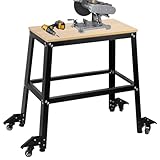
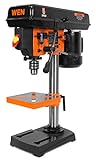


Quick picks for small garages
| Best for | Stand type | Recommended top size | Target capacity | Typical market range |
|---|---|---|---|---|
| Lowest cost | Reinforced DIY plywood cabinet | 20 × 24 in. | 200 lb | $60–$140 in materials |
| Frequent woodworking | Steel tool stand with drawer | 20 × 24 to 24 × 30 in. | 250–400 lb | $120–$300 |
| Very limited floor space | Wall-mounted folding work surface | 18 × 24 in. | 150–250 lb | $100–$250 |
| Easy repositioning | Locking mobile base or wheeled cabinet | 20 × 24 in. minimum | 250 lb or more | $150–$400 |
| Heavy metalworking | Bolted steel pedestal | 24 × 30 in. or larger | 400 lb or more | $250–$600+ |
These are five practical stand solutions rather than five interchangeable products. Benchtop drill presses from WEN, SKIL, and Ryobi use different base shapes and hole patterns, so a stand advertised as “universal” still needs to be measured before purchase.
1. Best budget stand: a reinforced DIY drill press stand
A DIY drill press stand is the best choice when cost and custom fit matter more than appearance. Build a 3/4-inch plywood top over two layers of plywood or a hardwood frame, then use a lower shelf or enclosed cabinet to prevent racking. Add a 2 × 4 or hardwood stretcher between the sides near the floor.
For a WEN 4214, SKIL 3320, or Ryobi DP103L-sized machine, start with a 20 × 24-inch top. Make the top larger if the drill press has a long quill travel or if you regularly drill wide panels. The drill press should sit with its column centered front-to-back and with at least 3 inches of clearance around the base.
Use the drill press’s actual base as your template. Mark the holes, drill clearance holes rather than relying on pilot marks, and use washers under the bolt heads. If the base has elongated slots, take advantage of them; if it has an unusual pattern, a DIY top is often more secure than trying to modify a steel stand.
Why it works
- It can match almost any base-hole pattern.
- A cabinet stores bits, chuck keys, clamps, and sanding drums.
- A wide lower footprint reduces tipping when drilling large workpieces.
- Replacement parts are inexpensive if the top becomes scarred.
The common mistake is building a tall, narrow box. A 36-inch-high cabinet with a 16-inch-deep top can feel unstable even when it holds the machine’s weight. Keep the stand depth at least 4 inches greater than the drill press base depth, and add ballast or a wall anchor if the footprint is small.
2. Best for regular woodworking: a steel tool stand with storage
A steel bench drill press stand with a drawer is the most balanced option for a garage shop. Look for welded or tightly bolted steel, a top plate of at least 14-gauge steel, and a drawer or shelf that does not interfere with the motor or belt guard.
This type suits owners who use a compact WEN, SKIL, or Ryobi drill press every week and want storage without building a cabinet. A 20 × 24-inch top is usually enough for a 10- to 12-inch benchtop drill press. Choose 24 × 30 inches if you use a large auxiliary table, fence, or drum-sanding attachment.
Check the top-plate hole pattern before ordering. Many stands have four predrilled holes, but their spacing may not match the drill press base. A solid steel plate is preferable to a thin stamped top because it can be drilled for a custom pattern without flexing. Avoid relying on self-tapping screws; use through-bolts, washers, and locknuts wherever access permits.
3. Best for the smallest garage: a folding wall-mounted stand
A folding bench top drill press stand makes sense when floor area is more valuable than instant setup. It consists of a wall-mounted frame, a hinged work surface, and diagonal braces or locking folding brackets. Use it only on a structural wall, masonry, or properly blocked studs—not on drywall alone.
Keep the platform at least 18 × 24 inches and limit the machine to a compact drill press. A folding surface should support at least 150 pounds, even if the drill press weighs only 50 to 90 pounds. That reserve covers the machine, a vise, the workpiece, and accidental downward force.
Place the stand so the drill press table can be adjusted without hitting a wall or shelf. Leave roughly 12 inches behind the motor for belt changes and ventilation. When folded, the stand can save about 2 square feet of floor area; when open, it still needs enough clearance for long boards.
4. Best for shared workspaces: a locking mobile cabinet
A mobile stand is the right stand for a bench drill press when the machine must share a garage with a car, bicycle, or assembly table. Choose four locking casters rated for the total load, not just the drill press weight. For example, four 75-pound casters provide a nominal 300-pound capacity, but a practical working target is closer to 210 pounds because loads are not always distributed evenly.
Here is a useful sizing calculation. Suppose a WEN, SKIL, or Ryobi benchtop machine weighs 90 pounds, the stand weighs 70 pounds, and stored accessories add 35 pounds. The static total is 195 pounds. Applying a 1.5 safety factor gives 292.5 pounds, so four 100-pound-rated casters are a sensible minimum. Locking only two casters is acceptable if the frame has wide feet, but four locking casters provide better control during drilling.
Use retractable casters or leveling feet if possible. Ordinary small casters can let the machine rock, causing oversized holes, wandering bits, and vibration. A mobile stand should be locked in place before every operation.
5. Best for heavy work: a bolted steel pedestal
A steel pedestal is the strongest benchtop drill press stand and the best choice for frequent metal drilling, large Forstner bits, or a vise that remains on the table. Look for a broad base, gussets at the column or legs, and holes for anchoring the pedestal to the floor or a thick workbench.
A 24 × 30-inch top is a useful starting point for a heavier compact drill press. A stand rated at 400 pounds or more gives room for the machine, a cross-slide vise, coolant tray, and workpiece. The extra mass also reduces vibration, but it does not eliminate the need to secure the drill press itself.
Do not confuse a pedestal made for a full-size floor drill press with a stand designed for a benchtop machine. A tall pedestal can place the chuck too high for comfortable work and may require a separate auxiliary table. For a small garage, a low steel cabinet is usually more practical.
How to match a stand to WEN, SKIL, or Ryobi
- Measure the base. Record its maximum width, depth, and the distance between mounting holes.
- Weigh the complete setup. Include the drill press, table, vise, chuck accessories, and stored items.
- Check vertical clearance. Measure from the floor to the top of the drill press and compare it with your comfortable working height.
- Inspect the hole pattern. Do not assume two machines from the same brand use identical spacing.
- Choose fasteners. Use bolts that fill the holes without forcing them, plus large washers and locknuts.
- Test for movement. Push the stand from the front and side. Any rocking should be fixed before drilling.
A practical working height usually places the drill press table around elbow height, but the exact position depends on the machine’s column length and the type of work. If the stand makes the chuck too high, lower the platform rather than adding a tall, narrow base.
Ownership details that affect the choice
Vibration usually exposes a weak stand before anything breaks. The first parts to loosen are commonly caster fasteners, shelf screws, and bolts holding a thin top plate. Check them after the first few sessions, then periodically. Keep the surface free of packed sawdust, especially around leveling feet and folding hinges.
Metal stands can rust where chips collect under the drill press base. Wax or paint the exposed steel and wipe away cutting fluid. On plywood stands, seal all edges; unsealed edges swell when exposed to coolant or a damp garage. Replace a scarred sacrificial top rather than allowing an uneven surface to tilt the machine.
For most small garages, the best overall choice is a low steel cabinet or reinforced DIY cabinet with a 20 × 24-inch top, a 250-pound-or-greater capacity, and lockable storage. Choose the folding version only when floor space is genuinely limited, and choose the heavy pedestal when stability under metalworking loads matters more than mobility.
Frequently asked questions
Can I put a benchtop drill press on any utility stand?
Only if the top is rigid, deep enough for the base, and rated for the combined load. A light utility cart may hold the machine but still flex during drilling. Secure the drill press with through-bolts whenever possible.
Does a stand need to match the brand?
No. A stand for bench drill press use does not need to share the machine’s brand, but its mounting plate and capacity must match the machine’s dimensions. Measuring the hole pattern is more important than matching logos.
Is a DIY drill press stand safe?
It can be, provided the cabinet is wide, braced, securely fastened, and anchored when necessary. The stand must not rock, slide, or tip when pressure is applied to the feed handle.