
Our Top Picks
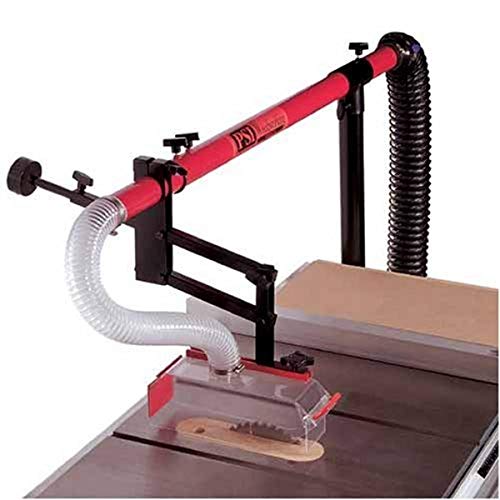 PSI Woodworking TSGUARD Table Saw Dust Collection Guard47.3 x 12.8 x 6.5 inches41.1 PoundsCheck on Amazon

What's inside
- The four categories, and who each one is actually for
- Why the fence matters more than the motor
- What actually makes a table saw the best table saw for DIY projects
- Cordless, corded, or a hybrid you’ll never move
- The accessories that change the saw more than the saw does
- Blade safety tech, and whether to pay for it
- FAQ
- What I’d buy tomorrow
- Related Guides
As an Amazon Associate I earn from qualifying purchases. This post may contain affiliate links at no extra cost to you.
The real problem with picking the best table saw for DIY projects isn’t finding a saw that cuts wood. Almost all of them cut wood. The problem is that most DIY shops are half a garage, the car still has to fit at night, and the saw has to rip an 8-foot sheet of plywood without the whole thing tipping over. That constraint kills more table saw purchases than motor power ever will.
I’ve made this decision badly and then made it again slightly less badly. My first saw was a bargain bench-top unit with a fence that drifted out of parallel every time I bumped it, and I spent two years blaming my technique for cuts that were never going to be square. So this is less a spec shootout and more the set of questions I wish somebody had put in front of me before I handed over the money.
The four categories, and who each one is actually for
Table saws sort themselves into a few buckets. Ignore the marketing names and look at what the thing weighs and what the fence rides on.
| Type | Rough weight | Typical price band | Best for |
|---|
| Type | Rough weight | Typical price band | Best for |
|---|---|---|---|
| Bench-top | 35-60 lbs | Entry level | Trim, small boxes, apartment balconies |
| Compact jobsite | 45-70 lbs | Low-to-mid | Occasional DIY, tight storage, no stand |
| Jobsite with rolling stand | 75-110 lbs | Mid | The default garage DIY answer |
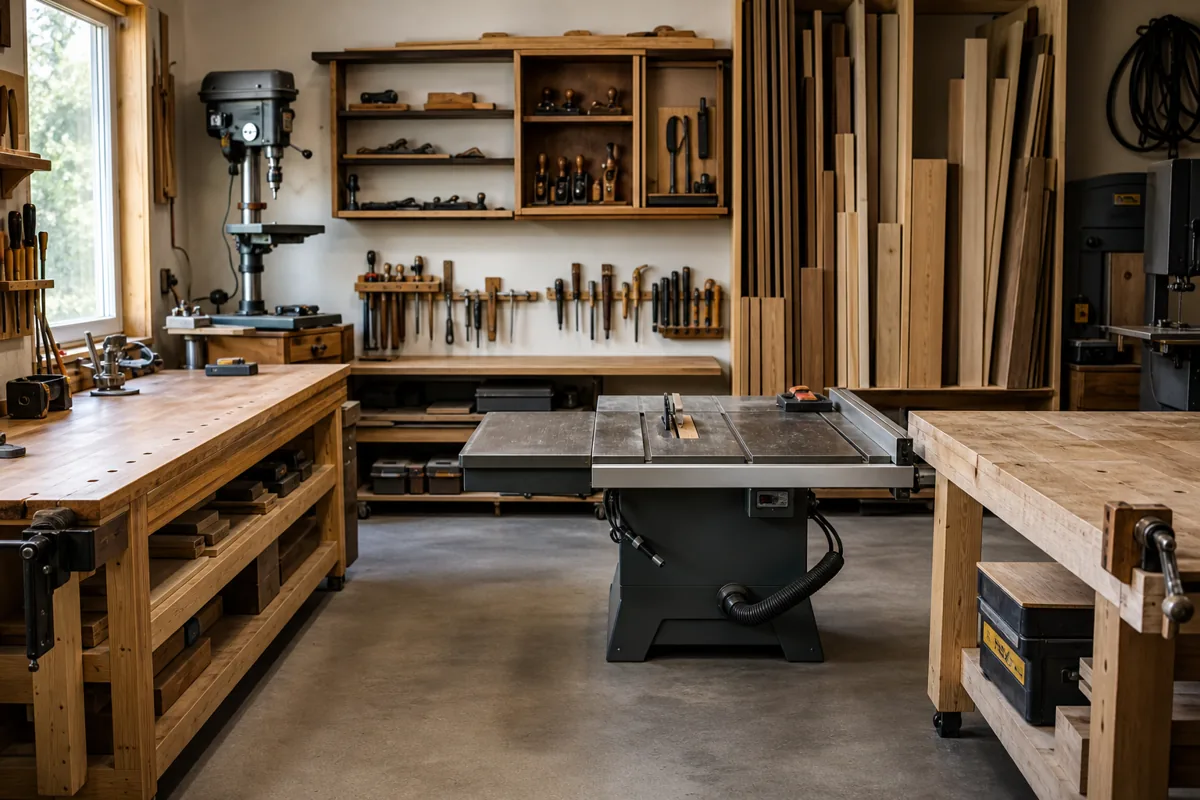
| Hybrid / contractor | 250-400 lbs | Mid-to-high | Furniture work, dedicated shop space |
| Cabinet saw | 450+ lbs | Premium | Full-time shops, 240V, permanent footprint |
Most people reading this land on a jobsite saw with a rolling stand or, if the garage has a corner that’s genuinely yours, a hybrid. The bench-top tier looks tempting on price, but the fences are usually the compromise, and the fence is the part you fight every single cut.
Why the fence matters more than the motor
Here’s the thing nobody tells beginners: a table saw is a fence with a motor attached. The blade spins, fine. Whether your rip is 1.5 inches at the front and 1.53 inches at the back is entirely down to the fence, and that difference is the gap between a cabinet door that closes and one that doesn’t.
What to look for, in order:
A rack-and-pinion fence. On modern jobsite saws this is the single biggest quality-of-life upgrade. You turn a knob, both ends of the fence move together, and it locks parallel. The alternative is a single-point clamp fence that you nudge, lock, measure, unlock, nudge again. I lost a lot of evenings to that dance.
Rip capacity you’ll actually use. Roughly 24 to 25 inches of rip lets you cut a 4×8 sheet down the middle plus some. Under about 20 inches and you’ll be breaking sheet goods down with a circular saw and a track first, which honestly isn’t the worst workflow, but know that’s what you’re signing up for.
A flat top and a solid miter slot. Cast aluminum tops on jobsite saws are fine. What you want is no visible dish or twist, and a miter slot that a decent aftermarket gauge or a shop-made sled will actually ride in without slop.
Jobsite Table Saw With Rack-And-Pinion Fence
If I were starting over in a shared garage, this is the category I’d buy from. Look for around 24-25 inches of rip capacity, a rack-and-pinion fence, and a rolling stand that folds flat against a wall. You give up mass and dust collection compared to a hybrid, but you get a saw that lives in a corner and rolls out in twenty seconds. That convenience is what determines whether you build things or just think about building things.
What actually makes a table saw the best table saw for DIY projects
I’d rank the decision factors like this, and I’d argue with anyone who reorders the top two.
1. Can you set it up in under a minute? A saw you have to unbury is a saw you don’t use. Rolling stands, fold-flat legs, on-board storage for the miter gauge and push stick. Unsexy, decisive.
2. Does the fence hold parallel? Covered above. Non-negotiable.
3. Safety hardware you’ll keep installed. A modular guard, a riving knife (not just a fixed splitter) that you can drop below the blade for non-through cuts, and an easy anti-kickback pawl setup. The reason this matters: guards that are annoying to remove and reinstall get left off permanently. Ask me how I know. A riving knife that comes off with one lever gets put back on.
4. Dust. Jobsite saws are open underneath and throw dust everywhere. Some have a shroud and a 2.5-inch port that catches maybe half of it. In a closed garage that matters for your lungs, not just your floor. Budget for a shop vac and a decent filter, and open the garage door.
5. Power. Genuinely last. A 15-amp universal motor on a 120V circuit will rip 3/4 hardwood all day if the blade is sharp and you don’t rush the feed. If you’re resawing thick maple regularly you already know you want an induction-motor hybrid.
Cordless, corded, or a hybrid you’ll never move
Cordless table saws exist now and the big battery platforms all have one. DeWalt runs theirs on FlexVolt, Milwaukee has an M18 FUEL version, Makita has an XGT option. They are genuinely useful if you already own a pile of high-capacity batteries and you cut outdoors or on job sites.
For a garage with an outlet on the wall, I’d take corded. You get the same or better performance without watching a battery gauge mid-rip, and mid-rip is a bad time to be distracted. The one exception: if your “shop” is a driveway and your power situation is an extension cord run through a window, cordless solves a real problem.
The hybrid conversation is different. A 300-pound saw with a cast-iron top and a real 4-inch dust port is a nicer machine in every way that affects cut quality. It’s also a permanent tenant. Measure the outfeed space honestly, including the swing of the garage door, before you fall in love.
- ✔ Rack-and-pinion fences on modern jobsite saws hold parallel better than older single-clamp designs
- ✔ Rolling stands turn a corner of the garage into a usable shop in seconds
- ✔ 120V, 15-amp motors handle typical DIY hardwood and sheet goods with a sharp blade
- ✔ Resale on well-known jobsite saws is strong if you outgrow it
- ✘ Open-bottom jobsite saws lose a lot of dust to the room no matter what you hook up
- ✘ Light saws can walk or tip with long stock unless you add outfeed support
- ✘ Stock blades are usually adequate at best, so factor in a good 40-tooth combination blade
- ✘ Small tables mean crosscut sleds are limited compared to a hybrid
The accessories that change the saw more than the saw does
I’d rather have a mid-priced saw with these than a nicer saw without them.
A good blade. The single highest-leverage purchase. A quality 40-tooth combination blade in the 10-inch size will make a mid-tier saw feel like a different machine. Thin-kerf if your motor is 120V, because there’s less material to push through.
Outfeed and side support. A folding roller stand or a scrap-plywood outfeed table clamped to sawhorses. Long boards tipping off the back of a light saw is how bad things happen.
A crosscut sled. Shop-made, weekend project, transforms your accuracy. Even a small one on a jobsite saw beats the stamped miter gauge that came in the box.
Push blocks and a featherboard or two. Cheap. Keeps fingers away from the blade and keeps stock tight to the fence, which also improves the cut.
Hybrid Table Saw With Cast-Iron Top
Step up here when you’ve decided the garage corner is permanently yours and you’re building furniture rather than shelves. The mass kills vibration, the cast-iron top stays flat, and a 4-inch dust port with a real collector actually keeps the shop breathable. The trade-off is blunt: it isn’t moving again once it’s assembled, and you’ll want to check your circuit before you buy.
Blade safety tech, and whether to pay for it
Flesh-detection systems that stop the blade on contact are the biggest safety development in table saws, and they carry a real price premium. I won’t pretend to be neutral: if the budget stretches and you’re teaching yourself in a garage with nobody around to help, that technology is worth serious consideration.
If it doesn’t stretch, the free version is discipline. Riving knife installed. Guard on for through-cuts. Never freehand. Never reach over a spinning blade. Push stick within arm’s reach before you switch on. A saw with good safety habits beats an expensive saw with lazy ones.
FAQ
Do I really need a table saw, or is a track saw enough? If you mostly break down plywood, a track saw plus a circular saw covers a surprising amount and stores on a shelf. The moment you’re ripping narrow strips, cutting repeatable parts, or cutting joinery like tenons and dados, a table saw is far faster and more accurate. Many garage shops end up with both, and a track saw first is a defensible order.
How much should I spend on my first table saw? Enough to get a rack-and-pinion fence and a rolling stand, which typically means skipping the cheapest bench-top tier. Then set aside money for a quality blade and outfeed support before you upgrade the saw itself. The blade-plus-support money buys more accuracy per dollar than moving up one saw tier does.
Can a 120V jobsite saw handle hardwood? Yes, within reason. With a sharp thin-kerf blade it will rip 3/4 oak, maple, and walnut steadily if you feed at a pace the motor accepts rather than forcing it. Where it struggles is thick stock, long sessions of heavy ripping, and resawing. That’s the point where an induction-motor hybrid earns its footprint.
What I’d buy tomorrow
If the car still parks in the garage: a jobsite saw with a rack-and-pinion fence, roughly 24 inches of rip, on a rolling stand, plus a 40-tooth thin-kerf blade and a shop-made sled. That combination handles the overwhelming majority of DIY projects, from shelves to plywood cabinets to small furniture, and it disappears against a wall when you’re done.
If the corner is yours for good and you’re chasing furniture-grade results: a hybrid with a cast-iron top, and accept that it’s the last time that saw moves. Both are honest answers. The wrong answer is the cheap saw with a fence you’ll fight for two years, because that’s the one that makes people think they’re bad at woodworking.
Check prices on Amazon →