
Our Top Picks
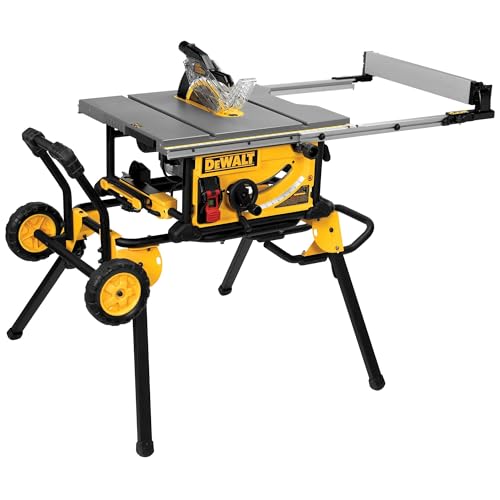
 DEWALT 15 Amp 8-1/4 in. Compact Portable JobsiteOne Size22.75 x 22.75 x 13 inches54 poundsCheck on Amazon


What's inside
As an Amazon Associate I earn from qualifying purchases. This post may contain affiliate links at no extra cost to you.
Ripping a full sheet of 3/4-inch plywood alone is still the most awkward job in my garage. The sheet is heavy, floppy in the middle, and the moment it tips off the back of the table my rip goes wavy. That wave turns into a gap in a cabinet carcass later, and sanding never saves it. So when someone asks me about the best table saw for ripping plywood, I steer the conversation off horsepower and onto what actually ruins cuts: fence repeatability, how much table sits in front of and behind the blade, and where the offcut lands.
My constraints are probably yours. One person, one car in the garage, 120V outlets, and a saw that has to roll into a corner when I’m done. A 3 hp cabinet saw with a 52-inch fence rips sheet goods beautifully and would also end my parking privileges. Everything below is filtered through that.
As an Amazon Associate we earn from qualifying purchases at no extra cost to you.


| Saw type | Rip capacity right of blade | Plywood verdict | Garage reality | |
|---|---|---|---|---|
| Compact benchtop | About 16 to 20 in | Fights you on full sheets | Stores on a shelf | |
| Jobsite with rack-and-pinion fence | About 24 to 32 in | Good with outfeed support | Rolls out of the way | |
| Contractor or hybrid | Around 30 in | Very good, stays put | Wants a dedicated corner | |
| Cabinet saw | 30 to 52 in | Best there is | Floor space and often 240V | |
| Track saw plus foam board | Full 4× | 8 sheet | Best for breaking sheets down | Not a table saw, but solves it |
What makes the best table saw for ripping plywood
Plywood is a different problem than solid lumber. It doesn’t pinch the blade, it has no internal tension waiting to spring, and it rarely needs brute power. It needs a flat, wide, slick surface and a fence that stays parallel from the first inch of the cut to the last.
Fence quality is the whole ballgame
A fence that deflects when I lean a sheet against it does more damage than a weak motor. Budget saws often lock at the front rail only, so the far end can drift. The rack-and-pinion fences on modern jobsite saws are genuinely good here because both ends move together and they repeat well. On stationary saws I want a T-square fence riding on a heavy rail. Either way, check the fence parallel to the miter slot at both ends before you trust it, and recheck any time the saw gets bumped.
Table depth, not just rip capacity
Every spec sheet lists rip capacity to the right of the blade. Almost none list front-to-back depth, and that is the number that actually decides whether a sheet tips. Portable saws give you roughly two feet of surface. A cast iron top with a wing and an extension gives you meaningfully more, which means the sheet is tracking straight before the teeth ever touch it.
Power and dust, in that order
A 15-amp motor and a thin-kerf blade will rip plywood all day. Where portable saws lose is dust. An open-bottom jobsite saw throws fine ply dust everywhere, and that matters when the garage door is shut in January. An enclosed base with a real port is a quality-of-life upgrade, not a luxury.
Jobsite table saw with rack-and-pinion fence
For most one-car garages this is the honest answer. A fence that repeats, enough rip capacity for cabinet parts, and a stand that rolls out of the way. Budget for an outfeed table on top of the saw price.
Which class of saw I would actually buy
Compact benchtop
Skip it for sheet goods unless space is truly desperate. Short fence travel, small table, and light enough that a sheet can shove the whole saw around. I owned one and ended up breaking every sheet down with a circular saw first anyway.
Jobsite saw with rack-and-pinion fence
The sweet spot, and what I use. Roughly 24 to 32 inches of rip covers cabinet sides and shelves in one pass, the fence is accurate, and it stores upright. Trade-offs are the small table and the noise. DeWalt, Bosch, SKILSAW and Metabo HPT all play in this space, and cordless options from the DeWalt XR and Milwaukee M18 FUEL lines will rip plywood fine if you accept battery swaps.
Contractor or hybrid
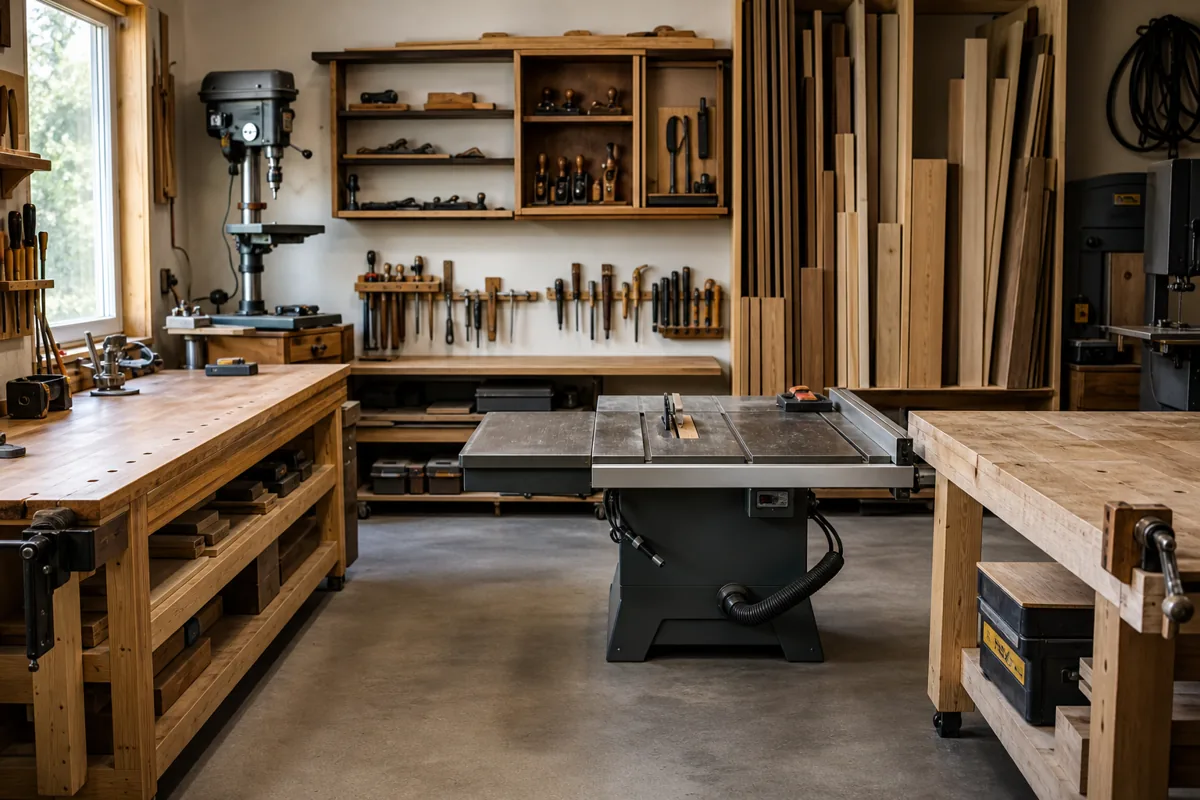
If your saw can live in one spot, this is the upgrade that changes how plywood feels. Cast iron top, heavier trunnions, belt drive, enclosed base, still on a household circuit. It will not move easily, and that is the entire cost.
Cabinet saw
The best plywood saw there is, and overkill for most solo garages. If you are spending at that level, the flesh-detection technology in SawStop’s line deserves a look, because sheet goods put your hands closer to the blade than you would like.
Hybrid table saw with cast iron top
Worth it if the saw gets a permanent home. The mass alone makes sheet goods feel calmer, and the enclosed base finally makes dust collection work. Measure your floor space honestly first.
Support beats muscle every single time
Honest admission: I blamed my saw for wavy rips for about a year. It was me. An unsupported sheet always wins.
What I run now is a folding plywood outfeed table set dead level with the saw top, a roller stand a hair low on the infeed side, and paste wax so the sheet slides instead of grabbing. Anything wider than about two feet gets broken down first with a track saw or a circular saw on a straightedge, sheet flat on foam insulation on the floor, then cleaned up on the table saw. Two operations instead of one, and much faster than wrestling a full sheet solo.
- ✔ No solo wrestling with 4×8 sheets
- ✔ Rough cuts on the floor are safer and repeatable
- ✔ The table saw only makes the final clean pass
- ✘ Two setups instead of one
- ✘ Needs a track saw or a straightedge jig
- ✘ Foam board eats storage space[/afk_cons>
Blades, inserts, and mistakes I keep repeating
A thin-kerf 40 to 50 tooth combination blade handles most plywood well. When the show face matters, a high tooth count plywood blade cuts cleaner, and a zero-clearance insert does more for bottom-face tearout than any blade swap. Score the line with a utility knife or masking tape when the veneer is thin and expensive.
My repeat offenses, in case they save you a sheet: running the blade too high, pushing too fast through the last few inches so the cut burns, and trusting the fence scale instead of a tape, which once left me with maple ply parts a full 1/16 inch narrow across a whole project. I also pulled the riving knife for a non-through cut and forgot to reinstall it. Nothing bad happened, and I still think about it. Put it back.
Plywood blade and zero-clearance insert
The cheapest upgrade on this page. A dedicated plywood blade plus a zero-clearance insert cleans up edges more than moving up a saw class does.
Frequently asked questions
Can a jobsite table saw rip a full sheet of plywood? Physically yes, safely and accurately only with support. Add an outfeed table and a side support, or break the sheet into manageable pieces first. Balancing a 4×8 sheet on a small table by yourself is how people get hurt.
Do I still need a track saw if I own a table saw? Not need, but the combination is the best answer for a garage. The track saw breaks sheets down on the floor, the table saw makes the accurate final rip. If I had to pick one for sheet goods only, I would take the track saw.
What blade should I use for plywood? A thin-kerf 40 to 50 tooth combination blade for construction-grade sheets, and a higher tooth count blade for veneered plywood where tearout shows. Keep it clean and sharp, because dull teeth burn edges and cause more tearout than tooth count ever will.
If I were buying today with one garage bay and no helper, I would take a jobsite saw with a rack-and-pinion fence and spend the savings on a real outfeed table, a good blade, and a straightedge for breaking sheets down. That beats a bigger saw with nowhere to put a sheet.
Check prices on Amazon →