4 Best Flux Welders vs MIG Welders (November 2026)
flux welder vs mig welder: compare four home-shop machines, from gasless flux-core welders to gas-shielded MIG units, and choose the process for your shop.
flux welder vs mig welder: compare four home-shop machines, from gasless flux-core welders to gas-shielded MIG units, and choose the process for your shop.
As an Amazon Associate I earn from qualifying purchases. This post may contain affiliate links at no extra cost to you.
Choosing between a flux welder and a MIG welder comes down to where you weld and how clean you want the bead. A flux-core machine runs without a gas bottle, so wind cannot blow the shielding away and the setup stays simple, but the weld leaves slag and spatter to clean. A gas-shielded MIG welder makes smoother beads with less cleanup, yet it needs a gas cylinder, a regulator, and calm air. Both join the same mild steel, so the real question is which set of trade-offs fits your shop.
This guide is for home shop welders, beginners buying a first machine, and anyone repairing farm equipment, trailers, or furniture in a garage. Each welder below was picked from the name and specifications listed on its Amazon page, with the flux-core and gas-shielded sides kept separate so you can compare the two processes side by side. The comparison below keeps the two sides separate so the trade-offs stay clear.
Quick Picks
As an Amazon Associate we earn from qualifying purchases
Product
Best for
Key spec from title
Forney Easy Weld 140 FC-i
Flux-core welding outdoors
140-amp flux-core welder
Lincoln Electric Weld-Pak 90i
First flux-core machine
90-amp flux-core welder
Lincoln Electric EasyMIG 180
Gas-shielded MIG at home
180-amp MIG welder
Hobart Handler 140
Clean MIG beads in the garage
140-amp MIG welder
How to Choose
Flux-core or gas-shielded MIG
Flux-core wire carries its own shielding inside the wire, so the weld stays protected when a breeze crosses the driveway or the barn door stands open. That makes flux-core the natural choice for outdoor repairs, farm gates, and trailers. Gas-shielded MIG uses a separate cylinder, and the gas blanket gives a smoother bead with far less spatter, which matters on visible work and thin panels. The trade-off is setup: a MIG rig needs a cylinder, a regulator, and still air. If you weld mostly inside a closed garage and care about appearance, MIG wins. If you weld outside or want the simplest possible rig, flux-core wins.
Amperage and metal thickness
Amperage decides how thick a metal each machine can join in a single pass, so match the rating to the thickest steel you plan to weld. A 90-amp flux-core machine handles thin sheet and light brackets, while a 140-amp machine reaches into thicker angle iron and trailer frames. A 180-amp MIG unit covers the widest home-shop range, from auto body panels to heavier plate. Check the listing for the rated thickness range and the input voltage the machine needs, since a 120-volt machine plugs into a standard outlet while a 230-volt machine needs a dedicated circuit. Buying more amperage than your projects need only adds weight and cost.
Safety in the home shop
Welding throws sparks, ultraviolet light, and hot metal, so treat safety as part of the purchase, not an afterthought. Wear a welding helmet, gloves, and flame-resistant clothing every time you strike an arc, and keep flammable material well away from the work area. Ventilation matters because welding fumes build up fast in a closed garage, so open a door or run a fan and never weld on painted or galvanized steel without removing the coating first. Disconnect the machine from power before changing wire or tips, and read the manual that ships with the welder before the first bead. The listings for these machines include their manuals and safety guidance.
Wire, gas, and running costs
A flux-core machine needs only wire and tips, which keeps the running costs low and the setup short. A gas-shielded MIG machine adds a cylinder rental or purchase, a regulator, and shielding gas refills, so budget for those before you buy. Wire diameter matters too: thinner wire suits sheet metal, while thicker wire feeds better on heavy stock, and the listing states which diameters each machine accepts. Check whether the machine ships with a starter spool, a torch, and a ground clamp, since some kits include them and others do not. A machine that accepts both flux-core and solid wire gives you the cheapest path to trying both processes.
The 4 Best Options
Forney Easy Weld 140 FC-i (Flux-Core)
Top Pick
Forney Easy Weld 140 FC-i (Flux-Core)
Best for: outdoor repairs and farm work where wind rules out shielding gas.
The Forney Easy Weld 140 FC-i is the flux-core pick for welders who work outside or want the simplest rig in this guide. Its 140-amp output covers light brackets, farm repairs, and trailer frames without a gas cylinder in sight, and the inverter design keeps the machine light enough to carry to the job. Setup is short: load the flux-core wire, set the voltage, and weld. The bead needs slag chipped off and a wire brush afterward, which is the honest price of gasless welding. For a driveway or barn repair where wind would ruin a gas shield, this machine earns its place.
Watch out for: expect slag and spatter cleanup after every bead.
Lincoln Electric Weld-Pak 90i (Flux-Core)
Runner-Up
Lincoln Electric Weld-Pak 90i (Flux-Core)
Best for: beginners and light repairs on thin steel.
The Lincoln Electric Weld-Pak 90i is the smallest machine in this guide and the easiest first welder for a beginner. Its 90-amp output suits thin sheet, small brackets, and light hobby projects, and the compact case stores on a shelf when the job is done. Flux-core wire means no cylinder to rent and no regulator to set, so a first-time welder can focus on arc control instead of gas flow. The lower amperage sets a ceiling on thickness, so heavy plate and thick angle iron sit outside this machine’s range. For learning the basics and fixing light steel around the house, it is a sensible starting point.
Watch out for: 90 amps limits how thick a metal you can join.
Lincoln Electric EasyMIG 180 (MIG)
Lincoln Electric EasyMIG 180 (MIG)
Best for: clean MIG beads across a wide range of steel thickness.
The Lincoln Electric EasyMIG 180 is the gas-shielded MIG pick for a home shop that wants clean beads and a wide thickness range. Its 180-amp output handles auto body panels at the low end and heavier plate at the high end, which covers most garage projects in one machine. With solid wire and shielding gas, the beads come out smoother and need far less cleanup than flux-core, so visible work looks better. The trade-off is the cylinder and regulator, plus the need for still air while welding. For a closed garage where appearance matters, this is the most capable machine in the guide.
Watch out for: needs a gas cylinder and still air to shield the weld.
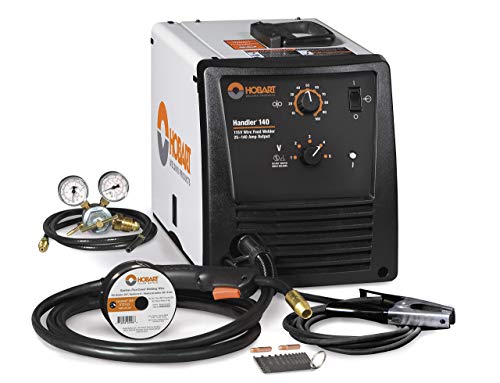
Hobart Handler 140 (MIG)
Hobart Handler 140 (MIG)
Best for: garage MIG welding on a standard outlet.
The Hobart Handler 140 is the garage-friendly MIG welder for owners who want clean beads without stepping up to a 230-volt circuit. Its 140-amp output joins sheet metal, brackets, and light frames, and it runs on a standard household outlet, so no electrician visit is needed. The gas-shielded process keeps spatter low and the bead smooth, which suits auto body panels and visible furniture joints. Flux-core wire is also an option when the job moves outside, so the machine adapts to both sides of this comparison. For a first MIG machine in a normal garage, it is the practical middle ground.
Watch out for: 140 amps caps the thickest plate you can join in one pass.
Which One Fits Your Situation
First welder for a garage
A beginner in a closed garage should start with the Hobart Handler 140. It runs on a normal outlet, the gas-shielded beads are forgiving to look at, and the 140-amp range covers the brackets, panels, and frames a first project usually involves. The Forney 140 FC-i is the alternative when the garage door stays open or the work happens in the driveway, since flux-core ignores wind entirely.
Outdoor and farm repairs
Farm gates, trailer frames, and equipment repairs happen outside, where wind strips shielding gas away from a MIG bead. The Forney Easy Weld 140 FC-i is built for that work: no cylinder to haul, no regulator to adjust, and enough amperage for angle iron and plate. Bring a chipping hammer and a wire brush, because slag cleanup is part of every flux-core bead.
Thin sheet metal and auto body
Thin panels punish too much heat, so the gas-shielded side wins here. The Lincoln EasyMIG 180 at its lower settings lays a smooth bead on auto body panels with minimal burn-through, and the Hobart Handler 140 does the same work on a standard outlet. Flux-core runs hotter and spatters more, which makes it a poor match for visible sheet metal.
A welder that grows with you
If you expect your projects to get heavier, the Lincoln EasyMIG 180 is the pick with the most headroom. Its 180-amp output reaches plate thicknesses the other three machines cannot, and the gas-shielded process scales from thin panels to structural brackets. The Hobart Handler 140 is the fallback when only a standard outlet is available.
Common Mistakes
Buying a gas-shielded MIG welder and then welding outdoors, where wind blows the shielding gas away from the bead.
Choosing a 90-amp machine for thick plate and expecting a single pass to hold on heavy stock.
Skipping the gas cylinder, regulator, and refills when budgeting for a MIG setup.
Welding on painted or galvanized steel without removing the coating first.
Forgetting slag cleanup on flux-core beads and then painting over a rough, weak joint that will not last.
Frequently Asked Questions
Is flux-core welding the same as MIG welding?
Flux-core and MIG both feed wire through a torch, but the shielding differs. Flux-core wire carries shielding compounds inside the wire, so no gas cylinder is needed. MIG uses solid wire plus a separate shielding gas cylinder, which gives a smoother bead with less spatter. Flux-core suits outdoor work, while MIG suits clean indoor work. Choose by location first.
Can one welder do both flux-core and MIG?
Some machines accept both wire types, and the Hobart Handler 140 in this guide is one of them. You swap the wire, change the polarity if the manual calls for it, and either connect the gas cylinder or leave it off. Check the listing before buying, since not every machine in this class supports both processes.
Do I need a special outlet for these welders?
Three of the four welders here run on a standard household outlet, which is part of their appeal for a home shop. The Lincoln EasyMIG 180 needs a higher-voltage circuit for its full output, so confirm your garage wiring before ordering. A machine that cannot reach full power on your outlet will not weld at its rated thickness.
Which process is better for a beginner?
Flux-core is simpler to set up because there is no gas to manage, so many beginners start there. MIG gives cleaner beads and less cleanup, which rewards a beginner who welds indoors. Either process works for learning, so pick based on where you weld most often rather than on which one sounds easier.
J
JD's Woodworks Editorial Team
We compare specs, warranty terms, long-term owner feedback and street pricing before anything earns a spot. Rankings are never paid.
Affiliate disclosure. As an Amazon Associate we earn from qualifying purchases at no extra cost to you. Prices accurate as of the date shown.
Miter saw vs table saw: compare crosscuts, rip cuts, accuracy, space, and value to choose the right saw for your shop and your first woodworking projects.
Compare five solar portable generators for shops, campsites, and outages, covering battery size, output, solar charging, outlets, and what to check first.
The best portable CNC machines for small shops and shared spaces, compared by footprint, weight, work area, and setup. Compact benchtop picks for wood, acrylic, and soft metal.
Find the best Penn Industries dust collector on Amazon: the PSI Woodworking DC3XX blower and the DC725 tabletop unit, compared on airflow, pressure, and shop fit.
Compare five large stationary horizontal metal band saws for fabrication shops on cutting capacity, motor, power supply, blade speed, and mitering before buying.
Find the best mortising chisel bits for clean square mortises in this guide: hollow-chisel sets and singles compared by size, shank, steel, and machine fit.
Find the best drill press base for your shop. Compare rolling stands and mobile bases by capacity, footprint, casters, locking, and setup before you buy.
Find the best dewalt planer dw734 blades for your 12-1/2-inch thickness planer. Compare OEM and aftermarket 3-knife sets, steel types, and fit before you buy.


 Hobart Handler 140 (MIG)









