What's inside
As an Amazon Associate I earn from qualifying purchases. This post may contain affiliate links at no extra cost to you.
The basic difference
Safety glasses are the practical default for many workshop jobs. They protect the eyes from flying chips and debris while staying relatively cool and easy to wear. Goggles seal against the face, making them a better choice when fine dust, liquid splash, or debris can come around the sides of glasses.
Neither is automatically safer in every situation. The right choice depends on what the tool throws, how long you will wear the protection, and whether it fits over prescription lenses. Look for eye protection marked to the applicable safety standard, such as ANSI/ISEA Z87.1 in the United States. Ordinary sunglasses and shop glasses without a safety rating are not substitutes.
As an Amazon Associate we earn from qualifying purchases at no extra cost to you.
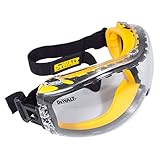


Safety glasses vs. goggles
| Feature | Safety glasses | Goggles |
|---|---|---|
| Side coverage | Depends on the design; wraparound lenses and side shields help | Typically sealed or close-fitting around the eyes |
| Airflow and fogging | Better airflow, usually less fog | More prone to fog, especially during exertion |
| Fine dust and splash | Limited protection around the frame | Better when a close seal is needed |
| Comfort over long sessions | Usually lighter and cooler | Can press on the face or feel warm |
| Prescription use | Prescription safety glasses or approved over-glasses styles | Some models fit over prescription glasses |
Both types need to fit properly. A gap at the temple, a loose strap, or a scratched lens can undermine protection. Replace eyewear with cracked frames, damaged straps, or deep scratches that interfere with vision.
Woodworking: cutting, sanding, and cleanup
For sawing, routing, drilling, and general bench work, close-fitting, wraparound safety glasses with side protection are often a good balance. A table saw can throw chips sideways as well as forward, so open-sided fashion-style eyewear is a poor choice. Glasses are usually more comfortable than goggles for a long session and are less likely to fog while you move between tools.
Sanding changes the equation. Coarse sanding creates visible particles, but orbital sanders and random-orbit sanders can produce fine dust that gets around ordinary glasses. A dust collector or sander-connected vacuum reduces airborne dust; it does not eliminate it. For prolonged sanding, overhead work, or a dusty shop, sealed goggles can improve eye protection. Pair them with a properly fitted respirator when dust exposure calls for one—goggles do not protect your lungs.
During cleanup, do not blow sawdust off a bench or your clothes with compressed air. It sends fine particles into the air and can drive debris into the eyes. Use a vacuum or dust extractor, and keep eye protection on until the airborne dust settles.
Metalworking and machining
Grinding, cutting metal, and using a lathe can send hard fragments in unpredictable directions. Wear impact-rated safety glasses with side protection as a minimum, and follow the tool’s instructions for any additional face protection. A face shield is useful for sparks and larger debris, but it does not replace safety glasses: particles can travel under or around the shield.
For grinding, check the eyewear rating and the grinder’s guard before starting. A small chip can cause a serious injury, and a cracked or poorly fitted pair is not a worthwhile cost saving. Goggles may be appropriate for dusty grinding or debris that can bypass glasses, but sealed goggles can fog. Stop if fogging obscures the work; wiping lenses while the grinder is running is not a safe fix.
Chemicals, finishes, and liquid splash
Brushing stain or oil finish is not the same exposure as mixing a corrosive cleaner, spraying solvent, or handling a liquid that could splash into the eyes. For splash hazards, use chemical-splash goggles designed for that use, and check the product label and safety data sheet for required protection. Basic impact glasses may leave open gaps at the sides and top.
Ventilated goggles can reduce fog but may not be suitable for every splash hazard. Choose a design rated for the exposure rather than assuming any pair that looks sealed will do. If a job requires a face shield as well, wear it over the goggles, not instead of them.
Fit, fog, and prescription lenses
Try the eyewear with the hearing protection, respirator, or dust mask you actually use. Earmuff arms can push glasses away from the temples; a respirator may interfere with goggles or direct warm breath upward. Check for gaps and pressure points, and look down and side to side to confirm the eyewear stays in place.
Fog is a common reason people take protection off. Anti-fog coatings or wipes can help, but they wear out and may need care according to the manufacturer’s instructions. In a warm shop, vented goggles may be more comfortable where dust or splash conditions allow them. If you need prescription correction, consider over-glasses safety goggles or properly rated prescription safety eyewear. Ordinary prescription glasses are not impact protection.
What to buy for a home shop
For a shop where most work is cutting, drilling, and assembly, a well-fitting pair of wraparound safety glasses with side protection is a sensible starting point. The cheaper option is fine if it has the needed rating, fits securely, and gives you a clear view. Paying more does not compensate for poor fit.
Add goggles if your work routinely involves fine dust, chemical splash, or debris that gets behind glasses. A basic pair can be adequate for occasional dusty jobs if it fits and has the right rating; spend more when you need a reliable seal, compatibility with prescription glasses, or frequent use. Keep eyewear clean in a case or closed drawer, and replace scratched lenses rather than tolerating blurred vision. A small, accessible selection is more useful than expensive protection left in a box.