
What's inside
- Who should buy the SawStop Contractor Saw?
- Key specifications and practical implications
- Safety system: a major benefit with real operating costs
- Fence, table, and setup: precision depends on alignment
- Dust collection and shop fit
- Which shop situation is the best fit?
- Ownership details that affect the decision
- Verdict
- Related Guides
As an Amazon Associate I earn from qualifying purchases. This post may contain affiliate links at no extra cost to you.
The SawStop Contractor Saw is best for a serious home or small professional shop that wants cabinet-saw-style safety technology without the footprint and cost of a full cabinet saw—provided there is room for its extension table, outfeed support, and a mobile base or clear path around the saw.
As an Amazon Associate we earn from qualifying purchases at no extra cost to you.

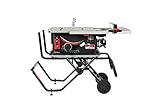


Who should buy the SawStop Contractor Saw?
This is a stationary, belt-driven table saw built around a 10-inch blade and SawStop’s flesh-detection brake. Its main appeal is the combination of that safety system, a substantial cast-iron work surface, and a T-glide fence. It makes most sense for woodworkers who use a table saw regularly, value injury mitigation, and can dedicate a stable spot to a machine weighing roughly 280 pounds before accessories.
It is less compelling if you need a saw that folds away after each project, primarily cut sheet goods in a compact room, or expect cabinet-saw-level dust containment and power in a package that behaves like a portable jobsite saw. The Contractor Saw is a meaningful upgrade in setup and capability, but it still requires shop planning.
Key specifications and practical implications
| Item | Contractor Saw specification | What it means in a shop |
|---|---|---|
| Blade diameter | 10 inches | Uses widely available table-saw blades; standard blade options cover ripping, crosscutting, and dado work. |
| Motor | 1.75 horsepower, 120 volts | Fits a typical household circuit when wired and loaded appropriately; thick hardwood cuts benefit from a sharp blade and a steady feed. |
| Maximum rip capacity | 36 inches to the right of the blade | Supports wide-panel breakdown, though large sheets still need infeed and outfeed support. |
| Table surface | Cast iron, approximately 20 by 27 inches before extensions | Provides a stable reference surface; the wings and rails increase working width and shop footprint. |
| Weight | About 280 pounds, configuration dependent | Plan for delivery, assembly, and a mobile base if the saw must be repositioned. |
| Dust port | 4 inches | Designed for a shop dust collector, not a small handheld vacuum; the open contractor-style cabinet can still release dust. |
Specifications can vary with trim, fence, and accessory package, so confirm the exact configuration before ordering. The listed weight is also a planning figure, not a promise that one person can safely move the assembled saw.
Safety system: a major benefit with real operating costs
SawStop’s brake cartridge detects contact between the spinning blade and conductive material such as skin, then drives an aluminum brake into the blade to stop it. The system is designed to reduce the severity of certain blade-contact injuries; it does not make a table saw safe to use carelessly. Kickback, blade exposure, unsafe hand placement, and other hazards remain. Keep the guard, riving knife, and anti-kickback pawls in place whenever the cut allows, and follow the manual’s operating procedures.
The safety system also changes ownership costs. A brake cartridge is a consumable: after activation, it must be replaced, and the blade may need replacement as well. Wet or green wood and some conductive materials can trigger the brake, so check the manual’s bypass procedure for cuts involving material likely to set it off. Bypass mode is not a substitute for caution; the brake is unavailable while it is engaged.
For a buyer who uses a table saw often, the cartridge expense is a worthwhile contingency to budget rather than a reason to avoid the saw. If the machine will be used only a few times a year, compare that added ownership cost with a lower-cost saw plus disciplined guarding and work practices.
Fence, table, and setup: precision depends on alignment
The T-glide fence is one of the Contractor Saw’s strongest practical features. Its long rails and locking action make repeated rip-width settings easier than on a lightweight fence, especially when processing cabinet parts or batches of furniture components. The cast-iron top supplies a flat, weighty surface, while extension wings and rails support wider work.
Do not assume the saw is ready for accurate cuts straight out of the box. After assembly, check that the blade is parallel to the miter slot and that the fence is parallel to the blade. A small alignment error can cause burning, wandering cuts, or binding. Use a reliable measuring method and make adjustments according to the manual; recheck after moving the saw or loosening the table or rail hardware.
A practical setup sequence
- Choose the location first. Leave room for the full fence travel, the longest boards you expect to cut, and safe access to the switch and blade controls.
- Level and stabilize the base. A mobile base makes repositioning easier, but lock it firmly before cutting. Uneven support can affect both stability and alignment.
- Assemble rails and fence, then align. Set the fence to the blade rather than relying only on rail markings. Verify its lock and repeatability at several positions.
- Install the blade and safety components. Confirm blade direction, riving-knife position, guard fit, and cartridge status before the first cut.
- Make a test cut. Check the cut width and edge quality with scrap. This catches setup errors before they affect a finished panel.
Dust collection and shop fit
The 4-inch dust port makes a dedicated shop dust collector the sensible match. The Contractor Saw’s cabinet is not as enclosed as a cabinet saw, so even a capable collector may not capture every chip and fine particle. Keep the port and internal passages clear, use the blade guard’s collection connection when the cut permits, and expect to sweep or vacuum around the machine. A shop vacuum alone may be inadequate for sustained table-saw dust collection.
Space is the other common surprise. The saw itself is only part of the footprint: fence rails extend beyond the table, and safe operation needs room for stock to enter and leave without hitting a wall, bench, or stored lumber. A 36-inch rip capacity is useful only if the shop can accommodate the fence setting and the workpiece. For plywood, plan for a helper or roller support, or break down sheets with a track saw before bringing smaller pieces to the table saw.
Which shop situation is the best fit?
| Your situation | Fit | Reason |
|---|---|---|
| Frequent furniture or cabinet work, with a dedicated shop area | Strong | The fence, cast-iron table, rip capacity, and brake system suit repeated precision work. |
| Small garage shop that must park a vehicle | Conditional | A mobile base helps, but rails, stock clearance, and outfeed support still need to be planned. |
| Occasional DIY projects and a tight budget | Compare alternatives | The safety system and robust fence add value, but may be more machine and ownership cost than the workload warrants. |
| Frequent sheet-goods work with limited help or floor space | Usually a poor fit | Large panels need room and support; a track saw may handle initial breakdown more conveniently. |
| High-volume production or demanding thick-stock work | Consider a cabinet saw | A larger motor and more enclosed dust collection may better match sustained heavy use, if budget and space allow. |
Ownership details that affect the decision
Blade quality and condition strongly influence cut quality and motor load. A dull or pitch-coated blade can burn wood and make the saw work harder; clean blades periodically and choose tooth geometry for the job rather than expecting one blade to excel at every cut. Inspect the belt and alignment as part of routine maintenance, and keep the table clean and protected from rust. If the brake activates, budget for a replacement cartridge and inspect the blade before returning the saw to service.
Also account for delivery and assembly. The saw’s weight and separate rails, wings, and accessories make setup a planned task, not a quick unpacking. Verify the power requirements and circuit capacity for the exact model, and follow the manufacturer’s electrical and installation instructions.
Verdict
The SawStop Contractor Saw is a strong choice for a committed hobbyist or small shop that wants a capable 10-inch saw, a dependable fence, and SawStop’s active brake system without moving to a larger cabinet saw. Its best fit is a stable, well-planned workspace with a dust collector and enough room for long stock. Buyers with very limited space, infrequent needs, or production-level demands should compare a portable saw, track-saw workflow, or cabinet saw instead. The deciding question is not just whether the saw fits on the floor, but whether the shop can support its full working envelope and ongoing ownership needs.