
Our Top Picks
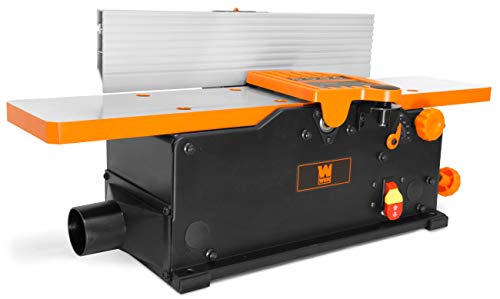
 Cutech 40180HI 8-Inch Spiral Cutterhead Benchtop Jointer with8 inch34 x 19.75 x 13.25 inchesCheck on Amazon
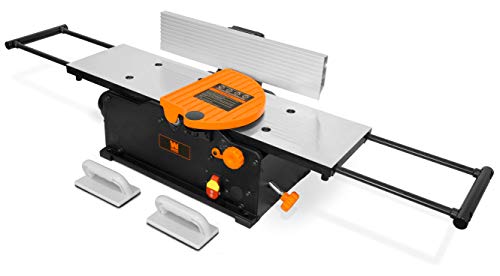
 Cutech 401120HI-IF 12-Inch Spiral Cutterhead Benchtop Jointer with12 inch w/ Cast Iron Fence34 x 23.75 x 13.25 inchesCheck on Amazon


What's inside
As an Amazon Associate I earn from qualifying purchases. This post may contain affiliate links at no extra cost to you.
Nobody gets excited about buying a jointer. I bought mine because I was tired of gluing panels from boards that rocked on the bench, and because the S4S pine from the home center stops being flat about two days after it comes home. If you are shopping for the best benchtop jointer for small shop work, start with honest framing: you are picking the least-bad compromise, not a miracle. A benchtop machine flattens and squares stock far better than a hand plane you have not learned to sharpen, and worse than the 8-inch cast iron unit you have no floor space for.
My shop is one bay of a two-car garage, and a car lives in the other half from November to March. That constraint drives everything below. I want weight I can lift onto a stand by myself, a footprint I can shove against the wall, and a fence that is still square after I bump it with a sheet of plywood. Horsepower claims matter far less than whether the two tables sit in the same plane out of the box.
As an Amazon Associate we earn from qualifying purchases at no extra cost to you.


| Machine class | Who it fits | The real trade-off |
|---|---|---|
| 6-inch benchtop | Most one-person garage shops | Short beds, limited board width |
| 8-inch floor model | Shops milling rough lumber weekly | Heavy, eats floor space, sometimes 240V |
| Spiral or helical head | Figured and knotty stock | Higher up-front cost plus inserts later |
What I Look For in the Best Benchtop Jointer for Small Shop Work
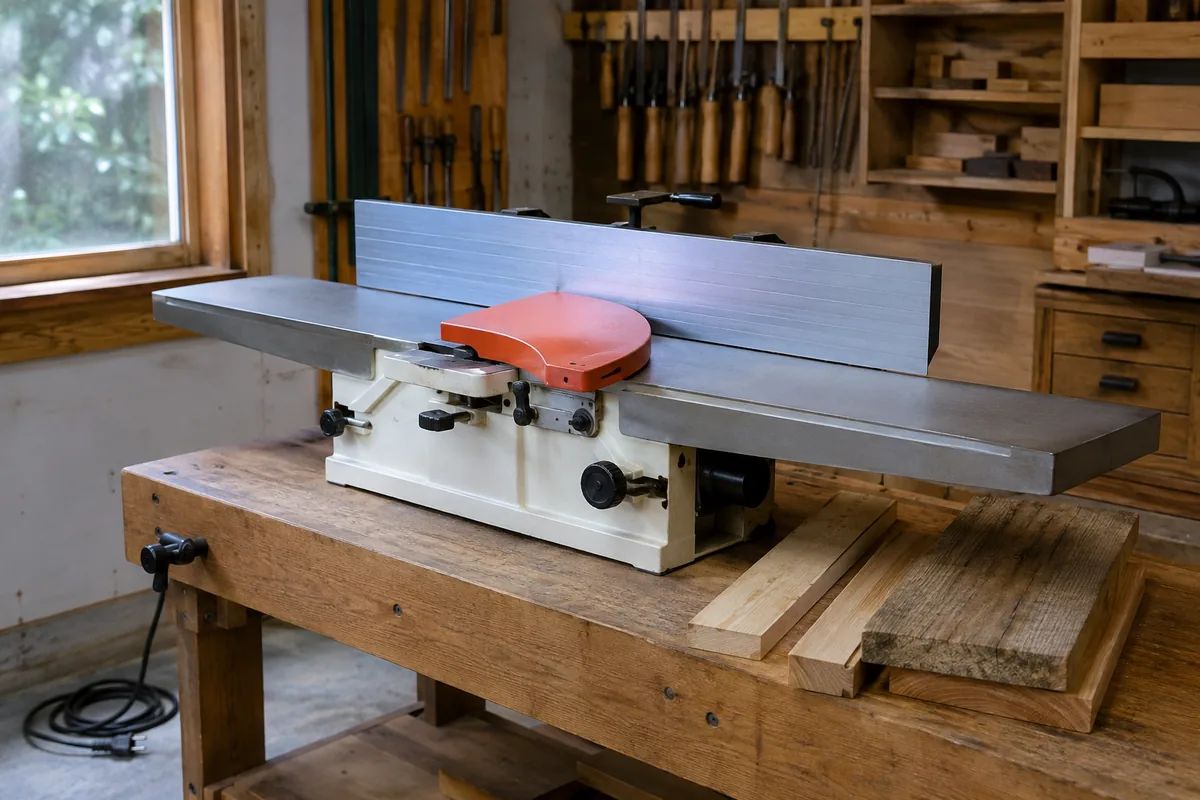
Tables come first. Two cast iron tables sitting in the same plane will give you a straight edge even with a modest motor behind them. Tables that are twisted or stepped will fight you forever, and technique does not fix it. When a machine lands, I swing the guard aside and lay a good straightedge across both tables looking for daylight. A low outfeed table means snipe at the tail of every board. A high one means the cut tapers off. Adjustable tables are worth paying for, because they let you correct this yourself instead of packing the thing back up.
The fence is second. I want it tall, with a positive stop at 90 degrees and a lock that genuinely clamps. Weight is third, and here I disagree with a lot of buying advice: heavier is better right up until you cannot move it alone. Around 70 to 80 pounds is my practical ceiling. Last, look at the dust port. A 2.5-inch port pairs with a shop vac. A 4-inch port means you are buying a real collector or eating chips.
6-Inch Benchtop Jointer With Adjustable Tables
For a one-person shop working boards up to about six inches wide, this is the category I would buy again. Put adjustable infeed and outfeed tables ahead of motor ratings, and budget for a rigid stand, because a flimsy folding base ruins an otherwise decent machine.
Straight Knives or a Spiral Cutterhead?
Straight knife heads cost less and cut cleanly when the knives are fresh. They are also miserable to reset after you nick one. I have burned an evening with a magnetic jig chasing knife height and would rather not repeat it. Spiral and helical heads use small square carbide inserts, so a damaged edge means loosening one screw, rotating the insert 90 degrees, and getting back to work. They also run quieter in a way you notice in a closed garage, and they tear out less in curly or knotty stock.
The catch is money. A helical head machine costs meaningfully more than a straight knife machine of the same width, and a full set of spare inserts is not cheap either. If you mill softwood and straight-grained hardwood, straight knives are fine and the difference is better spent on lumber. If you buy figured maple or reclaimed material with grit in it, the spiral head buys back sanding time.
- ✔ Rotate one insert instead of resetting a whole knife
- ✔ Quieter and lower pitched in a small space
- ✔ More forgiving on figured or reversing grain
- ✘ Costs more for the same cutter width
- ✘ Replacement inserts add up over the years
- ✘ Faint scallop lines if you feed too fast
Bed Length Is the Spec Nobody Reads
Cutter width gets the attention because it is printed on the box. Bed length is what actually limits you. Benchtop machines usually give you somewhere in the range of 28 to 30 inches of total table, which reliably straightens a board about twice that long. Beyond that the board pivots on short beds and you get a gentle curve you will not notice until glue-up.
My workaround is sequencing. I crosscut close to final length first, then joint, then glue up. For the occasional long piece, a track saw on a straight edge or a jointer plane and winding sticks gets me there. Admitting the length ceiling is more useful than pretending six inches of width is the real problem.
Benchtop Jointer With Helical Cutterhead
Worth the upgrade if you work figured hardwood or share a wall with living space. Before committing, check that the insert screws take a common driver bit and that spare inserts are easy to source, because that is what you live with three years in.
Setup, Dust, and the Mistakes That Cost Me Lumber
Three things went wrong for me. I took cuts that were too deep, close to a sixteenth at a pass, which bogged the motor and left ripples. An honest depth of cut on a benchtop machine is nearer a thirty-second, two or three passes, and you let the wood tell you. Then I tried face-jointing boards wider than the cutterhead by flipping them, and produced a very consistent wedge. If the board is wider than the head, rip and reglue it or use a planer sled.
Finally, I ran the thing with no dust collection for a month. Chips packed the guard, slid under the stock, and telegraphed dents into faces I had just cut. Hook up a shop vac at minimum. I also check my reference face and edge with a square between operations instead of trusting the machine to hold settings, because mine drifts a little every time it gets moved.
Mobile Stand and Dust Hookup
A rigid stand and a 2.5-inch hose improve cut quality more than any number on the spec sheet. Vibration and chip buildup were the two things I underestimated, and both are cheap to fix.
FAQ: Small Shop Jointer Questions
Is a 6-inch benchtop jointer enough for real furniture? For most of what a one-person shop builds, yes. Wide tops and panels get assembled from narrower boards anyway, which is better for wood movement. Bed length is the limit you hit first, not width.
Can I skip the jointer and just use a planer? Partly. A planer makes a board parallel, not flat, so it will happily plane a twist all the way down. A planer sled with shims gives you a flat reference face and is a legitimate substitute when space or budget is tight, and edge jointing is easy on a table saw with a decent blade.
Do benchtop jointers need special wiring? No. Machines in this class are built for a standard 120V household circuit, which matters in a rented garage. Larger floor-standing models are where 240V starts appearing, so a tight electrical panel is another argument for staying benchtop.
If I were setting up my garage again with the same square footage, I would buy the 6-inch benchtop machine with the best tables I could afford, bolt it to a heavy mobile stand, and spend nothing chasing extra width. Compare what is available now and confirm the beds are adjustable before you commit.
Check prices on Amazon →