
Our Top Picks
 HARDELL 12V Cordless Rotary Tool Kit 6-Speed 30000RPMLarge10 x 1.9 x 2.7 Inches1.1 PoundsCheck on Amazon


What's inside
As an Amazon Associate I earn from qualifying purchases. This post may contain affiliate links at no extra cost to you.
I bought my first rotary tool accessory kit because the box promised 276 pieces, and back then I believed piece count meant value. I can tell you exactly which of those pieces still get used: four sanding drums, two mandrels, a few diamond points, and one aluminum oxide stone worn down to a nub. The rest sits in the molded case, untouched, quietly judging me. That is the trap with these kits. The marketing runs on volume, and volume is the one thing a one-person garage shop does not need.
What you need instead is a short list of consumables you will burn through and replace, plus a few shaped cutters that match the work you really do. In cabinet and furniture work that means inlay cleanup, squaring hinge mortise corners, trimming dowels and plugs, backing out a snapped screw, and sanding inside curves my spindle sander cannot reach. Nobody needs sixty felt polishing pads for that. Here is how I sort the kits, what lives within arm’s reach of my bench, and where the bargain sets come apart.
As an Amazon Associate we earn from qualifying purchases at no extra cost to you.




| Kit Style | What Is Inside | Who It Suits |
|---|---|---|
| Brand starter kit, 30 to 100 pieces | Cutting, sanding, grinding, plus the mandrels | Starting from zero |
| Bargain mega kit, 150 to 300 pieces | Padded counts of felt pads and thin cutoff wheels | Cheap consumables, low value per piece |
| Task set, 10 to 30 pieces | One accessory family at better quality | Your second purchase |
| Diamond burr set | Coated points and burrs, fine grits | Hardwood detail, epoxy, dried glue |
| Carbide burr set | Aggressive shaped cutters that last | Shaping hardwood and plastic |
What a Rotary Tool Accessory Kit Really Needs to Cover
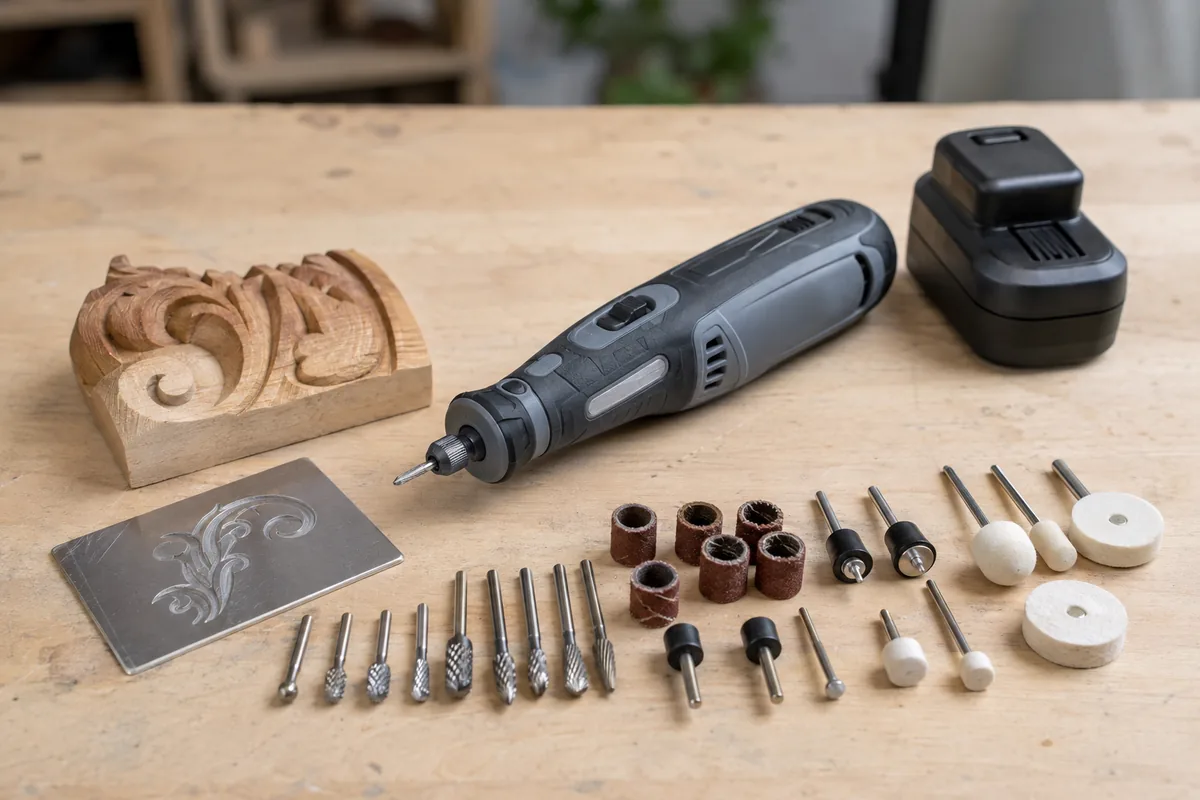
Strip away the packaging and every accessory does one of five jobs: cutting, sanding, shaping, polishing, and holding the other four. That last category is the one buyers skip, and it is the one that ruins Saturdays. Mandrels are the weak link in a cheap set. Hand me forty cutoff wheels and one screw mandrel and I own forty wheels plus a stripped thread waiting to happen.
Cutting. Reinforced cutoff wheels for hardware and screws, thin abrasive wheels for light work. Sanding. Drum mandrels with replaceable bands in coarse and medium grit do more woodworking than anything else in the box. Shaping. High speed steel cutters load up fast in softwood, carbide burrs last far longer, and diamond points are what I reach for on figured hardwood and cured finish because they cut without grabbing. Polishing. Felt wheels and compound earn their keep on brass hardware and blades, and nowhere else in a wood shop.
All-purpose rotary tool accessory kit
If you are starting from nothing, a mid-size branded kit is the boring right answer. You pay more per piece than the mega sets, but the mandrels fit, the cutoff wheels are reinforced, and the grit stays on the drums. Buy the smaller count and spend the difference on refills.
Match the Kit to the Tool You Already Own
Most accessories sold in the US use a 1/8 inch shank, with a few sanding and polishing pieces on 3/32 inch. If your rotary tool came with one collet, check which one before you order anything. A cheap collet set is the best few dollars you can spend, and a keyless chuck is better still if your tool takes one, because it handles both sizes and saves you hunting for the wrench you already lost.
Quick change systems are the other compatibility trap. Brand specific twist-lock cutoff wheels are genuinely faster and I use them, but they only fit their own mandrel, so a generic kit full of screw-type wheels will not click in. Decide which system you live with before buying in bulk. Cordless rotary tools, including Dremel’s battery models, also make less sustained torque than a corded unit, so aggressive carbide burrs bog down and drain the pack. On battery I stay with sanding, light cutting and diamond points.
Where the Bargain Kits Let Me Down
I have bought three of the giant no-name sets, and the pattern never changes. Thin unreinforced cutoff wheels shatter the second you flex them, and I have picked pieces of one off my safety glasses, which is exactly why the glasses are not optional. Sanding band adhesive quits under heat and the band walks off the drum. Mandrel screws are soft and strip. The so-called diamond burrs shed their grit in one session. Nothing is labeled either.
- ✔ Cheap way to stock the consumables you destroy anyway
- ✔ Enough variety to learn what you actually reach for
- ✔ Fine for rough work, rust and metal cleanup
- ✘ Unreinforced cutoff wheels are a real safety risk
- ✘ Mandrels and screws strip early
- ✘ Plated burrs shed grit fast on hardwood
- ✘ Piece count padded with felt pads and wire brushes
My compromise, after wasting money in both directions: buy quality where the accessory spins fast and can hurt you or wreck the workpiece, buy cheap where it is a disposable abrasive. Good mandrels, good cutoff wheels, good diamond and carbide burrs, and whatever sanding bands are on sale.
Sanding drum and band refill pack
Sanding bands are the true consumable and no starter kit includes enough. Get a multi-grit refill pack with spare rubber drums, because the drums glaze and harden sooner than you expect. Coarse and medium do the work in wood. Fine grit mostly burnishes.
How I Would Buy It Today
One mid-size branded kit, one refill pack of sanding bands and cutoff wheels, and one task set aimed at the work you keep repeating. Most of my rotary tool time is sanding and cutting anyway. Add a fourth purchase only when you catch yourself wishing for a shape you do not have. Everything past that is buying storage problems.
On storage, stop using the molded case as your working home. I drilled a scrap of hard maple with a grid of 1/8 inch and 3/32 inch holes, screwed it to the shelf over my bench, and penciled labels beside each hole. Bits go back in the block instead of rolling loose in a drawer, and I can see which grits are gone at a glance.
Diamond burr and point set
This is the upgrade that changed how often I pick the tool up. Diamond points cut cured finish, epoxy, dried glue and figured hardwood without grabbing and tearing the way steel cutters do. Look for sets sold by grit rather than by piece count, and keep them out of soft pine, which loads them up immediately.
Rotary Tool Accessory Kit FAQ
Do off-brand accessories work in a Dremel? Mostly yes, as long as the shank matches your collet, and 1/8 inch is the common size. The exceptions I care about are cutoff wheels and quick change mandrels, where I stay with the brand, because a wheel coming apart at speed is not a savings worth chasing.
How many pieces do I really need? Thirty to forty useful pieces cover a garage wood shop, and most of those should be sanding bands and cutoff wheels rather than one-of-everything oddities.
Why do my sanding bands keep tearing or burning? Too much speed and too much pressure, nearly every time. Rotary tools tempt you to run wide open, but on wood I dial the speed down and let the grit cut. If the wood is scorching, the rubber drum has probably hardened too.
The kit is not the skill. A modest set of good accessories, a slower speed than you think you need, and eye protection you actually wear will take you further than any 300-piece box.
Check prices on Amazon →