
Key takeaways
- A garage woodworker's guide to choosing multi tool blades for wood, covering tooth pitch, steel grades, mount types and the mistakes that eat blades alive.
What's inside
As an Amazon Associate I earn from qualifying purchases. This post may contain affiliate links at no extra cost to you.
I burned through a whole assortment pack of oscillating blades in about two weekends, and most of that was my own fault. I was using nail-embedded bimetal blades on clean pine, running the tool at full speed, and leaning on it like a jigsaw. That is the fastest way to turn a fresh edge into a dull, blue-tinged stub. Figuring out the best multi tool blades for wood is less about brand loyalty and more about matching tooth geometry and steel to the specific cut you are making, then changing how you feed the tool.
This is written from a one-car garage with a decent cordless oscillating multi-tool, not a lab. I have no bench data and no torn-down samples to show you. What I do have is a bin of dead blades and a reasonably clear idea of which ones died young and why. If you cut wood more than you cut drywall or metal, a small, deliberate blade selection will outlast a 30-piece variety kit every time.
As an Amazon Associate we earn from qualifying purchases at no extra cost to you.
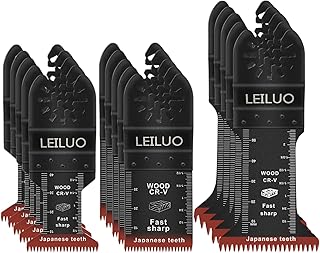
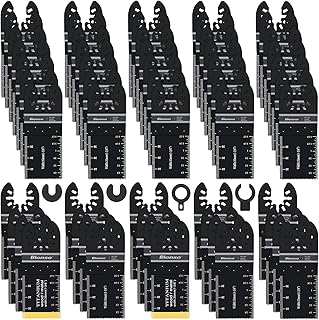


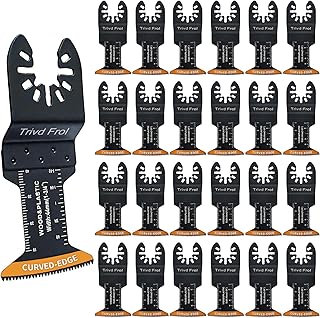

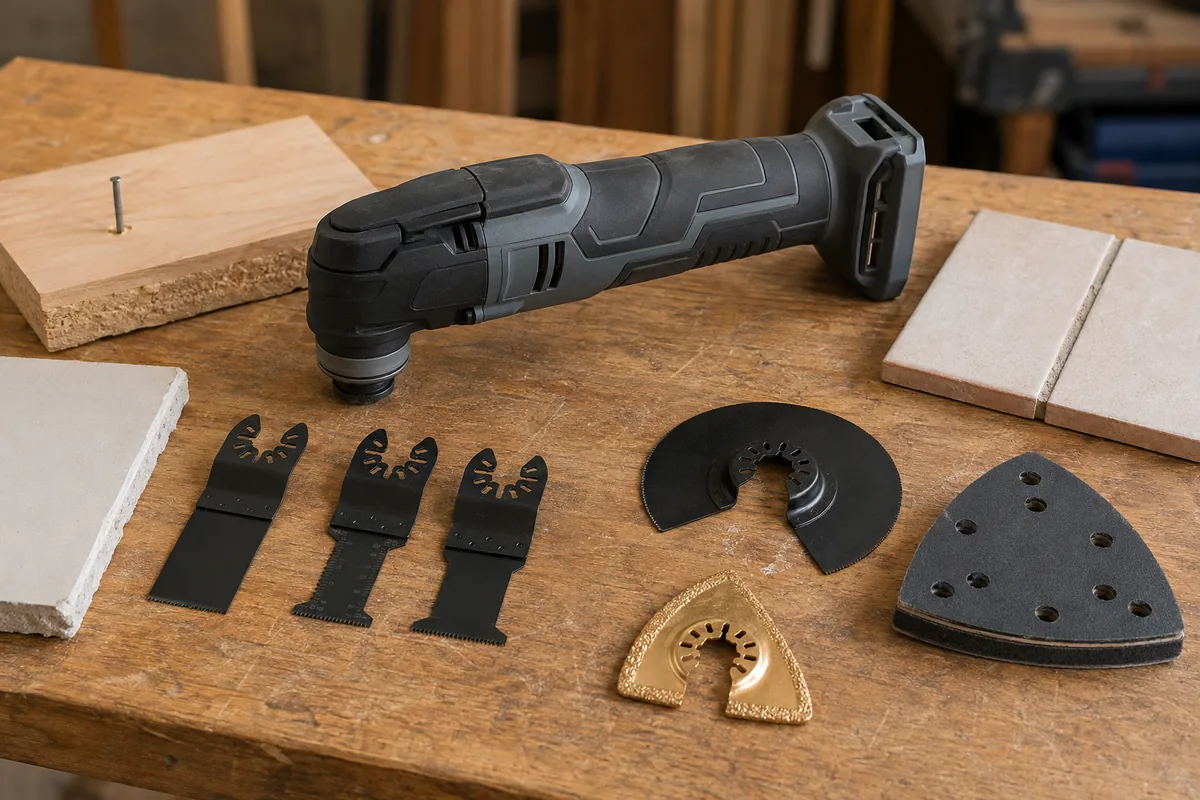
Quick Comparison: Blade Types For Wood Work
Here is how the main categories break down for woodworking tasks. Tooth pitch is usually printed on the packaging as TPI, teeth per inch, and it matters more than almost anything else on the label.
| Blade Type | Best For In Wood | Rough TPI Range | Trade-Off |
|---|---|---|---|
| High-carbon steel (HCS) wood blade | Clean softwood, plywood, trim, plunge cuts | Coarse, roughly 8-14 | Dies instantly on a hidden nail |
| Bimetal nail-embedded | Reclaimed lumber, demo, framing with fasteners | Medium, roughly 14-20 | Slower and rougher in clean wood |
| Japanese-tooth / hardwood blade | Hardwood, flush trimming, precise joinery | Fine, aggressive rake | Narrow kerf clogs in wet or resinous stock |
| Carbide-tipped | Hardwood, engineered wood, laminate, abrasive glue lines | Coarse to medium | Costs several times an HCS blade |
| Carbide rasp / grit segment | Shaping, opening a mortise, leveling epoxy | No teeth | Removes material, does not cut a line |
If I could only buy two shapes, it would be a wide plunge-cut HCS wood blade around 1-1/4 inch for general cutting and a bimetal blade for anything I did not personally mill. Everything else is a nice-to-have.
Why The Best Multi Tool Blades For Wood Are Usually The Coarse Ones
Wood needs gullet space. Each tooth has to lift a chip and carry it out of the cut, and in an oscillating tool the blade only sweeps a few degrees, so it has very little travel to clear that chip. Fine teeth pack with dust, the packed dust stops cutting and starts rubbing, rubbing generates heat, and heat is what actually kills a blade. That blue color on your dead blades is not wear. It is a temper burn.
This is why a nail-embedded bimetal blade feels sluggish in a clean 2×4. It is built with tight teeth for steel, so it is doing more polishing than cutting in softwood. It will still get through, and it is the right call when there might be a fastener in there, but you are trading speed and edge life for insurance.
Japanese-tooth blades go the other way. The teeth are ground with a steep rake and set for a very thin kerf, so they slice hardwood and leave a surface you can actually glue to. They are my pick for flush-cutting dowels and pegs, or trimming a proud tenon without gouging the shoulder. They also bind if you twist them even slightly, and they hate wet or pitchy stock.
General-Purpose Wood Plunge Blade (HCS, Wide)
This is the blade that does 70 percent of my wood cutting, and I treat it as a consumable rather than a tool. Buy a multi-pack of a mid-tier brand rather than one premium blade, because the failure mode for HCS in wood is usually a nail you did not see, not gradual wear. Check that the mount matches your tool before you click, and prefer a width around 1-1/4 inch as your default since narrow blades wander in a long cut.
Carbide Versus Steel In A Garage Shop
Carbide-tipped blades cost noticeably more per blade, and for a while I refused to buy them. That was a mistake, but only in specific situations. Where carbide earns its keep is abrasive material: MDF, particle board, plywood with hard glue lines, old flooring, anything with adhesive or filler in it. Steel teeth go dull on that stuff in minutes. Carbide keeps cutting long enough that the higher unit price ends up cheaper per cut.
Where carbide is a waste is clean softwood and quick one-off cuts. It cuts a wider kerf, it is less forgiving on a delicate flush trim, and if you drop a carbide blade on a concrete floor you can chip the teeth right off. In pine and plywood, HCS is faster and you will not wince when you kill it.
There is a middle option people forget: bimetal blades with a coarser wood-oriented tooth pattern. They survive an accidental nail hit, cost less than carbide, and cut clean wood better than a true metal blade. If you work with reclaimed lumber, pallet wood, or anything pulled off a house, that is probably your default rather than HCS.
- ✔ Coarse wood teeth clear chips and run cooler, so blades last longer
- ✔ Carbide handles glue lines, MDF and old flooring that destroys steel
- ✔ A wide plunge blade tracks straighter than a narrow one in long cuts
- ✔ Bimetal gives you a safety margin on hidden fasteners
- ✘ Variety packs are mostly blades you will never reach for
- ✘ Fine-tooth blades clog fast in resinous softwood
- ✘ Carbide chips if you drop it or twist it in the cut
- ✘ Off-brand mounts can be sloppy and cause chatter
Mount Compatibility, Or How I Wasted Money
I once ordered a pack of blades because the price looked great, then discovered they were cut for a mount my tool did not use. Most current tools from the big names, DeWalt XR, Milwaukee FUEL, Makita LXT and the rest, use a universal or quick-change interface, and most aftermarket blades ship with a slotted universal shank that fits several systems. Most is not all.
Two things to check before you buy. First, does the listing name your tool’s system explicitly, or at least show the star-and-slot universal pattern? Second, if your tool has a tool-free clamp, does the blade thickness suit it? Some thicker carbide shanks do not seat cleanly in older clamping mechanisms, and a blade that is not fully seated will chatter, wallow out the mount, and cut a wobbly line.
Also worth saying plainly: I do not think blade brand matters as much as blade category. A mid-tier coarse wood blade used correctly will beat a premium blade used at the wrong speed with too much pressure.
Bimetal Nail-Embedded Blade Set
If you salvage lumber, keep a few of these on the shelf and stop pretending you can spot every fastener. They cut slower in clean wood, that is the deal, but they will chew through a finish nail without losing the whole edge. Buy a small multi-pack rather than a single blade, since the point is being willing to use one without hesitating.
Technique That Doubles Blade Life
Speed setting first. If your tool has variable speed, back it off for wood. Full speed feels productive but generates heat faster than the teeth can clear chips, and heat is the enemy. I run mid-range for most wood cutting and only go high for rasps and grit blades.
Second, let the blade oscillate. Do not push. Steady, light pressure and a slight rocking motion, so different teeth engage across the cut instead of hammering the same three teeth. If you see smoke or smell scorching, you are pressing too hard or your teeth are packed. Pull out, tap the dust off, let the blade cool for a few seconds.
Third, use the whole blade. Most people wear out one small section near the tip, then throw away a blade that is 60 percent sharp. Shift your entry point along the edge deliberately. On plunge cuts, start the cut at a slight angle to establish a kerf, then square up once you have a groove to ride in. It reduces skating and gives you a much cleaner start line.
Last, mark your dead blades. I scratch an X on the shank with an awl the moment a blade is done, because I have absolutely reinstalled a dull blade and spent five minutes blaming the tool.
FAQ
How many TPI should a multi tool blade for wood have? Coarser is generally better in wood. Roughly 8-14 TPI for clean softwood and plywood, and 14-20 TPI when you expect fasteners or need a smoother finish. Anything much finer than that is really a metal blade and it will clog and overheat in wood.
Are expensive carbide blades worth it for a hobby shop? Sometimes. If you cut MDF, particle board, laminate flooring, or plywood with hard glue lines, carbide lasts long enough to be the cheaper choice per cut. For pine, trim, and general clean wood, coarse high-carbon steel blades in a multi-pack give better value.
Can I sharpen a used oscillating blade? Not practically. The teeth are small, often set and hardened, and a bimetal edge is a thin welded strip. You can sometimes extend a blade by cleaning packed dust out of the gullets with a brass brush, which recovers real cutting speed, but a truly dull or blued blade is scrap. Treat these as consumables and buy accordingly.
What I Would Actually Buy
If I were restocking today with a modest budget, it would be a multi-pack of wide coarse HCS wood plunge blades as the workhorse, a couple of bimetal nail-embedded blades for salvage and unknown lumber, one fine Japanese-tooth blade reserved for flush cuts and joinery cleanup, and one carbide-tipped blade set aside for MDF and glue lines. That covers nearly every wood task a garage shop throws at an oscillating tool, and it costs less than most 30-piece assortments where two thirds of the blades never leave the case.
Check compatibility with your tool’s mount, buy the wood blades in quantity, and change your feed pressure before you change brands. That combination fixed my blade budget more than any single upgrade did.
Check prices on Amazon →