
Our Top Picks


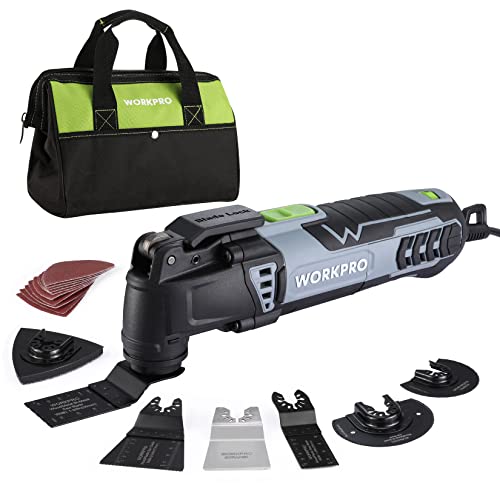

What's inside
As an Amazon Associate I earn from qualifying purchases. This post may contain affiliate links at no extra cost to you.
The oscillating multi tool is what I grab when I have already made a mistake. A plug standing proud where a chisel would tear out, a hinge mortise laid out an eighth of an inch off, a run of baseboard that has to come off without wrecking the drywall behind it. Which means choosing the best cordless oscillating multi tool for a one-car garage shop has less to do with peak power than with how the thing behaves in your hand, at a bad angle, on a Saturday, with one charged battery left on the shelf.
I have owned three of them and I was wrong about what mattered twice. The first time I bought on price and got a tool that buzzed my fingers numb inside ten minutes. The second time I bought on brand and picked a battery platform I did not otherwise use, so it sat in a drawer next to a dead pack. Here is how I sort it out now.
As an Amazon Associate we earn from qualifying purchases at no extra cost to you.


| Type | Where it earns its keep | Trade-off I would accept |
|---|---|---|
| 18V/20V brushless (DeWalt XR, Milwaukee FUEL, Makita LXT) | Plunge cuts in hardwood, nailed lumber, remodel work | Heavier nose, costs more, drains packs fast |
| 12V compact (M12, Makita CXT, Bosch 12V) | One-handed detail work, overhead, inside cabinets | Slows down in dense hardwood and thick fasteners |
| Entry-level brushed cordless kits | Occasional trim and cleanup jobs | More vibration, weaker blade clamp, fewer accessories |
| Corded multi tool | Bench-bound sanding and long continuous cuts | A cord dragging across your work |
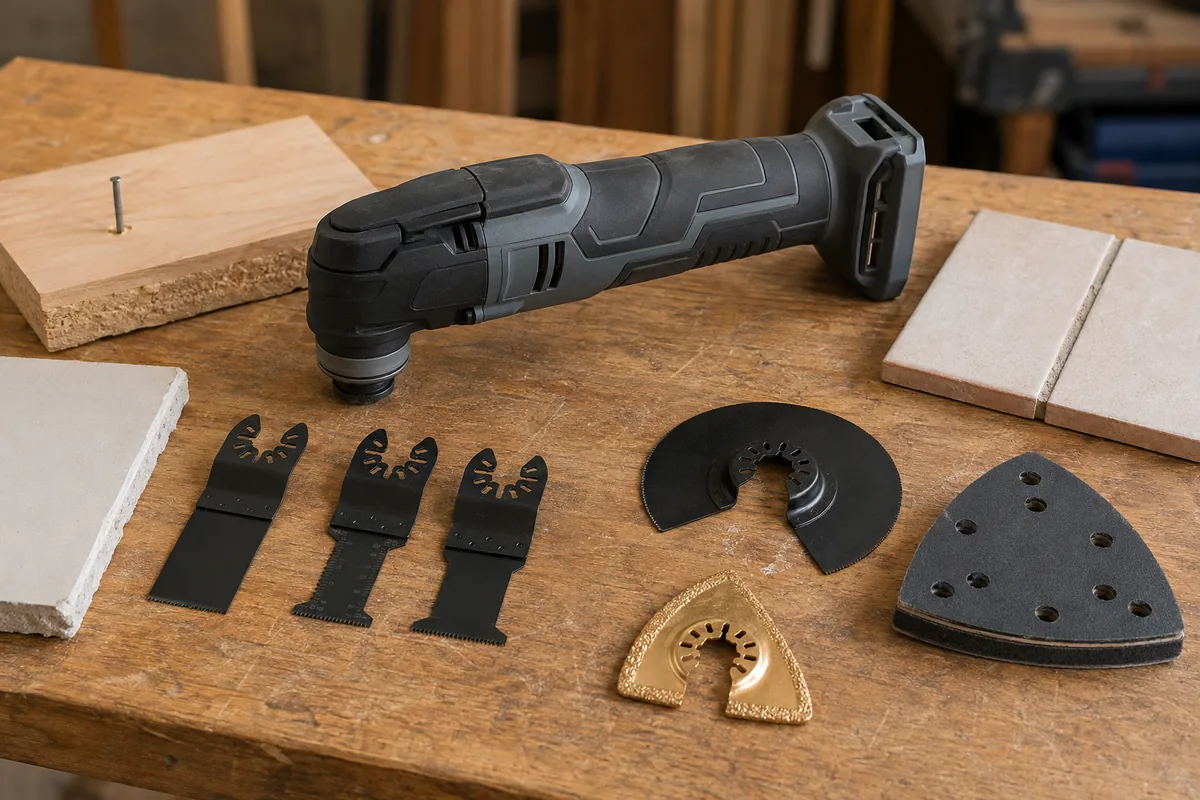
What actually makes the best cordless oscillating multi tool
The blade clamp comes first. A tool-free lever that grips hard is the biggest quality-of-life difference between a multi tool you reach for and one you avoid. If you need a hex key to change blades, you will stop changing blades, and you will finish jobs with the wrong one. Good clamps also let you index the blade at several angles, which matters when cutting flush along a wall.
Oscillation angle and real speed control. Full-size tools run a wider angle, right around three degrees, and that is what makes them cut instead of polish. Narrower angles are gentler to steer but crawl in hardwood. A dedicated speed dial earns its keep too: high for wood and drywall, low for scraping, plastic, and anything that melts or burns before it cuts.
Vibration and head shape. Nobody publishes the number that decides whether you actually like a multi tool, which is how hard it shakes your wrist. Better tools use counterweights and rubber overmold and you can feel it in five seconds holding one in the aisle. Then look at the nose. A slim head reaches under a toe kick or inside a carcass. A fat one does not.
Battery platform, honestly. If you already run one of the big 18V/20V systems, buy the bare tool on that platform and quit reading spec sheets. A great tool on an orphan battery system is worse than a decent tool on the platform hanging charged on your wall.
Full-size 18V brushless oscillating multi tool
This is the class I would buy if I only owned one. Get it bare on the battery platform you already use and put the savings into blades and a mid-capacity pack.
18V versus 12V for a one-person garage shop
If I could keep only one, it would be the full-size brushless class. It has the muscle to plunge through nailed framing or a hardwood tenon without bogging, and holding speed under load is what actually keeps blades alive. The cost is weight out at the nose and a shorter run of comfortable one-handed work.
The 12V compacts are the sleeper pick for woodworkers, though. Trimming plugs, cleaning squeeze-out inside a cabinet, sanding into the inside corner of a face frame: all of that is one-handed and awkward, and a light tool you steer with your fingertips does it better. Mine sees more use than the big one. It just takes longer once the material gets dense.
Set your runtime expectations low either way. An oscillating tool never coasts, the motor is loaded through the entire cut, and heat builds in both the pack and the gearbox. Keep a spare battery for demo work and let the tool rest when the head gets hot instead of leaning harder on it.
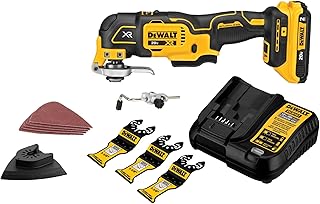
Compact 12V oscillating multi tool
Underrated for cabinet and furniture work. Buy this if your jobs are fussy and overhead rather than heavy, and accept that thick hardwood will take patience.
Blades matter more than the tool
A mid-priced tool with good blades beats a premium tool with bargain blades every single time. Keep three kinds on hand: bi-metal for wood that might hide nails, carbide for abrasive material and hardened fasteners, and a fine Japanese-tooth blade for clean crosscuts in solid wood and trim. Skip the huge accessory kits. Most of the piece count is sanding pads and scrapers you will never use, and the thin blades flex, wander, and burn.
My worst blade mistake was forcing a plunge cut through reclaimed fir. There was a nail in there and I was running a wood-only blade. I destroyed a good blade in about two seconds, scorched the surrounding grain, and spent the next twenty minutes patching a burn mark that would not sand out. Now I let the tool feed itself, lift out every few seconds to clear dust, and assume reclaimed lumber is full of metal until proven otherwise.
- ✔ Reaches cuts no other saw can make
- ✔ Blade swaps take seconds with a tool-free clamp
- ✔ Cuts, sands, and scrapes with one body
- ✔ No cord dragging over a finished panel
- ✘ Vibration gets tiring fast on cheap models
- ✘ Hard on batteries, the motor never coasts
- ✘ Blades are an ongoing cost, not a one-time buy
- ✘ Slower and dustier than a jigsaw or a sharp chisel
Bi-metal and carbide multi tool blade sets
Spend here before you upgrade the tool. A small set of quality blades in the right widths will outcut a bargain forty-piece kit and leave a cleaner edge.
The jobs I actually use mine for
Flush trimming dowels and plugs with a flush-cut blade and painter’s tape as a scratch guard. Squaring the round corners a router bit leaves in a hinge or lock mortise. Undercutting a door jamb so flooring slides beneath it. Trimming shims proud of a frame. Scraping dried glue, old finish, and silicone. Cutting a seized screw where nothing else fits. Notching a stud for a cable run. Sanding corners a random orbit sander cannot touch.
What it is not: a jigsaw, a track saw, or a chisel. It is slower than all three, it makes dust instead of chips, and it drifts if you hurry. I keep mine for access problems and repairs, and framing it that way is why I have never been disappointed in it.
FAQ: cordless oscillating multi tools
Is brushless worth paying for here? More than on a drill, yes. Brushless motors hold speed under load, and speed under load is what keeps blades cutting instead of rubbing and burning. They also run cooler on long cuts.
Will cheaper aftermarket blades fit my tool? Usually, but check the mount before you order. Universal-style blades fit most tools, sometimes with an adapter, while some proprietary clamps only accept their own interface. Match the system, then shop by price.
Is a 12V multi tool enough for woodworking? For shop work like plug trimming, mortise cleanup, sanding, and scraping, it is plenty. For nailed framing or repeated plunge cuts in thick hardwood, you will want the full-size tool.
My honest advice: buy the bare tool on the battery platform you already own, spend the difference on three good blades, and judge it after a month of real jobs rather than a spec comparison. That is the version of this decision I would make again.
Check prices on Amazon →