
Our Top Picks
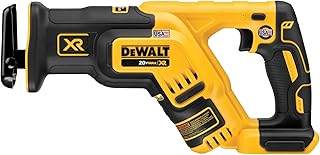
 BLACK+DECKER 20V MAX* Cordless Reciprocating Saw KitOne Size15 x 3 x 7 inches4.5 poundsCheck on Amazon
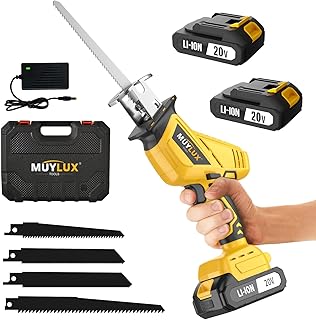
 SEESII Reciprocating Saw Cordless with 2 x 4.0Ah13.77 x 10.62 x 3.54 inches7.7 poundsCheck on Amazon
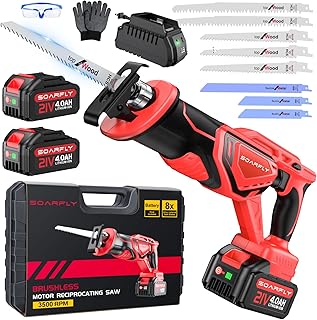
 Cordless Reciprocating Saw 21V Brushless Motor with 2x4.0Ah6.3 x 3.1 x 15.7 inches9.4 poundsCheck on Amazon

What's inside
As an Amazon Associate I earn from qualifying purchases. This post may contain affiliate links at no extra cost to you.
The first cordless recip saw I bought was a mistake. I picked it because it was on sale, it matched a battery I already owned, and I figured a sawzall is a sawzall. Two hours into tearing out a rotted deck ledger, my wrist hurt, the blade was walking all over the cut, and the battery was dead. That saw taught me that the best cordless reciprocating saw is not the one with the biggest spec sheet, it is the one that fits your battery platform, your grip strength, and the honest reality of what you cut.
I am one guy in a one-car garage. I do not have a demo crew, I do not have a fleet of batteries on a charging rack, and I do not run a saw eight hours a day. Most of my recip saw work is nail-embedded reclaimed lumber, pruning branches that are too thick for loppers, cutting off rusted bolts, notching studs, and the occasional ugly demo job I regret volunteering for. If that sounds like your life, the calculus is different than it is for a pro remodeler, and most buying guides ignore that completely.
As an Amazon Associate we earn from qualifying purchases at no extra cost to you.





What actually matters in a cordless recip saw
Here is how I weight the specs, in the order they have actually mattered to me. Note that the numbers below are typical ranges across the current cordless market, not measurements from my own bench.
| Feature | Typical Range | Why I Care |
|---|
| Feature | Typical Range | Why I Care |
|---|---|---|
| Battery platform | 12V, 18V/20V, or 36V/40V class | Biggest cost driver by far. Match what you own. |
| Stroke length | About 3/4 in on compacts, 1-1/8 to 1-1/4 in on full size | Longer stroke cuts faster and uses more of the blade |
| Orbital action | Off, on, or 2-4 selectable settings | On for wood demo, off for metal and clean cuts |
| Brushless motor | Standard on mid and upper tiers | More runtime per charge, better under load |
| Tool weight | About 4-6 lb bare on compacts, 7-9 lb full size | Overhead and one-handed work punish heavy saws |
| Blade change | Tool-free lever or collar | You will change blades constantly, this is not a minor feature |
| Shoe adjustment | Fixed or pivoting/adjustable | Adjustable shoe lets you use fresh blade teeth as they dull |
The one I underrated for years was stroke length. A compact saw with a short stroke feels fine on PVC and small branches, then bogs down embarrassingly in a doubled 2×10. If you only buy one recip saw and it is going to see framing lumber or nail-embedded stock, get the longer stroke and accept the extra weight.
The honest truth about battery platforms
This is the part where I get opinionated. For a hobbyist, the platform decision matters more than the saw itself. A recip saw is a high-draw tool. It will drain a small battery in a hurry, and a compact 2.0Ah pack on a full-size saw is a frustrating experience. If you already own the higher-capacity packs in a system like DeWalt XR, Milwaukee FUEL, Makita LXT, or Ryobi ONE+, buying the bare tool in that same system is almost always the right move financially, even if a competing saw is marginally better.
If you own nothing yet, then you are really choosing an ecosystem for the next decade, not a saw for this weekend. In that case I would look at what else you plan to buy. Milwaukee and DeWalt have deep pro lineups and strong resale. Makita is excellent and often lighter in the hand. Ryobi gives you an enormous tool catalog for the money, which is genuinely compelling for a garage shop where a mediocre tool used twice a year is fine. I run a mixed shop and I regret it, because I own three chargers and a drawer full of adapters I never use.
Full-Size Brushless Cordless Reciprocating Saw (18V/20V Class)
If you buy one recip saw, buy this class. A brushless 18V or 20V-class saw with a stroke in the 1-1/8 inch range and selectable orbital action will handle nail-embedded lumber, pruning, and metal without complaint. Buy it as a bare tool if you already own batteries, and pair it with a 5.0Ah or larger pack. It will be heavier than you want for overhead work, and that is the trade-off you accept for versatility.
Compact vs full size, and why I own both
I resisted compact recip saws for a long time because they looked like toys. Then I spent an afternoon cutting out old copper supply lines in a cabinet, contorted under a sink, and my full-size saw was completely useless in that space. A one-handed compact saw would have finished the job in fifteen minutes.
Compacts are genuinely great for pruning, plumbing, cutting through drywall and lath, trimming shims and dowels, and anything where you need one hand free to hold the workpiece. They are also light enough that you actually grab them instead of talking yourself out of the job. What they are not good at is sustained cutting through thick material. Push a compact through a stack of framing lumber and you will feel the motor complain and the battery drop fast.
My honest recommendation for someone buying their first one: get the full-size saw. Add a compact later if you find yourself in tight spaces often. Buying the compact first is how people end up owning two saws in six months anyway.
One-Handed Compact Cordless Reciprocating Saw
A compact recip saw, or a 12V-class hackzall style tool, is the one I reach for most often for pruning and plumbing. It fits between joists and under sinks, and the light weight means less wrist fatigue on awkward cuts. Do not expect it to replace a full-size saw for demo work. Think of it as a big, aggressive jab saw that happens to be powered.
Choosing the best cordless reciprocating saw for your shop
Let me put the decision in plain terms, because the marketing muddies it.
Buy a full-size brushless saw if you cut framing lumber, do any demo, cut nail-embedded reclaimed wood, or want one saw to cover everything. Prioritize a stroke length in the longer part of the range, selectable orbital action, tool-free blade changes, and a pivoting shoe.
Buy a compact or 12V-class saw if your work is pruning, plumbing, tight-space cuts, and light metal. Prioritize weight and grip comfort over raw power.
Buy the cheapest saw in a platform you already own if you honestly use a recip saw twice a year. There is no shame in this. A budget brushed saw with a 4.0Ah battery will cut through a lot of deck boards, just slowly, and with more vibration.
Skip the cordless recip saw entirely if you are a furniture-only woodworker with no demo, pruning, or metal work in your future. Your money is better spent on a track saw, a better bandsaw blade, or dust collection. I say that as someone who bought tools in the wrong order for years.
- ✔ One tool handles wood, metal, plastic, and pruning
- ✔ No cord to drag across a cluttered garage floor
- ✔ Blades are cheap and widely available at any hardware store
- ✔ Cuts in positions no other saw can reach
- ✔ Brushless models have gotten genuinely powerful on 18V/20V platforms
- ✘ High battery draw, so small packs disappoint
- ✘ Vibration is fatiguing, especially on budget models
- ✘ It is a rough-cut tool, never a finish-cut tool
- ✘ Full-size saws are heavy for overhead work
- ✘ Easy to overbuy if you rarely do demo
Blades and technique matter more than the saw
I want to be blunt: a mid-tier saw with the right blade beats a premium saw with a dull, wrong blade every single time. When my old saw was walking all over that deck ledger, the real problem was that I was using a worn wood blade on nail-embedded lumber.
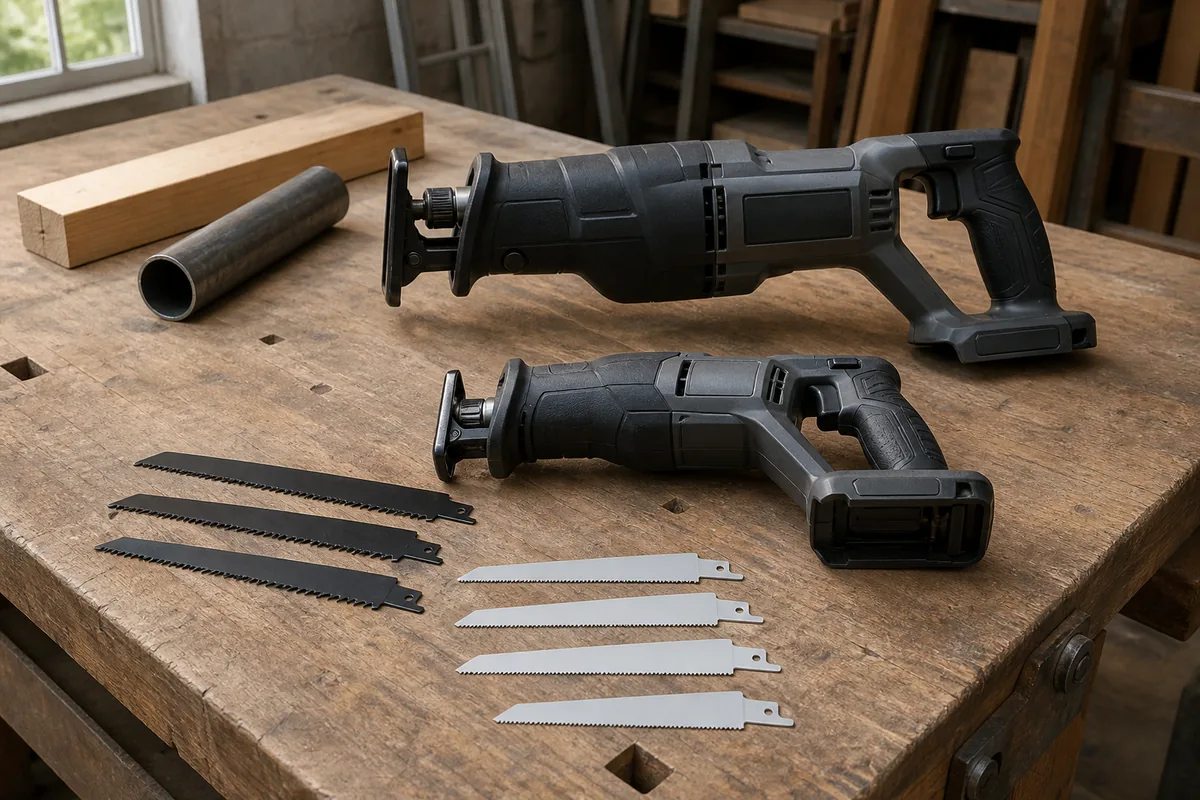
Keep three kinds of blades on hand. A coarse wood blade around 6 teeth per inch for fast cuts in clean lumber. A bi-metal demolition blade in the 8 to 10 TPI range for anything that might contain nails or screws. A fine metal blade at 18 to 24 TPI for bolts, conduit, and thin stock. Add a long pruning blade if you have trees. That is the whole kit for a garage shop.
Technique-wise, three habits changed my results. First, press the shoe firmly against the workpiece before you pull the trigger, which stops the saw from hammering and bouncing. Second, turn orbital action off for metal and for anything where the cut quality matters, and turn it on for fast wood demo. Third, let the saw run at full speed before it engages the material rather than starting the cut at low speed, which just heats the blade.
Bi-Metal Reciprocating Saw Blade Variety Pack
Honestly, if your saw is disappointing you, buy blades before you buy a new saw. A variety pack with wood, demolition, and metal blades costs a fraction of a tool and will transform how your existing saw performs. Buy more than you think you need, because you will bend and burn a few learning where the nails are.
Frequently asked questions
Do I need orbital action on a reciprocating saw? Not strictly, but it is worth having if you cut wood. Orbital action moves the blade in a slight oval instead of straight back and forth, which cuts wood noticeably faster and clears chips better. You want it switched off for metal, where it shortens blade life and roughens the cut. If a saw offers selectable settings rather than a simple on/off, that is a nice bonus but not a dealbreaker.
Can a cordless reciprocating saw replace a circular saw or jigsaw? No, and trying to use it that way is how I ruined a few boards. A recip saw is a demolition and rough-cutting tool. The blade flexes, the cut wanders, and the edge is torn rather than clean. Use it for tear-out, pruning, cutting things off, and reaching into places nothing else fits. Keep the circular saw for straight cuts and the jigsaw for curves in sheet goods.
What battery size should I run on a recip saw? Bigger than you think. Recip saws pull hard, so a compact 2.0Ah pack on a full-size saw gives you short runtime and can feel sluggish under load. On an 18V or 20V-class saw I would run 4.0Ah minimum and prefer 5.0Ah or larger for demo work. On a 12V-class compact saw the small packs are fine, because the tool is not asking as much of them.
If I were starting over, I would buy one full-size brushless saw in whatever platform my drill lives in, a good variety pack of blades, and a battery large enough to finish a job. That combination has done more work in my garage than anything else in the same price bracket. Everything past that is refinement.
Check prices on Amazon →