
Our Top Picks
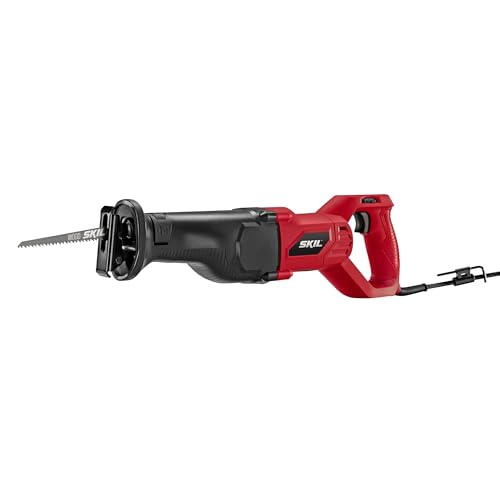 Skil 9206-02 7.5-Amp Variable Speed Reciprocating SawOne Size18 x 5.5 x 3.38 inches7.05 PoundsCheck on Amazon
 BLACK+DECKER 20V MAX* Cordless Reciprocating Saw KitOne Size15 x 3 x 7 inches4.5 poundsCheck on Amazon

What's inside
As an Amazon Associate I earn from qualifying purchases. This post may contain affiliate links at no extra cost to you.
The first time I needed a reciprocating saw for demolition, I was tearing out a rotten deck ledger and I grabbed the cheapest corded saw on the shelf. It cut. It also rattled my forearms numb in about twenty minutes, chewed through blades because I had no idea what a variable-speed trigger was for, and left me with a jagged cut line I had to clean up with a handsaw anyway. That saw taught me more than any spec sheet did.
Demolition is the one job where a recip saw genuinely has no substitute. A circular saw can’t reach into a stud bay. An oscillating multi-tool is too slow for framing lumber. A recip saw is a crude, violent tool that happens to be exactly right for pulling apart things that were never meant to come apart. But the differences between models matter more here than in almost any other tool category, because demolition punishes weak gearboxes, bad blade clamps, and poor vibration control.
As an Amazon Associate we earn from qualifying purchases at no extra cost to you.



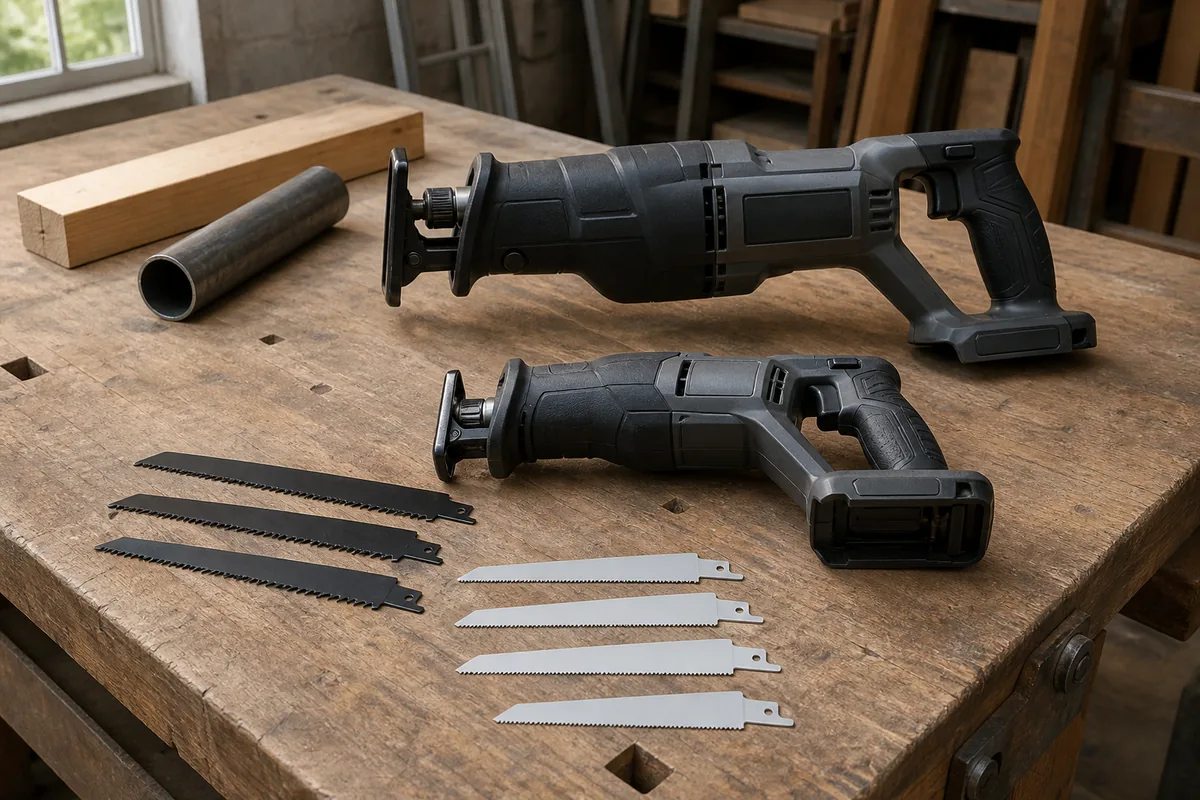
What Actually Separates a Good Demolition Saw From a Bad One
Stroke length is the first number I look at. Most quality saws land at 1-1/8 inches, and cheaper ones drop to 7/8 inch or less. That difference sounds trivial written down. In practice, a longer stroke moves more teeth through the cut per second, which means faster cuts and less heat buildup in the blade. Short-stroke saws feel like they are nibbling.
Second is orbital action. A straight-reciprocating blade moves back and forth in one plane. An orbital saw adds a slight elliptical motion so the teeth bite more aggressively on the pull stroke. For wood and nail-embedded lumber, orbital mode is a real speed increase. For metal, it is actively bad and will destroy blades, which is why any saw worth buying lets you switch it off.
Third, and most underrated, is the shoe. A pivoting shoe that stays planted against the workpiece is the difference between a controlled cut and a saw that hammers itself off the material and into your knuckles. Some shoes are also adjustable in and out, which lets you use a fresh section of a partially dulled blade. That feature has saved me real money on blades.
Vibration is the thing you cannot read off a box. Counterbalance mechanisms in higher-end saws make a genuine difference over a long session. I do not have lab data on this, and I would not trust anyone who claims a precise number, but the felt difference between a premium brushless saw and a budget one after an hour of overhead cutting is not subtle.
Corded vs Cordless for a One-Car Garage Shop
I own both and I use both, for different reasons. Here is how I think about the trade-off.
| Factor | Corded | Cordless |
|---|
| Factor | Corded | Cordless |
|---|---|---|
| Sustained power | Never fades, no thermal cutoff | Strong bursts, drops as pack heats and drains |
| Cost of entry | Lower, no battery investment | Higher unless you already own the platform |
| Reach and setup | Cord management, needs an outlet | Grab and go, ideal for crawlspaces and roofs |
| Weight | Often lighter at the tool | Heavier with a large pack on the tail |
| Best use case | Long teardowns at a fixed spot | Short bursts, awkward positions, jobsite mobility |
My honest recommendation for most garage woodworkers: if demolition is occasional, buy corded. A solid corded recip saw costs a fraction of a bare-tool-plus-battery setup, and it will never quit on you mid-cut. If you already have batteries in a DeWalt XR, Milwaukee FUEL, or Makita LXT system, buy the bare tool and skip the corded saw entirely. Owning two saws because you couldn’t decide is the mistake I actually made.
One caveat on cordless: use big packs. A 2.0Ah battery in a demolition saw is miserable. The tool will draw more current than that pack wants to give, you will get sag, and you will hit thermal protection. Five amp-hours is my practical floor for this application.
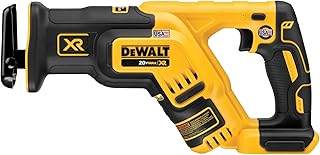
Cordless Brushless Reciprocating Saw (Bare Tool)
If you already have a battery platform, the bare tool is the obvious buy. Filter for brushless, orbital action, and a tool-free blade clamp, then check that the model takes your highest-capacity pack comfortably. Skip kits that bundle a small battery you will immediately outgrow.
Choosing a Reciprocating Saw for Demolition Work You Actually Do
Demolition is not one job. Sorting out which version you are doing narrows the choice fast.
Nail-embedded framing lumber
This is the classic case: pulling apart a wall, cutting out studs, removing old subfloor. You want a full-size saw, orbital action on, and demolition blades with 6 to 10 teeth per inch and a thick bimetal or carbide-tipped body. Do not use clean-wood blades here. They will hit a nail and lose teeth instantly.
Metal: pipe, conduit, rebar, fasteners
Orbital off, low speed, 18 to 24 TPI, and cutting fluid or at least a wax stick if you are going through anything thick. The mistake beginners make is running metal at full trigger. Heat is what kills the blade, not the cutting itself. Slow and steady genuinely lasts longer.
Tight-quarters work
Under a sink, in a stud bay, behind a cabinet. This is where a compact or one-handed recip saw earns its keep. They are much less capable in framing lumber, so I would only buy one as a second saw, not a first. If your garage budget allows exactly one saw, buy the full-size one.
Corded Variable-Speed Reciprocating Saw
For a garage shop that does demolition a few times a year, a corded saw is the sensible money. Look for a 1-1/8 inch stroke, selectable orbital action, an adjustable pivoting shoe, and a genuinely tool-free blade clamp. Everything above that is comfort, not capability.
Blades Matter More Than the Saw
I will say this plainly because it took me too long to learn: a mid-tier saw with good blades outcuts a premium saw with bad blades, every time. Blades are the consumable that determines your actual experience.
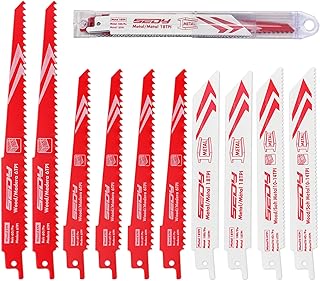
Buy a variety pack to start, but buy quality within it. Carbide-tipped demolition blades cost several times what bimetal blades cost and last far longer in nail-embedded wood, so the math usually works out in their favor if you are doing real teardown volume. For one-off jobs, bimetal is fine. Blade length matters too: a 9-inch blade flexes more but reaches through a 2×6 stud plus sheathing, while a 6-inch blade is stiffer and more controllable. I keep both.
- ✔ Reaches into places no other saw can go
- ✔ Cuts wood, metal, plastic, and nails with just a blade change
- ✔ Cordless versions are genuinely liberating for awkward positions
- ✔ Cheap entry point if you go corded
- ✘ Rough, imprecise cuts that often need cleanup
- ✘ Heavy vibration causes real fatigue over long sessions
- ✘ Blade cost adds up fast if you use the wrong type
- ✘ Easy to cut into something you did not intend to, including wiring and plumbing
Safety Habits I Wish I’d Started With
Before any wall cut, I kill the breaker to that area and assume there is a wire in the bay whether the plans say so or not. I have nicked a cable exactly once and that was enough. A cheap non-contact voltage tester and a stud finder with AC detection are worth more than the upgrade from a good saw to a great one.
Keep the shoe pressed firmly to the material at all times. Kickback in a recip saw comes almost entirely from letting the shoe lift. Hold the tool with both hands on a full-size saw, wear eye protection because demolition throws nails and grit, and use gloves plus hearing protection for anything longer than a few cuts. Let the saw come to a full stop before pulling it out of a cut, especially in metal, where a hot blade will find your forearm.
Frequently Asked Questions
Do I need a brushless reciprocating saw for demolition? Not strictly, but it helps. Brushless motors run cooler, deliver better power under load, and stretch battery runtime, all of which matter in a tool that gets pushed hard. On corded saws the question is moot since most are brushed and it does not really hurt them. If you are buying cordless and demolition is a regular part of your work, brushless is the better long-term buy.
Can I use a reciprocating saw instead of a circular saw for cutting lumber? You can, but you will not like the result. Recip saw cuts wander and leave a rough edge because the blade is unsupported and flexes. It is a demolition and rough-cut tool. For anything you want square, use a circular saw or miter saw. I keep the recip saw for taking things apart, not building them.
What blade should I start with if I only buy one? A bimetal demolition blade around 9 inches with 6 to 10 TPI handles nail-embedded wood, which is most demolition. It will cut soft metal in a pinch, poorly. If your job involves any real metal, buy a second pack of 18 to 24 TPI metal blades. Trying to make one blade do both jobs is a false economy.
What I’d Buy Today
If I were starting over with no batteries and a limited budget, I would buy a corded full-size saw with a 1-1/8 inch stroke, selectable orbital action, and a tool-free blade change, then spend the savings on carbide-tipped demolition blades. If I already had a battery platform, I would buy the bare-tool brushless version on that platform and a 5.0Ah or larger pack. Either way, spend money on blades before you spend it on features you will use once.
The saw is the cheap part of this decision. The expensive part is buying twice because you guessed on the power source.
Check prices on Amazon →