
Our Top Picks
 SKIL 5” Random Orbital Sander with Cyclonic Dust5 inches7.87 x 4.8 x 5.51 inches3.44 poundsCheck on Amazon


What's inside
As an Amazon Associate I earn from qualifying purchases. This post may contain affiliate links at no extra cost to you.
My first cordless random orbital sander was a reaction to one specific annoyance: dragging a cord and a vac hose around a one-car garage while trying to keep a panel from sliding off the bench. If you are shopping for the best cordless random orbital sander for a small shop, you have noticed the reviews never agree. The honest answer depends less on the tool than on which batteries are already sitting on your charger.
My position after a few years of running cordless sanders next to a corded 5 inch: cordless is excellent for the last twenty percent of a project, for assembled pieces, and for anything you carry outside. It is a compromise for the first eighty percent, when you are leveling glue-ups and chasing mill marks. Buy with that split in mind and you will like the tool. Expect it to replace a corded sander for a full afternoon of stock prep and you will be annoyed.
As an Amazon Associate we earn from qualifying purchases at no extra cost to you.

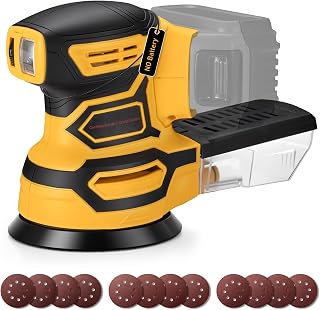


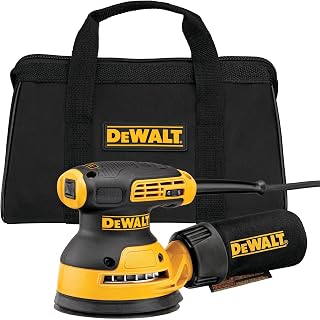
Here is how the main US battery platforms compare when you are picking a sander rather than a brand.
| Battery platform | Where it helps in a garage shop | Trade-off I would accept |
|---|---|---|
| Milwaukee M18 FUEL | Long runtime with big packs and a tight canister seal | Highest entry cost if you own nothing yet |
| DeWalt 20V MAX XR | Widest battery selection and easy local availability | Bodies can feel tall under your palm |
| Makita 18V LXT | Smooth low-vibration feel over long sessions | Fewer deals on high-capacity packs |
| Ryobi ONE+ HP | Cheapest way in if you already own the platform | Shorter runtime and more wobble wide open |
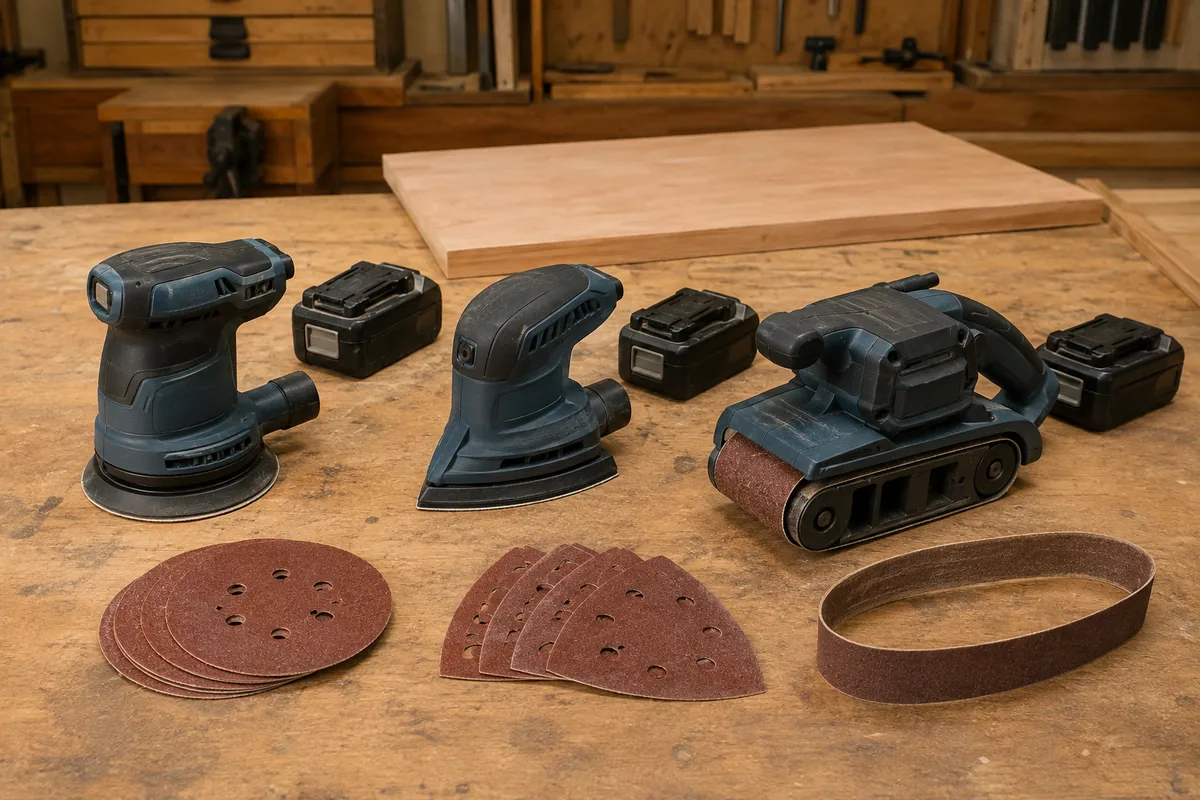
What I actually look for in the best cordless random orbital sander
Spec sheets are mostly brushless badges and orbits per minute. Neither number tells you whether a sander is pleasant to hold for forty minutes. Four things changed how I shop.
Pad size and orbit
Five inch is the default for furniture work and the right call for most garage shops, mainly because disc selection is huge and cheap. Six inch covers a tabletop faster but it is heavier, drinks more battery, and is harder to keep flat on narrow stiles. Orbit width matters more than people expect: wider cuts faster and leaves deeper swirl, tighter finishes cleaner and slower. One cordless sander in my shop means 5 inch with a moderate orbit, and the corded machine still does the heavy leveling.
Dust collection that seals
This is where cordless sanders separate themselves. With no hose attached you rely entirely on the onboard canister, and a good seal is the difference between a clean finish and a garage full of airborne maple. I want a canister that locks in positively instead of friction fitting, a pad hole pattern that matches the discs I already buy, and a port that still takes a hose adapter on bench days. Watch for exhaust aimed down at the work, because it kicks fines back at your face.
Runtime you can plan around
A sander is a steady-load tool, not a burst tool like an impact driver, so it drains a pack in a predictable straight line. Plan on roughly twenty to forty five minutes of continuous sanding from a mid-size battery, less if you lean on it. So buy the tool bare and put the savings into one high-capacity pack. Keep a compact pack around too, because it balances better on a sander even though you swap more often.
Vibration, balance and a pad brake
A sander with a battery hanging off the back is a different animal than a corded palm sander. Good designs keep the pack low and your hand right over the pad, and bad ones get buzzy at the top of the speed range. Check for a pad brake as well. Without one the disc keeps spinning when you lift, and setting it back down carves a crescent gouge. I sanded through veneer that way once and had to remake the door.
Milwaukee M18 FUEL random orbital sander
If your drill and impact are already red, this is the easy answer. The FUEL sanders are the ones I would trust for a long finishing session, and their canisters seal well. Buy it bare, skip the kit, and spend the difference on a high-capacity pack every other tool can use.
Battery platform beats brand loyalty
I say this in most tool posts and it applies double here. Any current brushless 5 inch from a major line will leave a finish-ready surface if you work through the grits and do not skip steps. What decides whether you are happy is whether you can grab a charged pack without thinking about it. Buying off-platform because a review crowned it best means another charger, another battery size to keep topped off, and a tool that sits idle because its pack is always dead.
The exception is starting from nothing. Then choose the platform for the whole lineup you expect to buy over the next few years and let the sander be one vote out of ten.
Matching the sander to what you build
Boxes, shelves and small projects
A budget 5 inch on a platform you already own is plenty. Sessions are short, parts are small, and setup takes longer than the sanding does. Do not spend premium money here.
Ryobi ONE+ HP brushless random orbit sander
For weekend projects and touch-up work this is enough tool, especially if ONE+ batteries are already in a drawer. It will not match the premium lines on vibration or runtime, and I would not pick it for a dining table, but for small parts and edge cleanup the value is hard to argue with.
Furniture, cabinets and big panels
Here I would go premium line, 5 inch, and own two large packs. Better still, keep the corded sander for flattening and let the cordless handle assembly-stage work, cabinet interiors, and the final grits where a cord is most in the way.
Makita 18V LXT random orbit sander
Makita has a long reputation for low vibration and low-profile bodies, which matters more than raw power once you are past 80 grit. Worth a look if you are on LXT already, or if long finishing sessions are the reason you want cordless at all.
Decks, fences and outdoor work
This is where cordless pays for itself and where I stop worrying about swirl. No extension cord across the yard and nothing to trip over. Consider 6 inch if you have real square footage, and buy discs in bulk because weathered lumber destroys abrasives.
Mistakes I made so you can skip them
I bought a kit with two compact batteries because it looked like a deal. Bare tool plus one large pack would have served me better. I also cheaped out on discs for a year, which is the dumbest way to save money in a shop, since loaded-up abrasive burnishes instead of cutting. And for months I judged cordless unfairly by expecting a replacement instead of a second sander.
- ✔ No cord snagging on clamps or dragging across a fresh finish
- ✔ Genuinely better on assembled pieces, cabinet interiors and outdoor work
- ✔ Easy to carry outside and dump dust away from the shop
- ✘ Onboard collection never matches a shop vac on the port
- ✘ Battery swaps interrupt you in the middle of a panel
- ✘ Extra height and weight right where your hand sits
- ✘ Costs more than an equivalent corded sander
Frequently asked questions
Can a cordless sander replace my corded one? For most garage shops, no. It will replace it for finish grits, assembled pieces and on-site work, but for flattening glue-ups and long stock prep a corded sander on a vacuum is still faster and cleaner.
Do I still need a shop vac if the sander has a canister? Yes, for your lungs and your finish. Onboard collection is decent but it is not extraction, and fine hardwood or MDF dust deserves a vac and a respirator. I run the canister when moving around and hook up the hose at the bench.
Is brushless worth the money on a sander? On a cordless one, yes. Brushless motors hold speed under pad pressure and stretch runtime, and runtime is the limitation of this whole category.
If you already own a major platform the decision is basically made: buy that brand’s current brushless 5 inch bare, add one large battery, and put the rest into good discs. Starting fresh, pick the platform for the whole lineup. Either way, keep the corded machine. Mine still comes out for every glue-up.
Check prices on Amazon →