What's inside
As an Amazon Associate I earn from qualifying purchases. This post may contain affiliate links at no extra cost to you.
A router bit case has a harder job in a dusty workshop than it does on a clean showroom shelf. Fine dust works into foam, hinges and bit shanks; loose bits can chip carbide or cut your hand when you rummage for the one you need. The right case keeps bits separated, makes common sizes quick to find and closes securely. It does not need to be expensive or complicated.
As an Amazon Associate we earn from qualifying purchases at no extra cost to you.
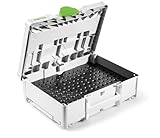

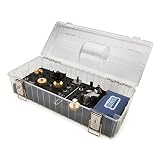
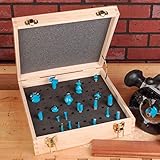
What matters in a router bit case
Start with the bits you own, not the number printed on the case. Router bits have different shank diameters, commonly 1/4 inch and 1/2 inch. A holder that grips one size may not secure the other. Check that the case has properly sized holes or collets, and leave room for bits with wide cutters or unusually long shanks.
Dust protection depends on the lid and the way the case closes. A close-fitting lid helps keep airborne dust off cutting edges, but few cases are airtight. A foam insert can seal around bits reasonably well, though it may trap dust if bits go back in dirty. Molded holders are easier to wipe clean and make it easier to see whether a bit is missing.
Look at how the case will live in your shop. A case stored flat in a drawer can be light and simple. One that gets moved between a cabinet and the router table needs a latch that stays shut when carried. If you hang a case on a wall, check that bits remain captured when it is vertical. A case that opens unexpectedly can spill heavy bits and damage their carbide edges.
Case types compared
| Case type | Best for | Dust and access | Main drawback |
|---|---|---|---|
| Molded plastic case | Mixed sets and frequent use | Clear layout; usually quick to wipe | Holes may not fit every shank or cutter shape |
| Foam-lined case | Keeping individual bits separated | Good coverage when closed | Foam can collect dust and wear around holes |
| Metal or wood box with holders | Permanent storage in a cabinet | Can be sturdy and easy to customize | Bulkier; quality depends on the insert and lid fit |
| Small organizer case | A few frequently used bits | Compact and easy to bring to the bench | Limited space for large-profile bits |
For most hobby shops, a molded case with individual bit holders is the practical middle ground. A router bit case with holders for 1/4-inch and 1/2-inch shanks is a sensible place to start if your collection includes both sizes. Confirm the holder dimensions and the case’s usable depth before ordering; a case advertised for a certain bit count may not accommodate large panel-raising or other wide-profile bits.
Storing bits in a dusty shop
Even a good case cannot compensate for putting away dusty bits. Brush or blow off loose debris before storage, then wipe the shanks and cutters with a clean cloth. Avoid pushing a shop-vac nozzle against delicate edges, and do not use compressed air in a way that sends chips toward your eyes or across the shop. Wear eye protection when cleaning.
Keep the case away from the direct path of a dust collector’s exhaust and from shelves where sanding dust settles. A closed drawer or cabinet adds a useful second barrier. If the shop is damp, dry bits before storage: trapped moisture can lead to rust on steel shanks, and corrosion can make a bit stick in a holder. A small desiccant packet in a closed cabinet can help, but replace it when saturated.
Label the outside with the shank size and the kinds of bits inside. For a mixed set, label positions or use a printed list under the lid. That small step reduces the time the case stays open while dust is circulating. It also helps prevent the common mistake of forcing a 1/2-inch shank into a holder designed for 1/4 inch.
Choose capacity with room to spare
Count the bits you use, then allow space for additions. A case with 20 to 30 positions is often enough for a small working set; buying a large case for a handful of bits can waste drawer space. On the other hand, cramming extra bits into open gaps risks contact between cutters. If your set is growing, compare router bit organizers with adjustable or removable holders rather than choosing solely by advertised capacity.
Pay attention to the tallest bit, not just the total count. Measure from the shank base to the top of the cutter and compare that with the case’s internal clearance. If the lid presses on a bit, it can loosen the holder, damage foam or put pressure on the cutting edge. For unusually large bits, a separate box for large router bits can be safer and easier to handle than forcing everything into one case.
When the cheaper case is fine
A basic plastic case is fine for a small set that stays in a clean drawer and is used occasionally. It is also a reasonable choice if the bits came in a sound case already. Check the hinges, latch and holders before relying on it: brittle hinges can crack, weak latches can pop open, and loose holders let bits rattle together. A case that costs less but keeps bits separated is better than an expensive case with a poor fit.
Pay more only for a real improvement you need, such as secure latches for transport, better-sized holders for mixed shanks, or a durable insert that can be replaced. Before buying, verify the shank sizes, bit height, holder layout and closed-case dimensions. Those checks matter more than a high bit count or a dustproof claim. If your existing case closes firmly and keeps cutters apart, spend the money on clean, dry storage habits instead.