What's inside
As an Amazon Associate I earn from qualifying purchases. This post may contain affiliate links at no extra cost to you.
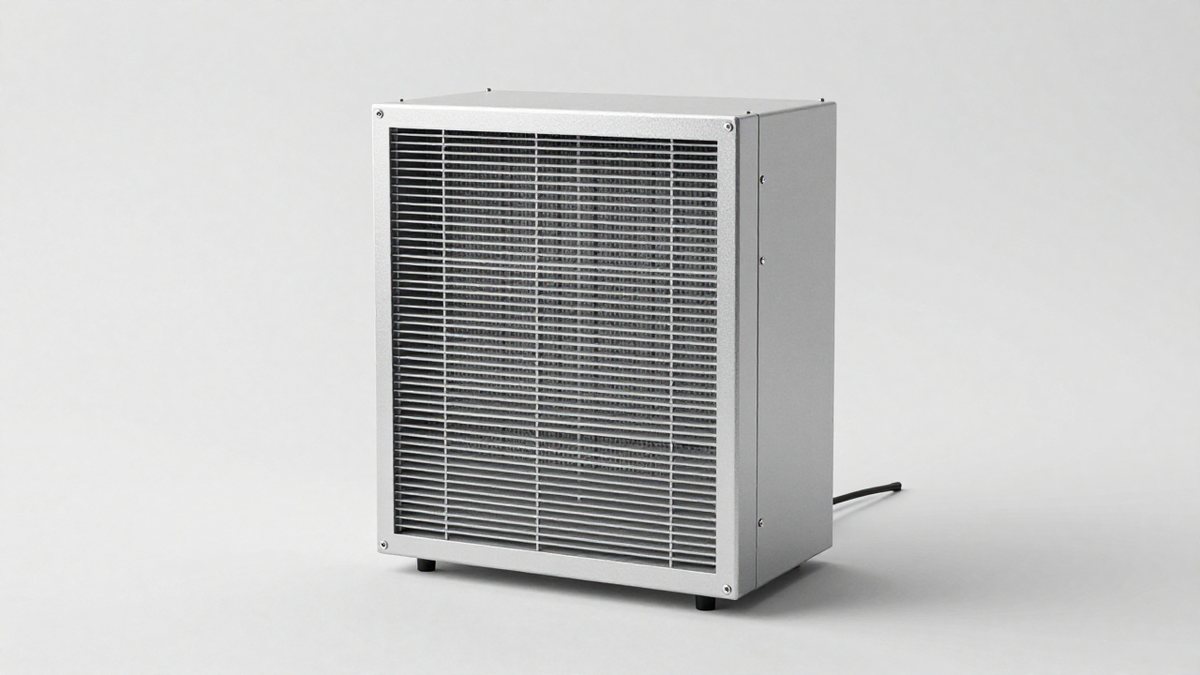
A dust collector can be running loudly while your tools still send fine dust into the shop. The useful question is not whether the motor is on, but whether enough air is moving at the pickup point. Monitoring airflow helps you find clogged filters, leaking ducts, undersized hoses, closed blast gates, and tools whose dust ports simply do not capture well.
Our Top Picks
 WEN 1-Micron Canister Filter Cartridge with Cleaning Paddles19-5/8” x 24”19.63 x 19.63 x 24 InchesCheck on Amazon


What to Monitor
Airflow is usually discussed in cubic feet per minute (CFM). CFM tells you how much air moves through the system, but it only means something at a specific location and under a specific load. A collector may advertise 1,200 CFM with no hose attached, then deliver far less through a long 2.5-inch hose, several bends, and a restrictive tool port.
Static pressure is the resistance the collector must overcome. It is measured in inches of water column, often written as “in. w.g.” A high static-pressure reading can indicate a blockage or restrictive ductwork. A low airflow reading with unusually low pressure can point to an air leak, an open access door, or a collector that cannot move enough air.
For many woodworking tools, practical airflow targets are roughly 150 to 250 CFM for a table saw or router table, 250 to 400 CFM for a planer or jointer, and 350 to 500 CFM for a large machine with a 4-inch port. These are working ranges, not guarantees. Fine dust from sanding often needs strong capture at the source, while chips from a planer mainly require volume to keep the duct clear.
Choose the Right Measuring Tools
The cheapest useful instrument is a handheld vane anemometer. It measures air speed, usually in feet per minute. Use it at the open end of a hose or over a tool port, then calculate approximate airflow with this formula:
CFM = air speed in feet per minute × opening area in square feet.
A 4-inch round opening has an area of about 0.087 square feet. If the anemometer reads 3,000 feet per minute at that opening, the theoretical airflow is about 261 CFM. Real-world readings are affected by turbulence, the meter’s position, and partial obstruction, so treat the result as a repeatable comparison rather than laboratory data.
A digital manometer or differential pressure gauge is better for tracking the condition of the collector. Install pressure taps on both sides of a cartridge filter, or use a gauge designed for filter monitoring. The difference between the two readings increases as the filter loads with dust. A simple digital differential pressure manometer is useful when you want numbers rather than a visual guess.
A basic pressure gauge is fine for a fixed installation, but it must be connected correctly. Do not connect a gauge to a random hole in the duct and assume the reading represents the whole system. Pressure changes with location, bends, and whether a blast gate is open. Mark normal readings after installation so later changes are meaningful.
| Tool | What it tells you | Best use | Limitation |
|---|---|---|---|
| Vane anemometer | Air speed and estimated CFM | Comparing tool ports, hoses, and blast-gate settings | Readings are turbulent and location-sensitive |
| Differential manometer | Pressure drop across a filter or section | Detecting filter loading and restrictions | Does not directly show CFM |
| Built-in filter gauge | Approximate filter condition | Quick checks on a collector | May not be calibrated or specific to your setup |
| Visual smoke test | Capture direction and leaks | Checking hoods, enclosures, and joints | Not a quantitative airflow test |
Establish a Baseline
Measure the system when the filter is clean and the ductwork is assembled correctly. Open only one blast gate, start the collector, and let it run for a few seconds. Record airflow at the tool connection, static pressure at the collector, and the hose or duct configuration. Repeat the measurement with the gate fully open and with the tool connected.
Do this for each frequently used machine. A single reading at the collector outlet can hide a poor connection at the table saw. Label each blast gate and write the normal readings on a card near the collector. This turns future troubleshooting into comparison instead of guesswork.
Keep the measuring position consistent. An anemometer held several inches away from a hose may read very differently from one pressed against the opening. For round ports, make a simple cardboard adapter with a known opening, or measure through a short straight section rather than directly at a sharp bend.
Find Airflow Losses
Start with the easiest failures. Confirm that the blast gate is fully open and that unused gates are closed. Check for a hose crushed behind a machine, a separator bin lid that is not sealed, and duct joints that have pulled apart. A small leak on the suction side can reduce performance and pull dusty shop air into the duct.
Then inspect the filter. A packed filter raises pressure drop and reduces airflow. Clean it according to the manufacturer’s instructions; aggressive compressed air can damage pleats or drive fine dust into the shop. If the pressure drop stays high after cleaning, replacement may be cheaper and safer than continuing to run a restricted collector.
Check the separator and collection bag as well. A full bag can block the lower outlet, while a cyclone or lid that leaks can reduce separation and load the filter quickly. If you collect fine sanding dust, a properly sized dust collector cartridge filter generally provides more surface area than a small fabric bag, but it costs more and still needs regular cleaning.
Improve Monitoring in Daily Use
Install a permanent gauge where it can be seen before starting a dusty operation. A filter pressure gauge or differential indicator gives an early warning, but do not use a green or red zone from another collector as if it were universal. Record the clean-filter reading and set your service point based on the manufacturer’s guidance or a noticeable airflow loss.
For a small shop, an anemometer used monthly is often enough. You do not need a costly airflow station if the system has one collector, short duct runs, and only a few machines. Spend the money instead on sealed ducting, smooth 4-inch or 5-inch pipe where appropriate, and a reliable dust collector blast gate system.
If readings fall by 20 to 30 percent from your baseline, stop treating the problem as normal variation. Look for a blocked hose, closed gate, loaded filter, full separator, or damaged impeller. Also remember that airflow monitoring cannot prove fine-dust safety by itself. Good source capture, a suitable filter, proper cleanup, and respiratory protection remain necessary, especially when sanding or cutting materials that produce hazardous dust.
Related guides
More from Amazon
Programs that pair well with the guide above. Offers and eligibility are set by Amazon and may change.
A free business account with business pricing and bulk-buying tools for work, shop or home office.
Create a business accountFree shipping on eligible items, Prime Video and more. Eligible new members can start with a free trial.
Start a Prime free trialAudiobooks and podcasts to listen to on the go. Eligible new members can start with a free trial.
Try Audible freeAd-free music streaming. Eligible new subscribers can start with a free trial.
Try Music Unlimited freeAs an Amazon Associate we earn from qualifying purchases.