What's inside
As an Amazon Associate I earn from qualifying purchases. This post may contain affiliate links at no extra cost to you.
Choosing Wall-Mounted Storage for Abrasives
Wall storage keeps sanding discs and sheets visible, dry, and off the workbench. That matters because abrasives are easy to damage: a bent sanding sheet may leave uneven scratches, while a hook-and-loop disc covered in dust may not grip the backing pad properly.
The best setup depends on the abrasives you use. A cabinet or divided bin works well for loose sheets. A rack with horizontal slots is better for full or half sheets. Hook-and-loop discs are easiest to manage in shallow round trays, small drawers, or labeled bins. If you use several grits, storage should let you identify the grit without opening every container.
As an Amazon Associate we earn from qualifying purchases at no extra cost to you.

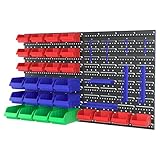
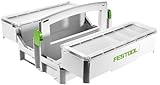
For most home workshops, a wall-mounted organizer with 8 to 16 labeled compartments is the practical middle ground. If you only use a few grits, a simple plywood rack costs less and may work just as well. If you have a large random-orbit sander collection, a modular bin system is usually easier to expand.
The Best Storage Types
| Storage type | Best for | Advantages | Limitations |
|---|---|---|---|
| Divided wall bin | Loose discs and small sheets | Compact, inexpensive, easy to label | Discs can become mixed or curled |
| Slot rack | Quarter, half, and full sheets | Fast access and good visibility | Needs more wall space |
| Small parts drawer cabinet | Many grits and abrasive types | Excellent sorting and protection from dust | Costs more and takes longer to load |
| Hanging file or envelope system | Occasional sanding and low-volume shops | Very cheap and simple to install | Less rigid; sheets can sag or bend |
A wall-mounted parts organizer with bins is a good choice when you have many disc grits but limited wall width. Choose bins at least 2 inches deep for stacks of 5-inch discs. For 6-inch discs, measure the bin opening carefully; a nominal 6-inch compartment may not accept the discs if its internal width is smaller.
Storage for Sanding Sheets
Sheet abrasives should be stored flat or held upright with support on both sides. A narrow slot rack is usually better than a deep box because you can see every grit and pull out one sheet without disturbing the others.
Build or buy slots approximately 1/2 to 3/4 inch wide for individual grit groups. This leaves enough room for a stack of sheets without making the opening so loose that paper slides out. For full 9-by-11-inch sheets, allow at least 10 inches of usable vertical height and 11 1/2 inches of width. If the rack is for folded sheets, use dividers that prevent the paper from leaning and developing a permanent crease.
Keep coarse and fine abrasives in separate sections. A 36-grit sheet can damage a 220-grit sheet when grit transfers between them. Label both the grit and the abrasive type, such as aluminum oxide, ceramic, or silicon carbide. “Fine” is not enough when you are standing at the bench trying to choose between 180 and 220 grit.
A wall-mounted sanding sheet rack makes sense if you regularly sand cabinets, furniture, or large panels. For occasional hand sanding, repurposed magazine files or labeled document holders are cheaper and perfectly adequate. Secure them to a backboard rather than relying on adhesive alone.
Storage for Sanding Discs
Random-orbit sanding discs take less wall space than sheets, but they are easier to mix up. Use one compartment per grit where possible. If you combine grits, put them in separate zip bags or envelopes inside the compartment and label the outside.
A 5-inch disc stack can become surprisingly heavy. A compartment holding 40 or 50 discs may weigh more than 2 pounds, especially with a rigid storage box. Mount organizers to studs whenever possible. If you must use drywall anchors, use four properly rated anchors and keep the total load well below their published limit. A small organizer that pulls away from the wall can scatter abrasive discs and damage the backing surfaces.
For a compact setup, consider 5-inch sanding disc storage organizers with removable dividers. Removable dividers let you create wider sections for mixed packs or narrow sections for individual grits. Avoid deep, opaque tubs unless you use large labels; otherwise, the grits become a guessing game.
Discs with pressure-sensitive adhesive backing need extra care. Do not store them where shop heat regularly exceeds about 90 degrees Fahrenheit, and keep the release liner flat. Heat and pressure can make adhesive discs stick together or leave residue on the backing pad.
Mounting and Workshop Layout
Place abrasive storage within arm’s reach of the sanding bench, but not directly below a dust collector discharge or next to a frequently opened door. Fine dust settles into open bins and can contaminate hook-and-loop fasteners. A storage location 4 to 6 feet from the sanding area is often a good compromise.
Mount the lowest compartment roughly 36 inches above the floor if the organizer sits near a bench. This keeps it accessible without forcing you to bend down. Leave at least 2 inches of clearance around the organizer so labels and dividers remain usable. Keep it away from the swing path of long boards and sheet goods.
For a plywood rack, 1/2-inch plywood is adequate for light abrasive storage. Use a solid back, glue the dividers, and add two screw rails near the top and bottom. Predrill the plywood to prevent splitting. For heavier drawer cabinets, attach a French cleat or screw through the cabinet’s rear mounting holes into studs.
Controlling Dust, Moisture, and Mix-Ups
Open storage is convenient but collects dust. If your shop uses a belt or cyclone dust collector, clean the organizer every few months with a vacuum and soft brush. Do not blast it with compressed air; that sends abrasive dust back into the room and can force grit into the hook-and-loop material.
Moisture is another problem, particularly in an unheated garage. Store paper abrasives away from exterior concrete walls and leave a small air gap behind wooden racks. A lidded cabinet or drawer unit is worthwhile if humidity regularly causes paper to curl. The cheaper open rack is fine in a dry basement or climate-controlled shop.
Use large labels with black lettering, such as “80 GRIT—5 INCH—HOOK AND LOOP.” Put a second label on the front edge of each bin if the organizer is mounted above eye level. This small detail prevents the common failure mode of grabbing 120 grit when you intended to start with 80.
For a larger collection, wall-mounted small-parts drawer cabinets offer the cleanest organization. They cost more than open bins, but they protect abrasives from dust and make inventory easy. Choose them when replacement discs are expensive, your shop is dusty, or you keep more than 10 grit grades. Otherwise, a labeled bin rack or homemade plywood organizer gives nearly the same usefulness for much less money.