
What's inside
- The best metal band saw depends on the stock you cut: choose a horizontal saw for repeatable crosscuts, or a vertical saw for curves and irregular shapes.
- Metal bandsaw comparison
- Choose by the work, not by the largest capacity number
- Blade speed: steel and aluminum need different approaches
- Coolant, cut quality, and burr control
- Setup steps that prevent wandering cuts
- Ownership costs and common wear points
- Related Guides
As an Amazon Associate I earn from qualifying purchases. This post may contain affiliate links at no extra cost to you.
The best metal band saw depends on the stock you cut: choose a horizontal saw for repeatable crosscuts, or a vertical saw for curves and irregular shapes.
For a compact shop cutting tube, angle iron, and solid bar, the 7 × 12-inch class of horizontal saw is a versatile starting point. For sheet, contours, and controlled freehand work, choose a vertical metal-cutting bandsaw with a variable-speed drive and a suitable work table. In either case, prioritize capacity, a speed range matched to your metals, and coolant support if accuracy and low-burr cuts matter.
Below are established machines and machine classes to compare. Capacities and weights can vary by model revision and configuration, so verify the current manufacturer specification before buying—especially whether a stated capacity is for round stock, rectangular stock, or both.
As an Amazon Associate we earn from qualifying purchases at no extra cost to you.

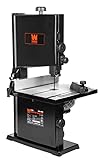


Metal bandsaw comparison
| Machine or class | Format | Capacity or blade size | Speed and coolant considerations | Best suited to |
|---|---|---|---|---|
| JET HVBS-712 | Horizontal, 7 × 12-inch class | Nominal maximum work envelope: 7 × 12 in.; confirm the round-versus-rectangular ratings for the exact version | Commonly specified with variable blade speeds of about 85–200 ft/min; check whether the configuration includes a coolant system | Small fabrication shops needing a general-purpose cutoff saw |
| Grizzly G0561 | Horizontal, 7 × 12-inch class | Nominal 7 × 12 in.; actual capacity depends on stock shape and vise position | Typically offers multiple speed settings; use the manual’s speed chart and check the included coolant arrangement | Budget-conscious shops cutting common tube, angle, and bar |
| Baileigh BS-128M | Horizontal, portable 5-inch class | Up to approximately 5 in. round stock, subject to the exact cut orientation and model specification | Verify the available speed settings and whether coolant is included; compact portable saws may rely on careful feed and blade choice | Limited floor space and occasional smaller-stock cutting |
| JET VBS-18MW | Vertical, large work table | Blade capacity and throat depend on configuration; it is not directly comparable to a horizontal saw’s vise opening | Look for a metal-cutting speed range, not a wood-only speed; confirm coolant support for sustained steel work | Contour work, irregular pieces, and stock that cannot be held in a horizontal vise |
| Vertical metal-cutting saw, 14–18 in. class | Vertical | Check throat depth, work-table size, and maximum stock height separately | Prefer variable speed that reaches a slow setting for steel; coolant or a suitable cutting lubricant helps with heat and finish | Shops that need curves, notches, or flexible workpiece orientation |
These figures are comparison points, not a substitute for the current manufacturer manual. A machine’s maximum capacity also does not guarantee a square cut at that limit: blade condition, vise rigidity, work support, and feed pressure all affect results.
Choose by the work, not by the largest capacity number
- Mostly straight cuts in tube, pipe, or bar: Choose a horizontal saw. Its vise holds stock consistently, and a hydraulic or controlled gravity feed can make repeated cuts easier to keep square.
- Curves, notches, and irregular pieces: Choose a vertical saw with a stable table, adequate throat depth, and a blade guide that can be set close to the work. A horizontal saw is a poor substitute for controlled contour cutting.
- Small shop or occasional use: A portable or benchtop horizontal model can be a sensible fit if its capacity covers your largest routine stock. Leave room for long material to extend beyond the machine, and provide a stable support stand.
- Frequent production cutting: Consider a rigid floor model with a clear coolant system, reliable blade tensioning, a quick-adjust vise, and easy access to replacement blades. Downtime from awkward setup can outweigh a lower purchase price.
- Mixed steel and aluminum: Prioritize variable speed or clearly separated speed settings. A machine that runs slowly enough for steel and fast enough for aluminum is more useful than one with a single convenient setting.
Blade speed: steel and aluminum need different approaches
Blade speed is usually stated in feet per minute (ft/min). Steel generally calls for a much slower blade speed than aluminum because cutting steel at an excessive speed generates heat and can shorten blade life. Aluminum can usually be cut faster, but its softness makes tooth geometry, chip clearance, and lubrication important: chips can pack into the gullets or stick to the teeth.
As a starting framework, many workshop cuts in mild steel fall around 80–150 ft/min, while aluminum is often cut several times faster, roughly 200–400 ft/min. These are broad working ranges, not universal settings. Stainless steel, hardened stock, thin-wall tube, blade tooth pitch, and the saw’s manufacturer guidance can shift the right speed substantially. Follow the machine and blade makers’ recommendations, and reduce speed or feed if the cut heats rapidly, squeals, or leaves a rough, wandering kerf.
For thin-wall tubing, use a finer tooth pitch so multiple teeth engage at once. For thick solid bar, a coarser pitch can clear chips more effectively. If the wrong tooth count is used, a thin wall may snag and strip teeth, while an overly fine blade in thick stock may clog and cut slowly.
Coolant, cut quality, and burr control
Coolant helps carry heat and chips away from the blade, particularly during repeated steel cuts. It can also improve finish and blade life when the machine’s system delivers fluid consistently to the cutting area. For aluminum, use a lubricant compatible with the material and machine; avoid letting chips accumulate around the guides or return path.
Coolant alone does not make a cut accurate. Secure the stock close to the cut, support long pieces so they cannot twist or sag, set blade guides near the work, and let the saw feed without forcing it. A fresh, correctly tensioned blade and a square vise alignment matter just as much. Expect to deburr cut edges: even a well-set saw can leave a small burr, especially on thin tube or a blade near the end of its useful life.
Setup steps that prevent wandering cuts
- Check the blade and speed chart. Match tooth pitch and speed to the material and section thickness. Confirm the blade runs in the correct direction and is tensioned to the manual’s specification.
- Square the vise or table. Use a machinist’s square against a test cut, rather than trusting a scale or pointer. Correct alignment before cutting a batch.
- Clamp and support the stock. Keep the workpiece firmly against the vise jaw. Support long offcuts at the same height as the saw table so they do not pull the cut out of square.
- Set feed and coolant. Use a steady, moderate feed and direct coolant to the blade-work contact point if the machine supports it. Do not push the saw through a cut to compensate for a dull blade.
- Inspect the first cut. Check squareness, burr size, and heat. Adjust feed, speed, or blade selection before repeating the setup.
Ownership costs and common wear points
Blades are the main recurring consumable. Their life depends on material, blade speed, tooth pitch, tension, and whether the saw is forced through the work. Guides and bearings also wear, while coolant systems need periodic cleaning because fines and chips can clog screens, pumps, and nozzles. Keep a spare blade, remove chips with a brush rather than your hands, and clean the coolant tank on the schedule in the manual.
A common false economy is choosing a saw solely by its maximum capacity. If the vise cannot hold your usual stock securely, the blade speed does not suit your materials, or coolant is difficult to maintain, the saw may produce more rework and consumable use than a better-matched machine. For most small fabrication shops, a variable-speed horizontal saw in the 7 × 12-inch class is the most practical all-rounder; choose a vertical machine when contour capability is a regular requirement.