
What's inside
- Best Long-Form CNC Machines for Large Projects
- Compare the machines by the work they can actually do
- Which long-form CNC fits your situation?
- Full-sheet workflow: bed size is only half the equation
- Rigidity, assembly, and ownership costs
- Calculate whether full-sheet capacity pays off
- Bottom line
- Related Guides
As an Amazon Associate I earn from qualifying purchases. This post may contain affiliate links at no extra cost to you.
Best Long-Form CNC Machines for Large Projects
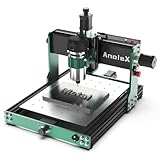
The best long-form CNC machine depends on whether you need to cut full sheets, make long narrow parts, or process oversized stock without repeatedly repositioning it: for full 4 × 8-foot sheets, choose a machine with a bed larger than the sheet; for furniture parts and signs, a 4 × 4- or 4 × 8-foot router may be easier to fit and assemble.
For a practical shortlist, consider the Avid CNC PRO4896 for a configurable 4 × 8-foot-class setup, ShopSabre IS 510 for a more production-oriented router, and Onefinity Elite Foreman when a modular machine with a roughly 4 × 4-foot work area suits the project better than a full-sheet bed. Verify current specifications and configuration with the manufacturer before buying: advertised work areas, included components, and machine options can change.
As an Amazon Associate we earn from qualifying purchases at no extra cost to you.

Compare the machines by the work they can actually do
Nominal bed dimensions are only a starting point. The usable cutting area can be smaller because of toolpath limits, clamps, spoilboard edges, and the clearance needed for a dust shoe. A 48-inch-wide work area, for example, does not guarantee that a full 48-inch-wide panel can be machined edge to edge.
| Machine | Approximate working-area class | Best fit | Planning consideration |
|---|---|---|---|
| Avid CNC PRO4896 | About 48 × 96 in | Cabinet parts, nested sheet layouts, long furniture components | Allow room for the machine’s frame, assembly, dust collection, and sheet loading. Confirm the exact configuration and clearances. |
| ShopSabre IS 510 | About 60 × 120 in | Production work, oversized panels, and jobs needing extra edge margin | Its larger footprint and heavier-duty setup call for careful floor-space, delivery, and installation planning. |
| Onefinity Elite Foreman | About 48 × 48 in | Signs, furniture components, and long projects that fit within a square work area | It is not a full-sheet solution. A 4 × 8 panel must be broken down or machined in registered sections. |
These are nominal size classes, not guarantees of edge-to-edge cutting. Check the current machine drawing for the usable travel in X and Y, and ask whether the quoted area includes the spindle’s full movement with your intended tool and dust shoe. If buying an extended or custom configuration, get the final dimensions in writing.
Which long-form CNC fits your situation?
- Regular full-sheet cabinet work: Choose a 4 × 8-foot-class or larger router, such as the Avid CNC PRO4896. It lets you nest parts on a sheet in one setup, reducing manual alignment and handling between operations.
- Production or oversized panels: Consider a larger machine such as the ShopSabre IS 510 if its extra capacity is useful often enough to justify the greater footprint, installation effort, and likely higher overall investment.
- Limited floor space or occasional long parts: A 4 × 4-foot machine such as the Onefinity Elite Foreman can handle many furniture parts and signs. Break down sheet goods with a track saw first, then use dowels, registration pins, or a carefully designed spoilboard grid to locate each section consistently.
- New to CNC: Favor accessible setup documentation, responsive technical support, and a configuration you can assemble safely. A smaller machine can be a better first purchase if you are still learning workholding, feeds and speeds, and toolpath setup.
- Daily use: Prioritize frame stiffness, serviceability, dust management, and support for the spindle and controller you plan to run. A long bed is useful only if the machine can maintain repeatable cuts across it.
Full-sheet workflow: bed size is only half the equation
A standard 4 × 8-foot sheet measures 48 × 96 inches, but it is rarely convenient to feed one directly from a crowded corner of a shop. You need room to carry the sheet flat, rotate it into position, and reach the far side of the machine. A larger-than-sheet bed provides useful margin for clamping and edge trimming, but it also increases the shop footprint.
Before ordering, mark the machine’s outer dimensions on the floor and mock up the stock path with cardboard or scrap. Include the operator aisle, control cabinet, dust-collection hoses, and any doors or posts the sheet must pass. For a 96-inch panel, the loading route may need substantially more than 96 inches of unobstructed length because the sheet must be turned and controlled by one or more people.
Plan for a spoilboard that can be surfaced flat and replaced when worn. Vacuum hold-down can speed up sheet work, but it adds cost and works best with suitable, relatively airtight material. For smaller batches, screws, clamps, or a combination of vacuum and mechanical stops may be more economical. Keep clamps outside the toolpath and check that the dust shoe will not strike them.
Rigidity, assembly, and ownership costs
Long rails and beams are more sensitive to alignment and deflection than compact machines. A stiff frame, properly supported rails, and a level, stable stand all contribute to consistent results. Frame material alone does not tell the whole story: extrusion size, gantry design, joints, rail support, and the machine’s mass matter too. For heavy hardwood cuts, allow for conservative passes and sharp tooling rather than assuming a large work area means aggressive cutting capacity.
Assembly is a real part of the purchase. A large CNC may arrive as multiple heavy components; moving and assembling it can require helpers, lifting equipment, and enough clear floor space to square the frame. Follow the manufacturer’s sequence for leveling and alignment. Rushing this step can cause binding, uneven wear, or cuts that vary across the bed. Also budget time to install electrical service, dust collection, computer or controller, and a surfaced spoilboard.
Common wear items include router or spindle brushes where applicable, collets, cutting tools, belts or rack components depending on the drive system, and the spoilboard. Dust buildup can shorten component life and interfere with motion, so clean rails and inspect fasteners regularly as directed by the manufacturer. Replace dull bits before they burn the work or place extra load on the machine. A long machine also magnifies small setup errors: check squareness, tram the spindle, and verify a test cut at more than one point on the bed.
Calculate whether full-sheet capacity pays off
Suppose you make 40 cabinet jobs a year and each job uses two sheets. If machining a full sheet on the CNC saves 12 minutes of manual layout and repositioning per sheet, that is 40 × 2 × 12 = 960 minutes, or 16 hours saved annually. Compare those 16 hours with the extra purchase, setup, and space costs of a full-sheet machine. If your work is mostly one-off furniture pieces that fit on a 4 × 4-foot bed, the larger machine may not save enough time to justify the room it occupies.
This calculation is only a starting point: include sheet loading, tool changes, cleanup, and the value of fewer alignment errors. Conversely, if panels must be cut down before loading, the smaller machine may add handling time and reduce the benefit of nested layouts.
Bottom line
For recurring cabinet and panel work, a 4 × 8-foot-class long-form CNC is the practical starting point; choose a larger format when you regularly need extra edge margin or oversized stock and have space to load it. For long parts that are narrower than a sheet, a 4 × 4-foot machine may be the more sensible buy. Compare verified usable travel—not just the bed label—and plan the complete stock path, assembly area, and dust-collection layout before committing.